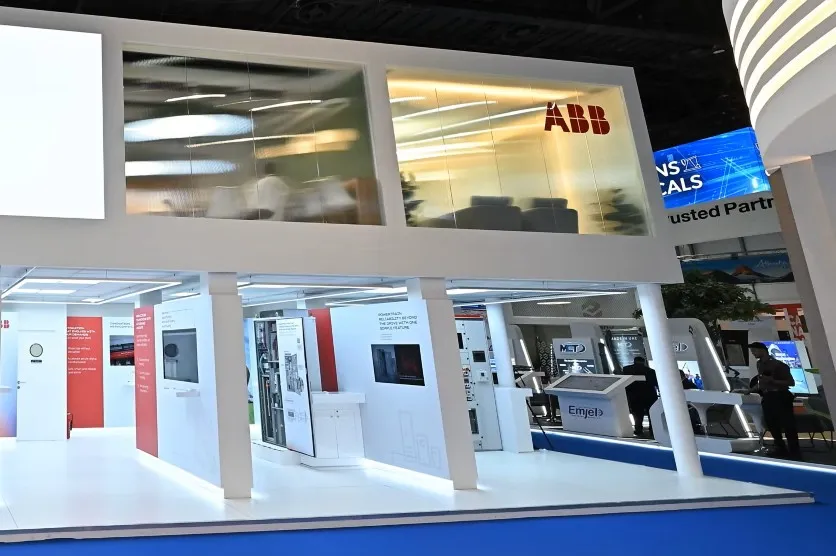
ADIPEC 2026 takes place in Abu Dhabi from November 2 to 5. During the exhibition, ABB launched ABB Ability™ Augmented Operator, bringing artificial intelligence into industrial control rooms to support anomaly detection and decision-making. In coverage of the launch, Gino Hernandez, Head of Global Digital Business at ABB’s Energy Industries division, emphasised that operators need to understand and trust their tools, making the way AI is introduced as important as its capabilities.
According to ABB, the software helps operators detect anomalies earlier, review how similar situations were handled at their facility and test responses before making changes. It combines operational context, process knowledge and AI-enabled guidance within existing control system workflows, while leaving final decisions to human operators. The software has been developed for chemicals, oil and gas, power generation, water and other industries.

ABB control room technology supporting industrial operations. Source: Pipeline & Gas Journal.
Its functions address three practical questions: what has gone wrong, whether it has happened before and what might happen after an adjustment. ABB’s product documentation describes these capabilities as anomaly detection, knowledge extraction and process prediction, covering multivariate change detection, the retrieval of operating experience and scenario simulation.
Hernandez said the software should explain its reasoning, draw on the facility’s accumulated experience and allow operators to evaluate potential outcomes before implementing changes. ABB positions it as a step towards greater autonomy while retaining human involvement in decisions. The company also said historical operating records can help newer operators benefit from the experience of previous control room teams.
The exhibition’s daily publication explored similar questions from an enterprise operations perspective. On page 33 of the Day 1 ADIPEC 2026 Show Daily, Microsoft Global Energy Industry Leader Hema Prapoo contributed an article titled “The Intelligent Oil and Gas Enterprise: Connecting AI from Reservoir to Market.” She argued that AI’s value depends on connecting decisions across the value chain and combining asset signals with historical records, engineering knowledge, maintenance information and business context.
On page 36 of the same issue, Muqsit Ashraf, Accenture’s Group Chief Executive—Industry and Enterprise, examined organisational readiness for AI. He stressed the need to simplify workflows, clarify decision-making responsibilities and measure success through operational outcomes such as reliability, safety and cycle time. Together with ABB’s launch, these contributions highlighted a practical priority: shortening the distance between discovering information, making a judgement and taking action in the field.
Bringing More Operational Context into View
ABB’s launch highlights the growing importance of connecting observations with the information operators need to act. In the control room, that means interpreting process changes alongside operating history and assessing possible responses. Across geographically dispersed energy assets, a similar need arises when teams assess changes along pipeline routes, around oilfields and near power infrastructure.
A new construction site beside a pipeline, for example, raises questions about location, proximity and activity. Which pipeline segment is affected? Is the work already authorised? Has a field team checked it? Satellite imagery can help identify the change, while drone observations and site records provide further context for investigation.
These observations extend an operator’s view into the surrounding environment, where construction, land-use changes and other activities may warrant attention alongside the information already available from the facility itself.
From a Mapped Change to a Field Task
For geospatial monitoring to support daily operations, a detected change needs more than a marker on a map. Its observation date, associated asset, before-and-after imagery and verification status help personnel judge its relevance and decide what to do next.
Where satellite screening identifies new earthworks near a pipeline, an operator may first check construction records, then arrange a drone survey or field inspection. The findings can be attached to the same event record, allowing teams to track how the situation develops and whether further action is needed.
Observation timing also matters. Satellite imagery provides a view of conditions at acquisition, drone surveys add local detail, and deployed video or sensors can support continued observation at selected locations. Keeping these timestamps visible helps teams understand the evidence available and identify where an updated check would be useful.
Connecting Monitoring with Existing Workflows
Through its energy infrastructure monitoring solutions, STARPATH GLOBAL coordinates satellite, drone and ground observations for pipelines, oilfields and power infrastructure. The focus is on turning geographical changes into asset-related findings that help operators prioritise inspections and follow-up work.
Delivery can be designed around a customer’s existing GIS, asset management or work order systems, with agreed formats, interfaces and access permissions. Requirements for local deployment and data ownership can also be addressed during project design, so monitoring results remain accessible within the customer’s approved environment.
The practical value lies in what happens after detection. Whether teams are reviewing a process deviation in a control room or investigating new activity along a pipeline corridor, clear evidence and operational context help them make informed decisions and coordinate the next step.