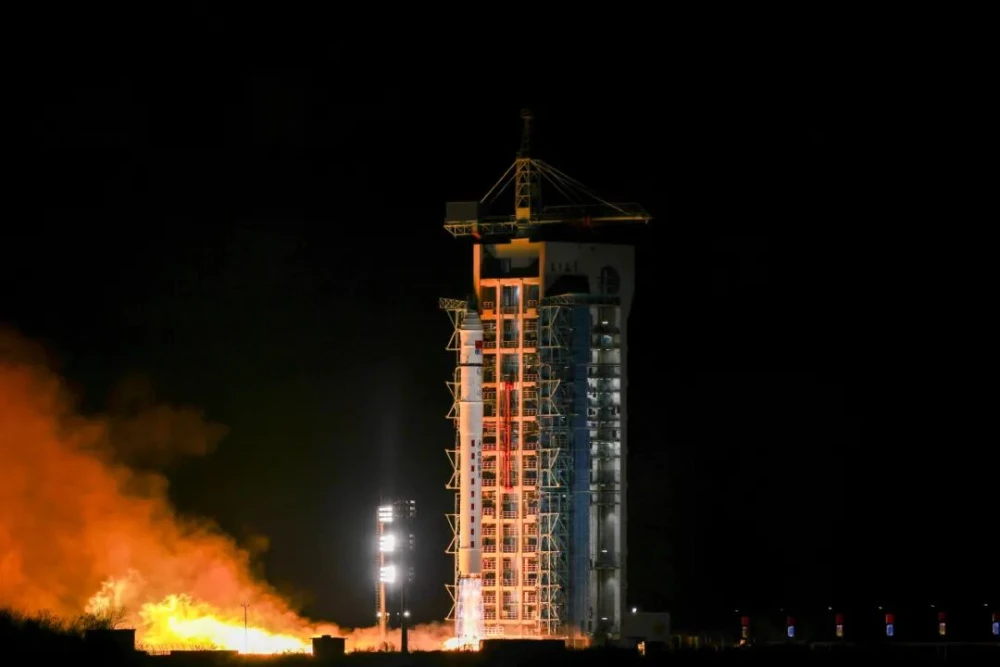
China launched the Pathfinder mission for its Origins space science program aboard a Long March 2D rocket from the Jiuquan Satellite Launch Center at 7:41 p.m. Beijing time (11:41 UTC) on November 11, 2026, delivering a four-satellite assembly to its planned orbit.
The flight marked the 677th launch of the Long March rocket family. Pathfinder will test payload technologies for future scientific spacecraft, including Hongmeng and Kuafu-2.
The Chinese Academy of Sciences’ National Space Science Center leads the mission. The four spacecraft, designated A, B, C and D, have a two-year design life in a 600-kilometer dawn-dusk sun-synchronous orbit. CAS’s Innovation Academy for Microsatellites developed the spacecraft, while its Aerospace Information Research Institute handles ground data reception.
Long March 2D is a two-stage launch vehicle using storable liquid propellants. Its development is overseen by China Aerospace Science and Technology Corporation’s commercial rocket company, with the corporation’s Eighth Academy, also known as the Shanghai Academy of Spaceflight Technology, responsible for development work.
The rocket can carry 1.3 metric tons to a 700-kilometer circular sun-synchronous orbit. It supports single-satellite launches, side-by-side or stacked multiple-satellite configurations, and secondary payloads.
Payload and formation-flight demonstrations
Spacecraft A carries five instruments: the Magnetic and Helioseismic Imager (MHI), Very Large Area Gamma-ray Space Telescope Pathfinder (VLAST-P), a high-resolution atmospheric boundary-layer lidar (HiRAL), a Langmuir probe (LMP), and a space-weather effects monitor (SWEM).
VLAST-P is a miniaturized demonstrator for a proposed larger gamma-ray observatory. It is designed to detect solar gamma rays at energies ranging from MeV to GeV and high-energy protons produced by solar flares. Its electromagnetic calorimeter uses thallium-doped cesium iodide crystals to measure incoming photon energies. The instrument’s readout electronics had completed flight-model development and testing before launch.
Spacecraft B, C and D form a distributed low-frequency interferometric imaging spectrometer demonstrator. Planned operations include separating A from the B-C-D assembly, deploying B, C and D, and testing formation control, intersatellite measurements and payloads.
The formation tests support Hongmeng, also known as Discovering the Sky at the Longest Wavelength. That mission’s planned lunar-orbit architecture comprises one lead spacecraft and nine smaller satellites. Its distributed instruments would combine measurements across multiple spacecraft, while the Moon would shield observations from terrestrial radio interference during passages behind its far side. Scientific objectives include detecting redshifted hydrogen signals from the universe’s cosmic dawn.
After technology validation, Pathfinder is intended to conduct space-environment monitoring demonstrations and research.

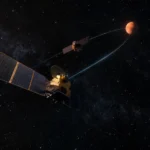
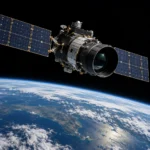
Illustration of the Pathfinder satellites in orbit
CAS plans to develop and launch four Origins missions over the next three to five years: Hongmeng, Kuafu-2, Earth 2.0, and the enhanced X-ray Timing and Polarimetry observatory, or eXTP.
For organizations preparing technology-demonstration satellites or follow-on missions, matching payloads, spacecraft platforms and ground testing capabilities is a practical step toward launch. STARPATH GLOBAL helps international customers source competitively priced custom satellites, payloads and assembly, integration and testing (AIT) equipment through its global supply network. Whether the next purchase is a satellite payload or equipment for an AIT facility, contact STARPATH GLOBAL to compare available hardware and procurement costs before committing to a supply plan.