
Author: starpathwp-production
-
-
Webb views the ‘cosmic cliffs’ of Carina Nebula
Carina Nebula viewed by the James Webb Space Telescope. Credit: NASA, ESA, CSA, and STScI The James Webb Space Telescope’s first image of Carina Nebula shows an iconic star-forming cloud of gas and dust 7,600 light-years away, revealing previously unseen vistas of young stars thanks to the new observatory’s sharp-eyed infrared vision. This is one…
-

A dying star through the eyes of the James Webb Space Telescope
This side-by-side comparison shows observations of the Southern Ring Nebula in near-infrared light, at left, and mid-infrared light, at right, from NASA’s Webb Telescope. Credit: NASA, ESA, CSA, STScI The James Webb Space Telescope’s multi-wavelength observations of the Southern Ring Nebula reveal the dying throes of a star flinging off vast amounts of stellar debris,…
-
JWST teases new era in exoplanet astronomy
NASA’s James Webb Space Telescope has captured the distinct signature of water, along with evidence for clouds and haze, in the atmosphere surrounding a hot, puffy gas giant planet orbiting a distant sun-like star. Credit: NASA, ESA, CSA, STScI Among the dazzling images from the James Webb Space Telescope released Tuesday was a squiggly line…
-
Feast your eyes on the first course of a celestial smorgasbord from NASA’s Webb Space Telescope
NASA’s James Webb Space Telescope provided this view of a galactic grouping known as Stephan’s Quintet. Click on the image for a larger version. (NASA / ESA / CSA / STScI) A day after NASA showed how far the James Webb Space Telescope could dive into the cosmic frontier, scientists released additional pictures demonstrating the…
-
Biden unveils first image from Webb Space Telescope, expanding the space frontier
The first full-color image from the James Webb Space Telescope reveals faraway galaxies. Click on the image for a larger view. (NASA / ESA / CSA / STScI) President Joe Biden got in on today’s celebration of the first full-color image from NASA’s James Webb Space Telescope, a $10 billion observatory that’s been decades in…
-
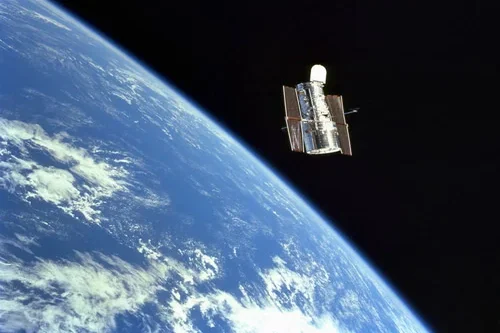
What resolution do I need when using satellite data?
Trick question: it depends on what you are trying to do. What does resolution mean? The resolution of Earth observation data is determined by three factors: spatial resolution, spectral resolution, and temporal resolution. While all three have to be considered when looking at satellite data, most people mean “spatial resolution” when they ask about resolution.…
-
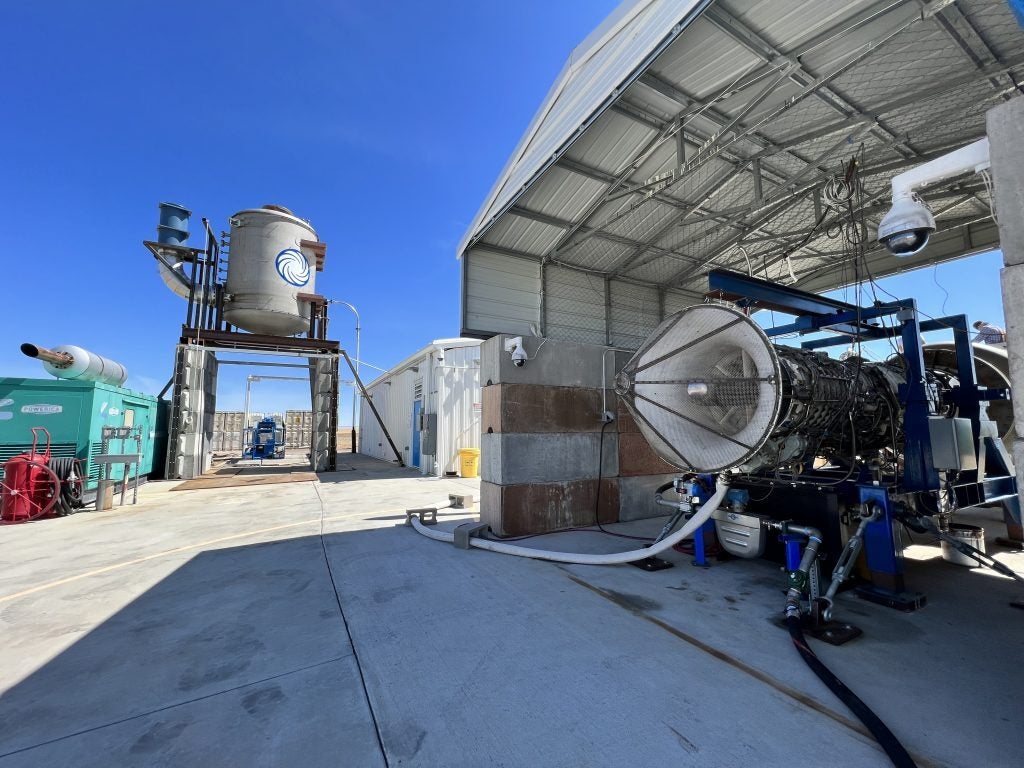
UK’s Reaction Engines Begins Propulsion Trials for US Military
Reaction Engines, a U.K. space company, has begun testing its high-Mach propulsion technology in a critical U.S.-based trial, as it looks to make more of an impact in the United States. The company announced Monday that it has been working on a series of tests conducted with the Air Force Research Laboratory (AFRL) and the…
-
Improving flood forecasting with Earth observation data
Improving flood forecasting with Earth observation data is not only possible but it’s been done time and time again. Luca Brocca is a Researcher at the Research Institute of Geo-Hydrological Protection (IRPI) of the National Research Council (CNR), a branch of the Italian government dedicated to monitoring and preventing floods, landslides, droughts, and other water-related…
-
SatixFy Partners with OneWeb to Enable the First 5G Link Through an LEO Constellation
SatixFy Communications, one of the leaders in next-generation satellite communication systems based on in-house developed chipsets, announced its critical role in enabling the first-ever demonstration of a high-speed, low-latency link with a LEO satellite constellation incorporating 5G. SatixFy has partnered with OneWeb under the ESA Sunrise Partnership Project, with support from the UK Space Agency,…