
Author: starpathwp-production
-

What is NASA-STD-4009 Standard?
NASA-STD-4009 is the Space Telecommunications Radio System (STRS) Architecture Standard, developed by NASA to provide a common framework for the design and implementation of software-defined radio (SDR) systems used in space missions. Traditional radio systems used in space missions were often custom-built, leading to high development costs, limited reusability, and challenges in incorporating advancements in…
-

What is ECSS-E-ST-60 Standard?
ECSS-E-ST-60 is a European space standard that covers the requirements for launch and the early orbit phase of space missions and that provides a framework for the design, analysis, testing, and verification of launch and early orbit phase (LEOP) operations for space projects. It includes the processes and procedures for launch operations, such as launch…
-
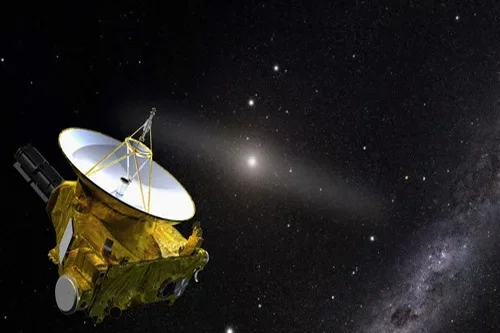
What is Third Generation Tracking and Data Relay Satellite (TDRSS)?
The third Generation Tracking and Data Relay Satellite (TDRSS) is equipped with a range of advanced capabilities, aimed at enhancing space communication to unprecedented levels. The Multiple Access Antenna features 32 receive antenna elements and 15 transmit antenna elements, allowing for efficient and robust communication. Utilizing S-band communications and Left Hand Circular (LHC) polarization, the…
-

What is Space Situational Awareness (SSA)?
Situational awareness in space (SSA) is the knowledge and understanding of position, motion, and properties of objects in space, such as satellites, debris, and other space-based assets. It includes tracking of space objects, forecasting orbits, and evaluating threats and dangers that can affect satellites, spacecrafts, or even Earth. With countless satellites, discarded rocket stages, and…
-

What is First Generation Tracking and Data Relay Satellite (TDRSS)?
The First Generation Tracking and Data Relay Satellite (TDRSS) possess a range of impressive capabilities designed to support seamless communication in space. Its Multiple Access Antenna is equipped with 30 elements, with 12 duplexed for transmit and 30 for receive operations. It facilitates S-band communications with circular polarization in the Left Hand Circular (LHC) orientation.…
-
What is an Atomic Clock?
An atomic clock is a clock that measures time by monitoring the resonant frequency of atoms where each atom that is used has naturally occurring oscillations. For any clock to function efficiently, oscillations produce a steady reproducible beat regularly. Clocks for displaying time predominantly use a quartz crystal that produces a low frequency (32,767 Hz)…
-

What do you mean by Tracking and Data Relay Satellite System (TDRSS)?
The Tracking and Data Relay Satellite System (TDRSS) is a network of geosynchronous satellites maintained by NASA to provide continuous and reliable communication for various space missions. Launched in 1983, TDRSS has been an essential asset in facilitating communication and data relay for numerous space missions, including the Space Shuttle program, the Hubble Space Telescope,…
-

What is NASA-STD-5019 Standard?
NASA-STD-5019 is a space standard developed by the National Aeronautics and Space Administration (NASA) that defines the requirements for designing and operating human spaceflight systems. This standard covers various aspects of crew safety, including environmental control, life support systems, emergency procedures, and crew interfaces. The purpose of NASA-STD-5019 is to ensure that human crews can…
-

What are Space Reflectors?
Space reflectors also known as space mirrors, a form of solar radiation management [SRM], are sun shields positioned in space to reduce the amount of solar energy reaching the earth. Space reflector is an idea that has been in constant development. The earth absorbs up to 70% of the solar rays that are emitted from…
-
NASA’s Electrical, Electronic and Electromechanical (EEE) Parts Selection Standards & Guidelines
NASA provides guidelines to developers, engineers, and manufacturers to choose and manage parts and equipment to facilitate several space explorations and missions. To qualify for certain specific missions, the parts or equipment to be used must be tested and approved by NASA under their specified regulations and instructions. All components used in space must meet the…