
Author: starpathwp-production
-

What are Satellite Transponders?
Satellite transponder provides a communication channel between the transmitting & the receiving antenna on the satellite with the base station on the ground. A transponder performs the function of both the transmitter and the receiver in a satellite. Transponders mainly perform the function of receiving a given signal and then processing, amplifying, and retransmitting the…
-
What is ECSS-E-ST-10 Standard?
ECSS-E-ST-10 is a European space standard that provides a framework for system engineering processes in space projects. It defines the processes, activities, and tasks that are required to develop and verify space systems, including requirements engineering, system architecture, and system integration. The standard applies to all types of space systems, including satellites, launch vehicles, and…
-

What is NASA-STD-1006A Standard?
NASA-STD-1006A also known as the Space System Protection Standard, serves as a comprehensive guideline for protecting space systems against a wide range of potential threats and hazards. The objectives of NASA-STD-1006A are multi-faceted and crucial for ensuring the success and resilience of space missions. Risk Identification and Assessment: This standard aims to identify and assess…
-

What are Satellite Antennas?
Satellite antennas are used to concentrate the satellite’s transmitting power towards a designated geographical region on earth and avoid interference from undesired signals that will deteriorate the overall quality of the signal. Antennas that are used onboard satellites are selected based on the requirements of their physical configurations, expected to have low volume, low cost,…
-
What is Second Generation Tracking and Data Relay Satellite (TDRSS)?
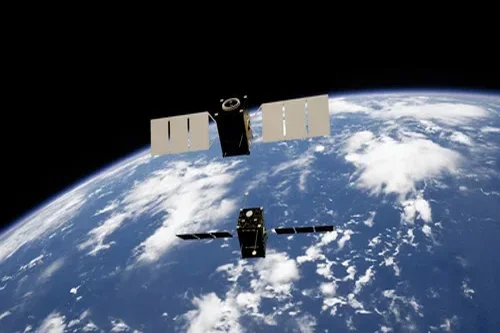
The Second Generation Tracking and Data Relay Satellite (TDRSS) showcases an array of advanced capabilities, designed to elevate space communication to new heights. Its Multiple Access Antenna is equipped with 32 receive antenna elements and 15 transmit antenna elements, enhancing its capacity for efficient communication. Utilizing S-band communications and Left Hand Circular (LHC) polarization, the…
-

What is NASA-STD-4005 Standard?
NASA-STD-4005 is a space standard developed by the National Aeronautics and Space Administration (NASA) that defines the requirements for the design and verification of electronic hardware used in spaceflight applications. This standard covers various aspects of electronic hardware, including design, fabrication, assembly, and testing. The purpose of NASA-STD-4005 is to ensure that electronic hardware used…
-

What are the Different Types of Antenna Mechanisms?
Antenna-pointing mechanisms are used in various applications such as communication with Earth observation satellites, satellite tracking systems, military satellites, and commercial satellites. They are also used in deep space missions, where communication with the spacecraft is necessary. Gimbal Mechanism: The gimbal mechanism consists of two orthogonal rotational axes that allow the antenna to be pointed…
-
What is ISO 14624 Standard?
ISO 14624 is a space standard developed by the International Organization for Standardization (ISO) that provides guidelines for the design, development, and verification of space systems. This standard covers various aspects of space systems, including their design, development, operation, and disposal. The purpose of ISO 14624 is to ensure that space systems are designed, developed, and…
-

What is NASA-STD-8719.17 Standard?
NASA-STD-8719.17 standard is defined by NASA to ensure the integrity and safety of ground-based pressure vessels and pressurized systems (PVS). Its fundamental purpose is to establish a comprehensive framework for the design, construction, inspection, testing, and certification of these vital components. The standard’s aim is to ensure that these pressure systems function optimally, without compromising the…
-

What are the Different Types of Space Standards?
Space standards are guidelines and regulations that define the specifications, dimensions, and requirements for designing and operating equipment, structures, and systems in space. These standards aim to ensure the safety, reliability, and compatibility of space missions and activities, as well as facilitate international cooperation and coordination. There are various space standards developed by different organizations…