
Author: starpathwp-production
-

Technology Transfer and Local Capability Development: Beyond Buying a Satellite
For many countries, purchasing a satellite is not the ultimate objective. The satellite itself is often only the first step in a broader strategy to develop domestic space capabilities, build technical expertise, and establish a sustainable local space industry. As a result, one of the most common questions international customers ask is not simply “Can…
-

Satellite Delivery Timelines and Launch Schedules: What Buyers Should Expect
One of the first questions customers ask after defining their mission requirements is simple: “When can the satellite be delivered and launched?” Whether the project involves Earth observation, communications, scientific research, or national infrastructure development, launch timing often has a direct impact on business plans, operational objectives, and investment returns. For many satellite buyers, the…
-

Data Security and Sovereignty Concerns: What Satellite Buyers Need to Know
For many international satellite customers, technical performance is only part of the purchasing decision. Equally important is a question that often arises early in procurement discussions: who controls the data? Governments, infrastructure operators, research organizations, and commercial satellite owners increasingly view satellite data as a strategic asset. As a result, concerns about data ownership, system…
-

How Can Customers Verify Satellite Reliability?
When purchasing a satellite, customers are not simply buying hardware. They are investing in a long-term space asset that may need to operate reliably for five, ten, or even fifteen years. As a result, one of the most common questions international satellite buyers ask is: “How can we verify that this satellite will actually perform…
-

Export Compliance and Satellite Data Regulations: What International Satellite Buyers Need to Know
For many international satellite buyers, one of the first questions is not about payload performance, imaging resolution, or launch vehicles. Instead, it is whether the satellite, technology, and data can be legally exported, transferred, and operated without creating future regulatory risks. In fact, export compliance is often one of the earliest topics raised during discussions…
-

Kratos Lands Roughly $100 Million Sole-Source Space Domain Awareness Contract
The company said its Ground Based Modular System had recently demonstrated mission effectiveness. The announcement implies that demonstrated performance was a factor in the decision to award the work on a sole-source basis, a designation reserved for cases where the government determines only one supplier can meet the requirement. Kratos, traded on NASDAQ under the…
-
Voyager Closes $291 Million Astrobotic Deal, Rebrands It Voyager Lunar Systems
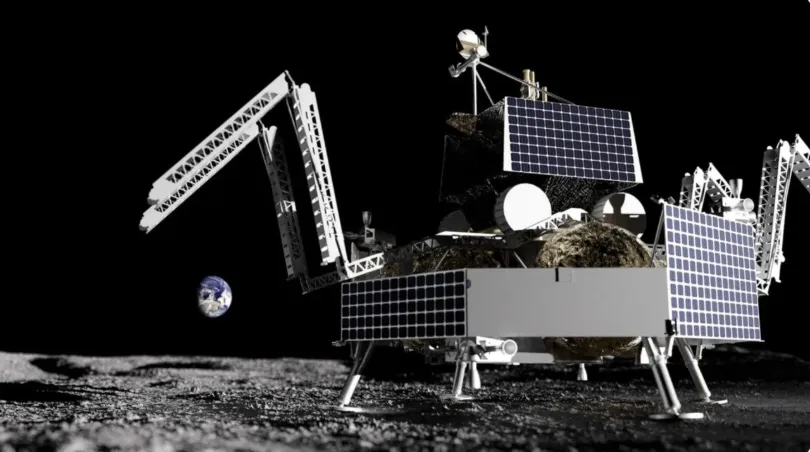
The acquisition, first announced in early June, values Astrobotic at $162 million in cash and stock, but the deal also includes an additional $129 million in earnout payments contingent on meeting performance milestones, bringing the total consideration to just shy of $300 million. The closing follows a busy stretch for Astrobotic. The company shipped its…
-
FCC Clears Reflect Orbital’s First Space Mirror, Leaves Impact Questions Unanswered
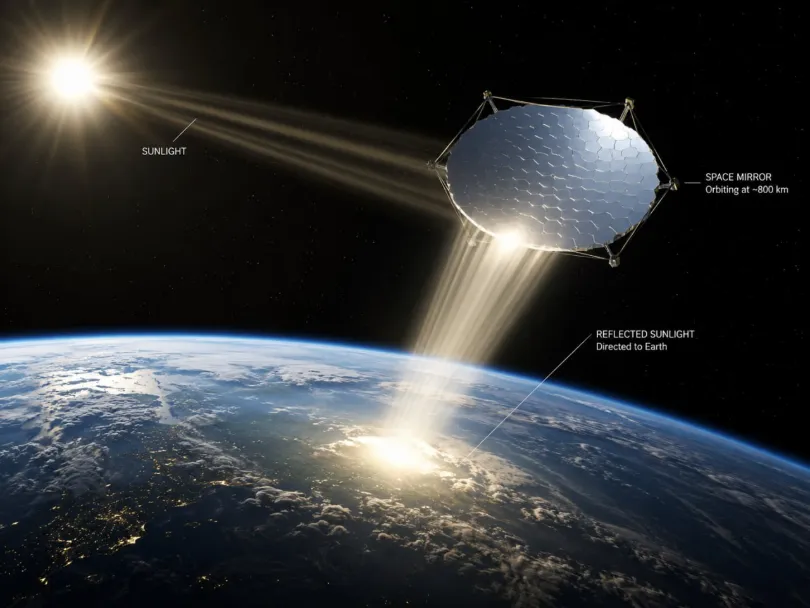
Reflect Orbital is attempting to provide on-demand sunlight using in-space mirrors, and the demo flight will test its core hardware, an 18 meter film reflector designed to redirect sunlight down to the surface. The mission and the company’s broader plan to launch a constellation of 50,000 additional mirrors have drawn opposition from astronomers, who argue…
-

The Implications of Dual-Use for Protecting Space Assets
For many years Europe organized space around clear distinctions. Civil programs were separated from defense. Commercial companies served institutional customers. Governments developed sovereign capabilities while industry provided technology and services. The concept of dual-use existed, but it remained politically uncomfortable. The separation itself was often seen as a strength. Today, that separation is becoming increasingly…
-

Reflect Orbital Clears FCC for First Space Mirror Launch
Is Reflect Orbital’s Space Mirror Constellation Legal to Launch? California-based startup Reflect Orbital has received a license from the U.S. Federal Communications Commission (FCC) to launch and operate its first demonstration satellite, Eärendil-1 — a spacecraft designed to unfurl a reflective surface measuring approximately 18 meters (60 feet) on a side. The license, announced July…