
Tag: Astronomy
-
Astronomers’ latest analysis turns ‘alien megastructure’ star into a triple mystery
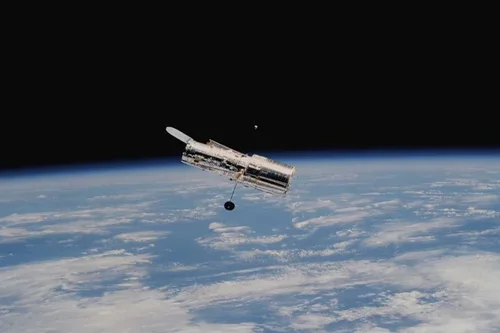
This illustration shows a star behind a shattered comet. Astronomers say it’s possible that such a phenomenon could explain some aspects of the dimming pattern for a mysterious star called KIC 8462852, but not all aspects. (Credit: NASA / JPL-Caltech) It’s been almost a year since astronomers first speculated that a strangely dimming star called…
-
Scientists explain how a giant impact created Mars’ past and present moons
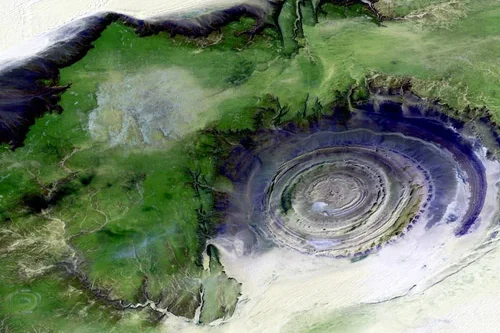
An artist’s conception shows the collision of Mars with another celestial object. The scenario could have given rise to a debris disk, and eventually to Mars’ two present-day moons. (Copyright 2016 Labex UnivEarthS) Are Mars’ two moons asteroids that were captured by the Red Planet’s gravitational field, or are they the result of an ancient…
-

Youngest planet spotted around alien star
An artist’s conception shows the planet K2-33b crossing the disk of its parent star. (Credi: NASA / JPL-Caltech) Scientists say they’ve detected a giant planet circling a star that’s only 5 million to 10 million years old, which would make it the youngest exoplanet ever identified. The super-Neptune-sized planet traces a super-close-in orbit, making a complete swing…
-

Most of us can’t see the Milky Way – this dark sky atlas shows you where you can
A Google Earth visualization shows the effect of light pollution on night-sky viewing in North America. Darker colors indicate lower light pollution, while warmer colors indicate higher levels. (Credit: Falchi et al., Science Advances; Jakob Grothe / NPS; Matthew Price / CU-Boulder) Eighty percent of Americans can’t see the Milky Way from where they live,…
-
Holy Hubble! See a super-sized Mars get bigger than it’s looked for a decade
This image of Mars was captured on May 12 by the Hubble Space Telescope’s Wide Field Camera 3 and UVIS. Click on the image for an annotated view. (Credit: NASA, / ESA / STScI / AURA / J. Bell / ASU / M. Wolff / STScI) For the next couple of weeks, Mars will look…
-

Transit of Mercury: How you can watch an astronomical rarity despite the clouds
A multiple-exposure photo shows Mercury as a speck making its way across the sun’s disk. (Credit: NASA) For the first time in a decade, we Earthlings can watch the planet Mercury’s black speck pass across the sun today – even in Seattle, where the skies are partly cloudy at best. “This is one of the…
-

Hubble bubble! Nebula shines on birthday card for 26-year-old space telescope
The Bubble Nebula, also known as NGC 7653, is an emission nebula located 8,000 light-years away in the constellation Cassiopeia. (Credit: NASA / ESA / Hubble Heritage Team) It’s been 26 years since the Hubble Space Telescope was launched into orbit, but the Bubble Nebula picture unveiled to mark its birthday would make the great…
-

Watch this week’s total solar eclipse online – and get set for 2017’s big one
The sun’s corona gleams during a total solar eclipse seen from the northern tip of Australia in November 2012. (Credit: Romeo Durscher via NASA) This week’s total solar eclipse is a bad-news, good-news, even-better-news situation for skywatchers in the United States. Solar eclipses are must-see astronomical events that occur when the moon is positioned just…
-
Far out! Hubble astronomers set record for spotting most distant galaxy (again)
This image locates galaxy GN-z11 in the northern hemisphere field of the Hubble GOODS survey, which takes in tens of thousands of galaxies stretching far back into time. GN-z11, shown in the inset, is seen as it was 13.4 billion years in the past, just 400 million years after the big bang, when the universe…
-
NASA finishes huge mirror for James Webb Space Telescope, due for 2018 liftoff
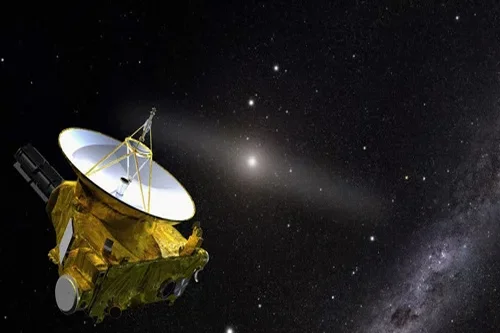
The James Webb Space Telescope’s 18 mirrors are fully installed. (Credit: Chris Gunn / NASA) NASA has put the 18th and final piece of the puzzle into place for the $8.8 billion James Webb Space Telescope’s primary mirror – marking a major milestone on the way to the observatory’s launch in 2018. The 21.3-foot-wide mirror is…