
Tag: Astronomy
-
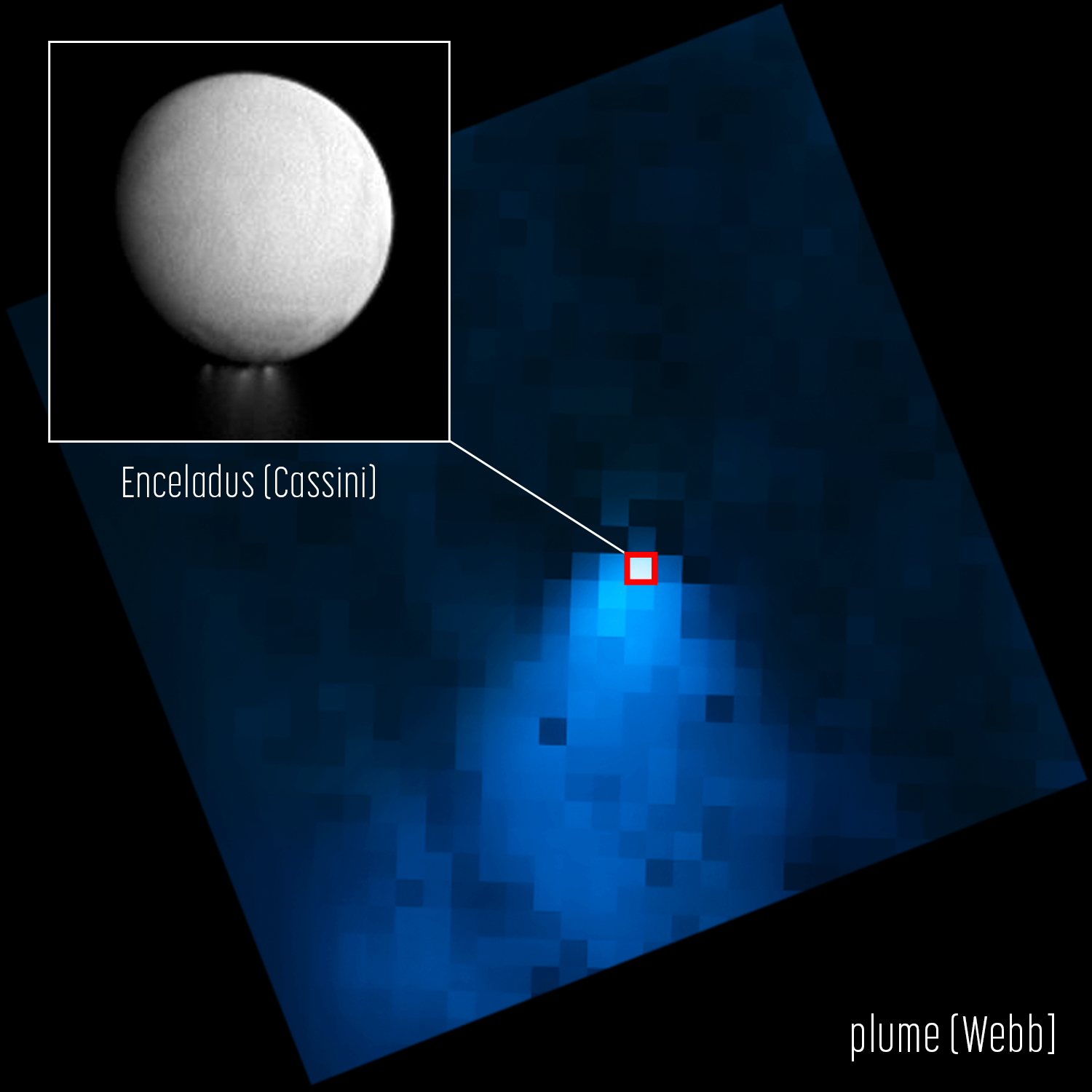
Megaplume of water vapor erupting on Enceladus caught by Webb Telescope
Enceladus, a frozen moon orbiting Saturn, has caught the interest of scientists because of the plumes of water vapor that erupt from its icy crust, which are possible evidence for a subsurface ocean. And an ocean means it has the potential for life (at least life as we know it). Now NASA’s James Webb Space…
-
As megaconstellations grow, scientists become concerned with their impacts on astronomy
Since their initial launch in 2019, SpaceX’s Starlink internet satellites have become infamous for photobombing observations from ground-based telescopes. While Starlink — along with other satellite “megaconstellations” — has been a primary concern for ground-based telescope observations, a new issue has begun to pop up; the satellites are now occasionally obstructing images from one of…
-
Japanese space science missions facing delays after H3 rocket failure
The spacecraft for the Japanese-led X-ray Imaging and Spectroscopy Mission, or XRISM, undergoes acoustic testing in Japan in December 2022. Credit: JAXA The launch of a Japanese X-ray telescope and robotic lunar lander has been delayed to no earlier than August, and the launch schedule for another Japanese mission to return samples from a moon…
-
Webb telescope sees the prelude to a supernova
The luminous, hot star Wolf-Rayet 124 (WR 124) is prominent at the center of the James Webb Space Telescope’s composite image combining near-infrared and mid-infrared wavelengths of light from Webb’s Near-Infrared Camera and Mid-Infrared Instrument. Credits: NASA, ESA, CSA, STScI, Webb ERO Production Team A new image from the James Webb Space Telescope shows a rare…
-
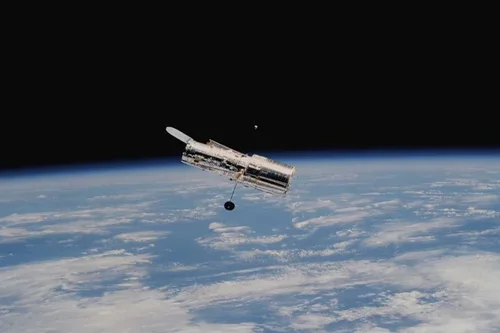
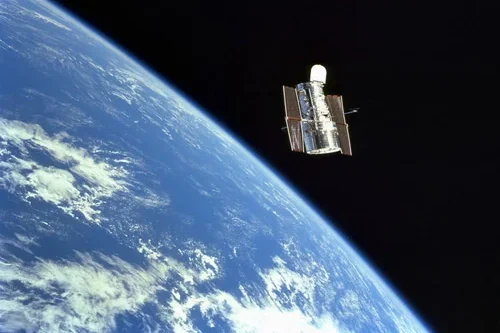
Study highlights concerns over satellite interference with Hubble observations
A raw Hubble image shows a satellite streak. (NASA / ESA / STScI / Kruk et al. / Nature) An analysis of more than 100,000 images from the Hubble Space Telescope, conducted with the aid of artificial intelligence and hundreds of human volunteers, confirms that satellites including SpaceX’s Starlink spacecraft are increasingly interfering with astronomical…
-
Fireball lights up the skies over Seattle
Corey Clarke’s webcam captured the flash of a meteor. (Courtesy of Corey Clarke via Twitter) It’s cool to see a fireball — but even cooler to capture it on video. At least that’s the way Seattle engineer/photographer Corey Clarke sees it. Clarke’s webcam happened to be pointing in the right direction to record the fireball’s…
-
NASA’s Webb Space Telescope scores big at America’s premier astronomy meeting
NASA’s James Webb Space Telescope captured this infrared view of NGC 346, a dynamic star cluster that lies within a nebula 200,000 light-years away. Science credit: NASA, ESA, CSA, Olivia C. Jones (UK ATC), Guido De Marchi (ESTEC), Margaret Meixner (USRA). Image processing: Alyssa Pagan (STScI), Nolan Habel (USRA), Laura Lenkić (USRA), Laurie E. U.…
-
Astronomers witness unprecedented corona formation, evolution around black hole
With help from NASA’s Nuclear Spectroscopic Telescopic Array (NuSTAR) X-ray telescope, a group of researchers recently bore unusually close witness to the formation and evolution of an unexpected corona around a supermassive black hole as it destroyed a star that had passed too close to it. The event, located 250 million light years from Earth,…
-
With Hubble and Spitzer, researchers discover water-filled exoplanets
Using data from NASA’s Hubble Space Telescope and retired Spitzer Space Telescope, a group of researchers has discovered two exoplanets that may be largely comprised of water. Located around a red dwarf star 218 light-years away, the two planets are low in density. Furthermore, the researchers, led by Caroline Piaulet of the Trottier Institute for…
-
Total lunar eclipse could be tricky to watch in the sky — but it’s sure to shine online
This graphic shows the phases of the Nov. 8 total lunar eclipse in Pacific Time. (NASA / GSFC SVS) If you’re on the West Coast, watching tonight’s total lunar eclipse will require a willingness to stay awake in the middle of the night — plus a lucky break on the weather. But maybe it’s worth…