
Tag: Astrophysics
-

Scientists, using Webb, discover water vapor within a planet-forming disk
Using the joint NASA/European Space Agency/Canadian Space Agency James Webb Space Telescope, a team of scientists has discovered, for the first time, water vapor within a planet-forming disk. The water vapor, which was found within the inner disk of two circumstellar disks around star PDS 70, is allowing scientists to research the ways by which…
-
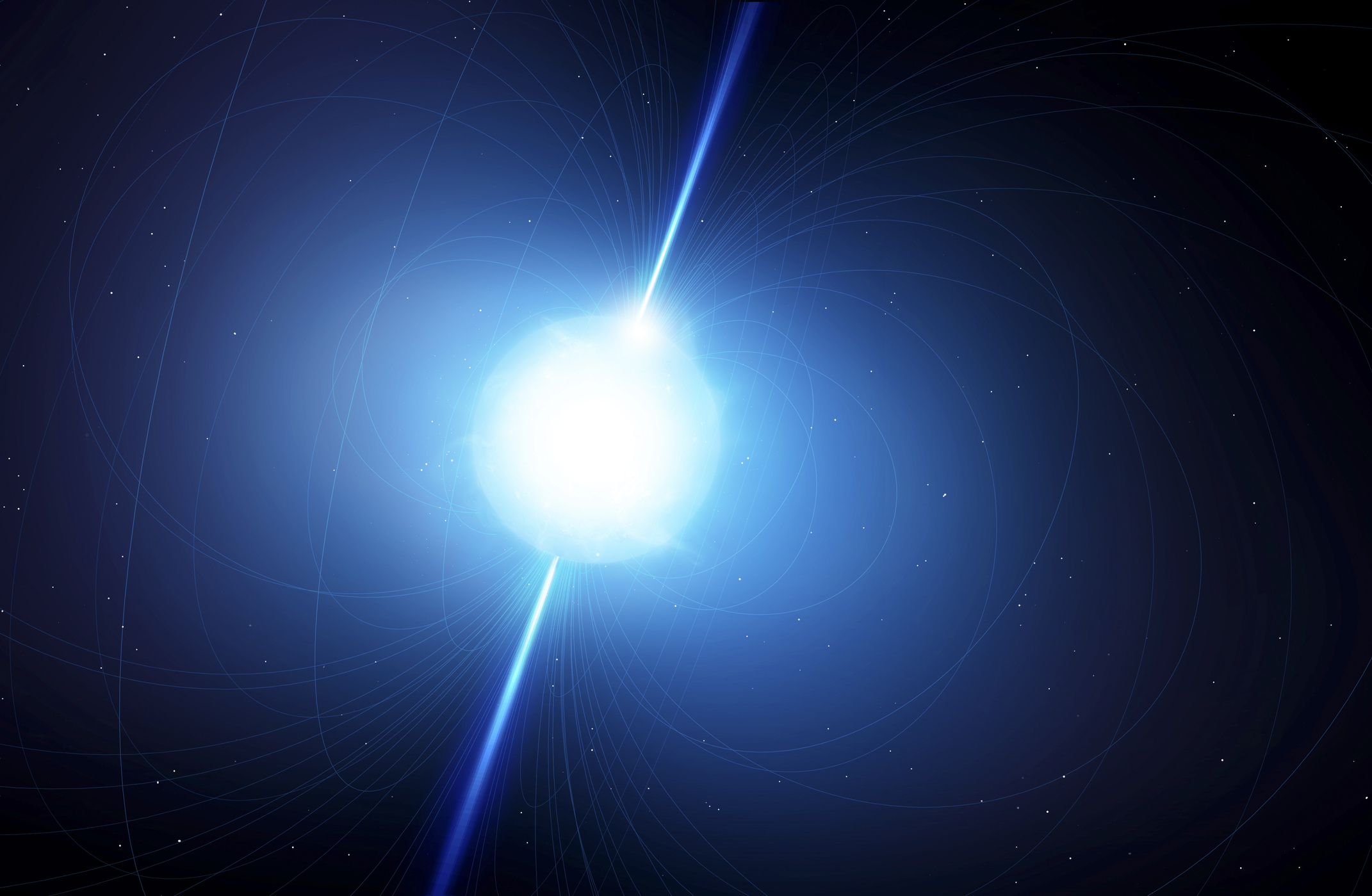
Something in space has been lighting up every 20 minutes since 1988
On Wednesday, researchers announced the discovery of a new astronomical enigma. The new object, GPM J1839–10, behaves a bit like a pulsar, sending out regular bursts of radio energy. But the physics that drives pulsars means that they’d stop emitting if they slowed down too much, and almost every pulsar we know of blinks at…
-
SpaceX launches ESA’s Euclid Telescope to explore the dark universe
SpaceX launched its 45th mission of the year, carrying the Euclid telescope from the European Space Agency (ESA). Liftoff was Saturday, July 1, at 11:12 AM EDT (15:12 UTC) from Space Launch Complex 40 (SLC-40) in Florida. ESA’s Euclid will observe a large portion of the sky and deep into the past of the universe…
-

With Webb, scientists make first detection of carbon molecule in protoplanetary disk
With new data collected by the joint NASA/European Space Agency/Canadian Space Agency James Webb Space Telescope, an international team of scientists has — for the first time ever — detected a carbon molecule within the protoplanetary disk of a star located in the Orion Nebula. The molecule, called methyl cation (CH3+), is quite unique. The…
-
Webb unveils the secrets of the early universe via deep field, peers into stellar nurseries
With help from the joint NASA/European Space Agency/Canadian Space Agency James Webb Space Telescope (JWST), scientists are peering deep into the universe and uncovering secrets that were previously hidden from visible and X-ray telescopes. The JWST advanced deep extragalactic survey (JADES) utilized Webb’s incredible deep-field surveying abilities to create a deep field that shows over…
-
Webb directly images young star’s asteroid belt; discovers two additional dusty disks
Using the joint NASA/ESA/CSA James Webb Space Telescope, a group of astronomers has directly imaged three dusty disks — the outermost being an asteroid belt — surrounding a young star. The outermost of the disks was first discovered by NASA’s Infrared Astronomical Satellite in 1983 and has since been imaged in detail by the Hubble…
-
With help from NEOWISE, astronomers observe giant star destroying planet for the first time
Using the California Institute of Technology’s (Caltech) Zwicky Transient Facility (ZTF) and NASA’s Near-Earth Object Wide Field Infrared Survey Explorer (NEOWISE) observatory, a group of scientists has observed an aging star destroying a planet within its own star system for the first time. Astronomers have long believed that such a phenomenon occurred in red giant…
-
Using JWST, scientists observe silicate clouds and measure the temperature of exoplanets
With help from the joint NASA/ESA/CSA James Webb Space Telescope, two teams of scientists have made groundbreaking, first-of-their-kind discoveries on two exoplanets. One team utilized the immense power of Webb’s Mid-Infrared Instrument (MIRI) and Near-Infrared Spectrograph (NIRSpec) instruments to observe and characterize clouds and molecules in the atmosphere of an exoplanet located 40 light-years away.…
-
Webb telescope sees the prelude to a supernova
The luminous, hot star Wolf-Rayet 124 (WR 124) is prominent at the center of the James Webb Space Telescope’s composite image combining near-infrared and mid-infrared wavelengths of light from Webb’s Near-Infrared Camera and Mid-Infrared Instrument. Credits: NASA, ESA, CSA, STScI, Webb ERO Production Team A new image from the James Webb Space Telescope shows a rare…
-
Using Hubble, researchers measure the mass of a single white dwarf for the first time
Of the trillions of stars scattered throughout the universe, one of the most common are the white dwarfs, which are the dormant, burned out, and leftover cores of low/medium mass stars. For decades, scientists have only measured the masses of white dwarfs within binary star systems. While these measurements provide insight into the true masses…