
Tag: Astrophysics
-
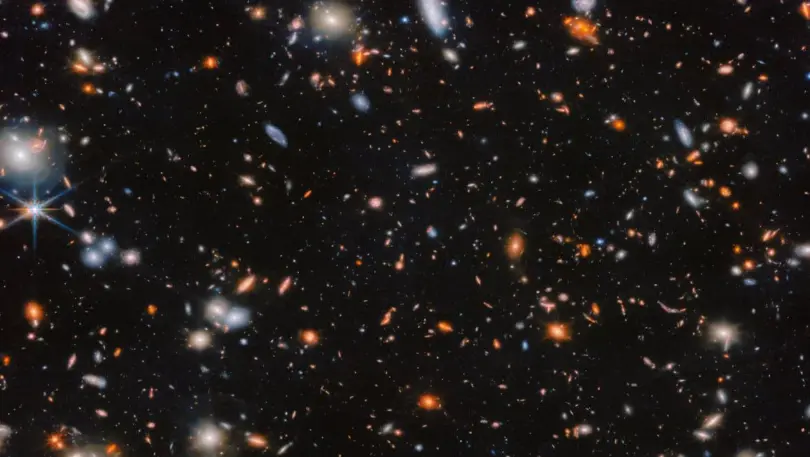
Webb discovers rapidly growing black hole in the very early universe
Using the joint NASA/European Space Agency/Canadian Space Agency James Webb Space Telescope, a group of astronomers has discovered a supermassive black hole within the distant galaxy CANUCS-LRD-z8.6. The galaxy is among the farthest ever observed, with Webb imaging it as it was just 570 million years after the Big Bang. CANUCS-LRD-z8.6 is a part of…
-
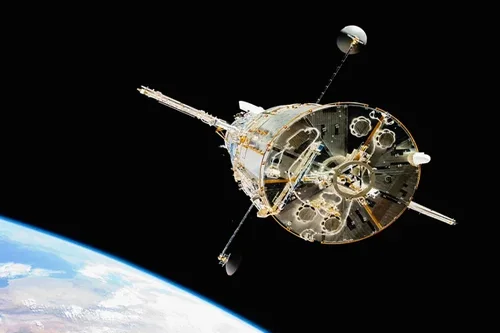
Wide-field surveys versus precise infrared observations: how Rubin compares to JWST
Earlier this year, the new Vera C. Rubin Observatory in Chile officially began scientific operations, becoming the world’s largest and most advanced ground-based telescope. Featuring an eight-meter primary mirror and the world’s largest camera, Rubin promises to deliver exceptional new results and astrophysical research opportunities for scientists worldwide. Meanwhile, situated at the L2 Lagrange point…
-
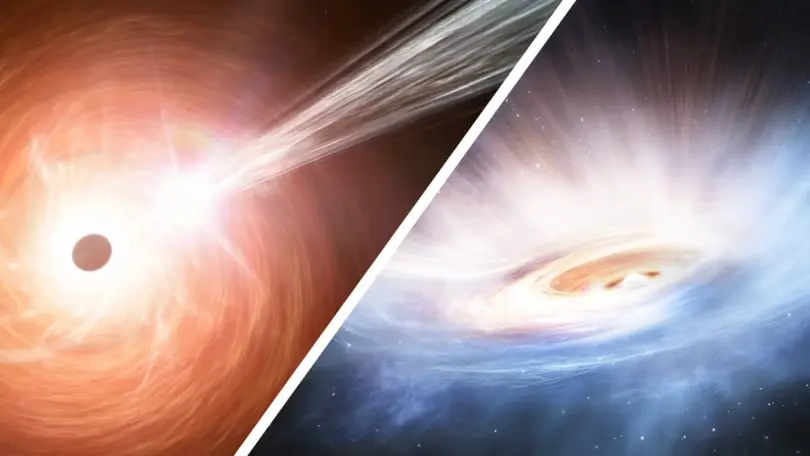
XRISM observes windy neutron star, Chandra studies a luminous quasar
Using the joint Japan Aerospace Exploration Agency (JAXA), European Space Agency (ESA), and NASA X-Ray Imaging and Spectroscopy Mission (XRISM), scientists uncovered a dense but surprisingly slow wind coming from a neutron star. The finding sheds new light on similar winds blowing from material surrounding supermassive black holes. Another team used NASA’s Chandra X-ray Observatory…
-

ESO’s VLT reveals inner wind layers of distant exoplanet
Using data from the four telescopic units of the European Southern Observatory’s (ESO) Very Large Telescope (VLT), a team of scientists has successfully peered into the atmosphere of an exoplanet for the first time. Moreover, the data allowed the team to create a three-dimensional map of the atmosphere. The results showed powerful winds within the…
-
Euclid reveals an Einstein ring around a nearby galaxy
Using the European Space Agency’s Euclid space telescope, astronomers have accidentally found a complete Einstein ring around a nearby galaxy known as NGC 6505. This optical effect shows a distorted image of a far-away galaxy as a ring around a separate galaxy in the foreground. NGC 6505’s proximity to Earth and the completeness of its…
-

Space science in 2024: Moon missions, Martian milestones, astrophysics discoveries, and more
2024 was another busy year for space science, with many new missions, successes, and discoveries across the solar system and beyond. Three new missions were launched to the Moon, while one mission was canceled, and Curiosity and Perseverance continued to explore and make discoveries in their respective regions on Mars. Beyond the Earth-Moon system and…
-

Astronomers use Hubble to discover rare intermediate-mass black hole in Omega Centauri
Using the joint NASA and European Space Agency (ESA) Hubble Space Telescope in low-Earth orbit, an international team of astronomers has discovered a rare black hole within Omega Centauri — the largest and brightest known globular cluster in the Milky Way. Globular clusters are large collections of stars and other cosmic material that can span…
-

Spitzer gives scientists insights into black hole eating habits
Using data from NASA’s retired Spitzer Space Telescope, scientists have gained new insights into the eating habits of supermassive black holes at the centers of galaxies throughout the universe. These black holes often fluctuate in brightness from the massive clumps of cosmic material falling into them. However, this is not true for the black holes…
-

Event Horizon Telescope reveals magnetic fields around the Milky Way’s central black hole
Astronomers from the Event Horizon Telescope (EHT) collaboration have found strong magnetic fields spiraling around the supermassive black hole at the center of our galaxy, named Sagittarius A* (Sgr A*). In 2022, the EHT Collaboration released the first image of Sgr A*, revealing that it looked very similar to the much larger black hole at…
-
ESA reveals Euclid’s first five images
The European Space Agency (ESA) has released the first full-color images from Euclid, the agency’s latest space telescope designed to study the nature and distribution of dark matter and dark energy in the universe. During a video broadcast on Nov. 7, scientists, engineers, and agency officials unveiled the telescope’s first five images. The images reveal…