
Tag: CSA
-

Canada’s Contribution to Space: A Look at Canadian Satellites
Many countries contribute to space with satellites, but how many Canadian satellites exist? Canada has a long history of satellite technology and space research, including the development of the Canadarm, a remote-controlled robotic arm which deployed, captured and repaired satellites, positioned astronauts, maintained equipment, and moved cargo. The Canadian Space Agency (CSA) has played a…
-
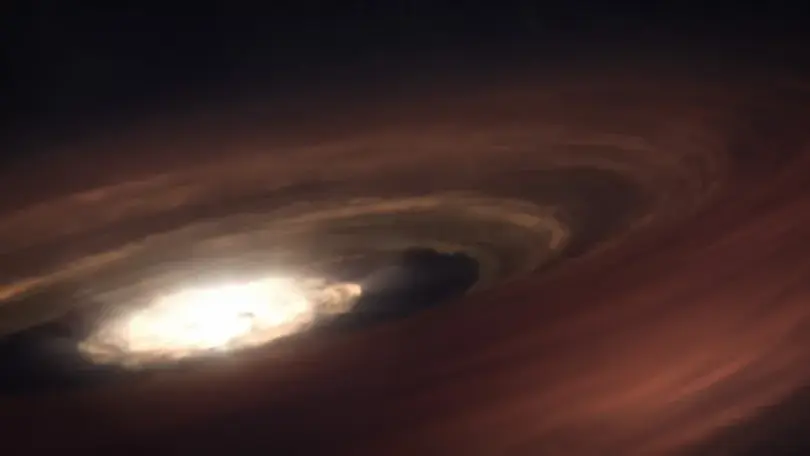
Webb detects neon in young star system, provides insight into planet formation
In 2008, observations from NASA’s now-retired Spitzer infrared space telescope hinted at the presence of neon within the protoplanetary disk of Sun-like star SZ Chamaeleontis (SZ Cha). However, Spitzer’s instruments could not confirm whether this reading was correct. Over a decade after Spitzer’s results were published, the joint NASA, European Space Agency, and Canadian Space…
-
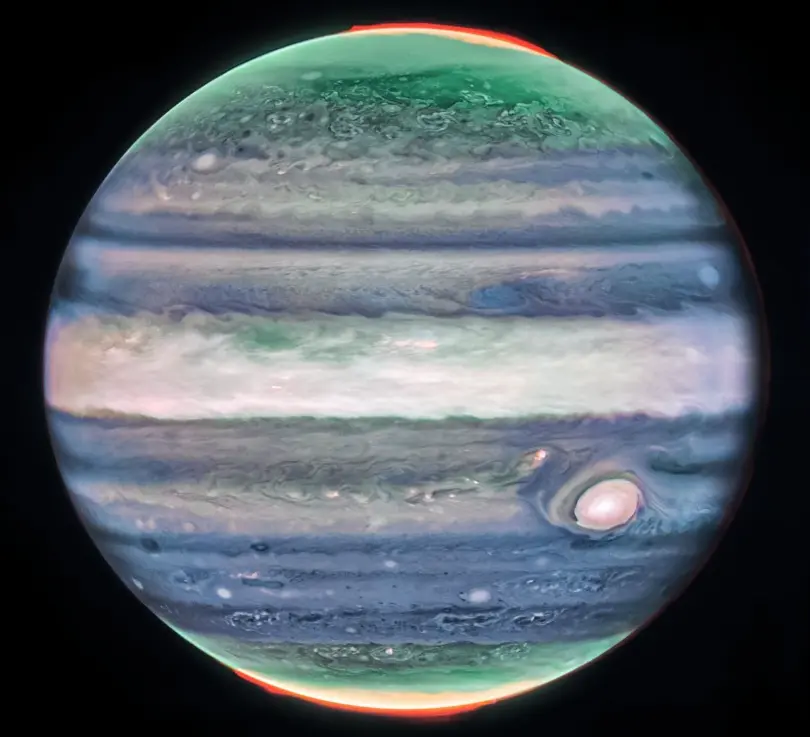
Using Webb, scientists measure high-speed jet stream in Jupiter’s atmosphere
Scientists recently discovered a high-speed jet stream at Jupiter’s equator using the joint NASA/European Space Agency/Canadian Space Agency James Webb Space Telescope. Webb’s images helped the team of scientists track fine details through the planet’s atmosphere, allowing them to measure these winds for the first time. The newly discovered jet stream will provide scientists with…
-
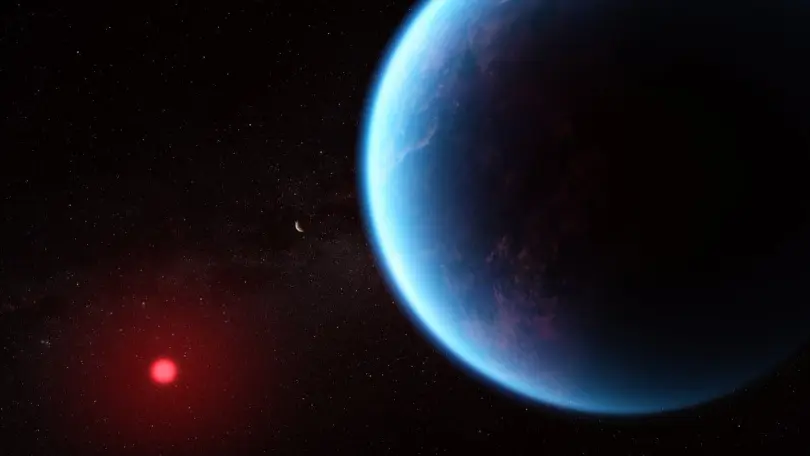
Using Webb, scientists discover carbon dioxide and methane in habitable-zone exoplanet
Using the joint NASA/European Space Agency/Canadian Space Agency James Webb Space Telescope, scientists have discovered the presence of carbon-bearing molecules within the atmosphere of exoplanet K2-18 b. Methane and carbon dioxide are among these carbon-bearing molecules. The discovery of the molecules is allowing scientists to better understand K2-18 b. The planet has been the subject…
-
Using Webb, scientists discover the most distant active supermassive black hole
Utilizing the infrared-sensitive instruments of the joint NASA/European Space Agency (ESA)/Canadian Space Agency (CSA) James Webb Space Telescope, a group of scientists has discovered the most distant active supermassive black hole to date. Located within a galaxy named CEERS 1019 — that existed just 570 million years after the formation of the universe — the…
-
EGS launch team looking forward to working with Artemis II crew
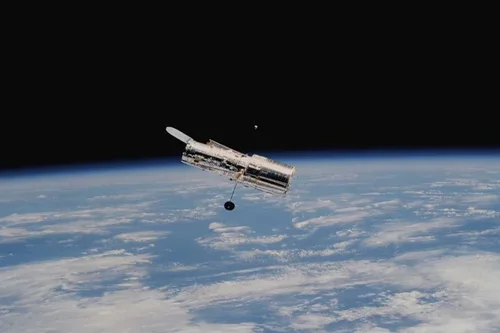
NASA Exploration Ground Systems (EGS) have been preparing and planning for the Artemis II launch since before the flight crew was announced on April 3. Teams at the Kennedy Space Center (KSC) in Florida are looking forward to working closely with the four astronauts who will be the first to fly to the Moon in…
-
Using JWST, scientists observe silicate clouds and measure the temperature of exoplanets
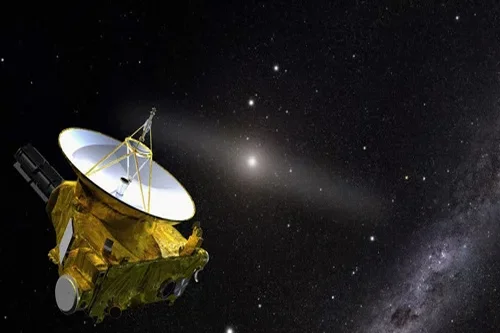
With help from the joint NASA/ESA/CSA James Webb Space Telescope, two teams of scientists have made groundbreaking, first-of-their-kind discoveries on two exoplanets. One team utilized the immense power of Webb’s Mid-Infrared Instrument (MIRI) and Near-Infrared Spectrograph (NIRSpec) instruments to observe and characterize clouds and molecules in the atmosphere of an exoplanet located 40 light-years away.…
-
SpaceX launches SWOT ocean research mission
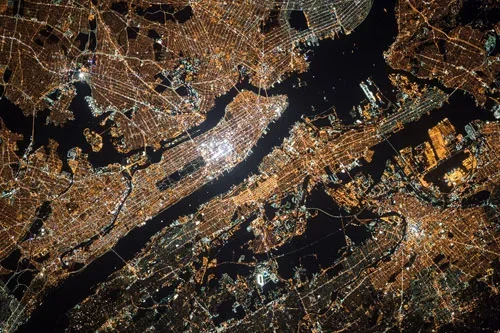
SpaceX’s Falcon 9 launched the joint NASA/CNES Surface Water and Ocean Topography satellite mission from Space Launch Complex 4E at Vandenberg Space Force Base at 3:46 AM PST (11:46 UTC) on Friday, Dec. 16, after a 24-hour delay to allow teams to complete further data review and analysis after moisture was identified in two of…
-
MDA sees Canadarm3 commercial spinoff success in robotic partnership with Lockheed Martin, General Motors
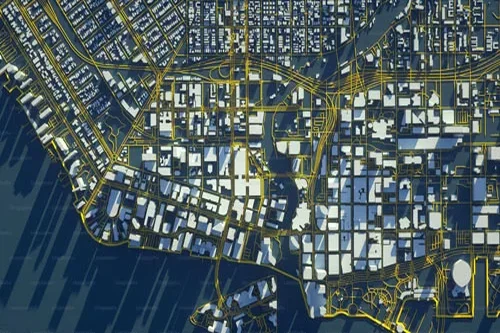
With over 21 years of service onboard the International Space Station, Canadarm2, along with Dextre and the OBSS (Orbiter Boom Sensor System), has served as a mission-critical tool in support of the construction of the orbital outpost and its ongoing maintenance. The robotic crew also serves as testbeds for innovative concepts to enable future space…
-
ISS in February: crew prepares for March arrivals, maintains science experiments, systems
The International Space Station (ISS) has emerged from the month of February 2022 on shakier ground than when it entered the month from a geopolitical standpoint based on events taking place 425 kilometers below it. Even with escalating tensions leading to the invasion of Ukraine, the month of February saw progress in the scientific experiments…