
Tag: ESA
-
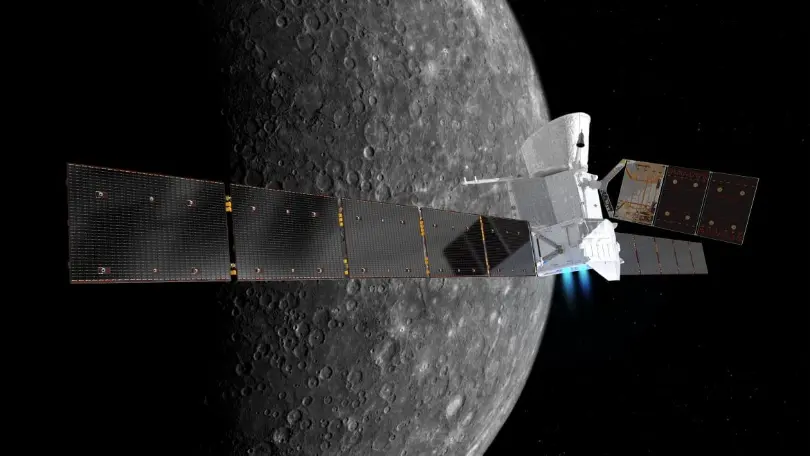
BepiColombo’s fifth flyby of Mercury reveals planet’s surface in mid-infrared light
The European Space Agency’s BepiColombo spacecraft recently performed its fifth flyby of Mercury on Dec. 1, becoming the first spacecraft ever to observe the planet in mid-infrared light. BepiColombo’s observations from the flyby have revealed interesting new details on the Mercury’s surface, including temperature and composition variations. BepiColombo is only the third mission to visit…
-
ESA workers face a maze of non-compete clauses and service contracts
A system of non-competition clauses enforced by the European Space Agency’s (ESA) workforce suppliers is allegedly trapping aerospace professionals who work at ESA’s facilities across Europe in a professional dead-end street. Their contracts prevent job mobility and the possibility to earn better pay, a large number of contractors have alleged to Ars Technica. And as…
-

India to launch Eurpope’s Proba-3 spacecraft pair to study the Sun, demonstrate tandem maneuvering in orbit
Artist’s view of Proba-3 on an ISRO PSLV-XL launch vehicle. Graphic: P. Carril/ESA Update 5:46 a.m. EST (1046 UTC): The launch was delayed a day due to a “technical issue in the Proba-3 spacecraft,” per ESA. The European Space Agency is preparing to launch two missions on Wednesday, half a world and half a day…
-
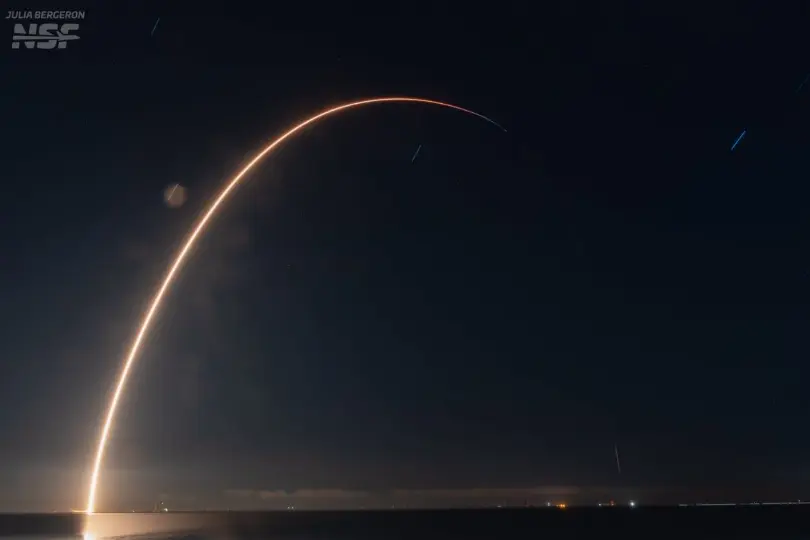
Launch Roundup: Sentinel 1C and PROBA 3 among ten planned launches
This week is busy in spaceflight, with 10 orbital launches planned throughout the week. China has, as expected, continued its launch cadence from last week with three more launches this week. SpaceX planned to launch five Falcon 9 missions in five days with the launches of four Starlink missions and one customer payload but has…
-

Vega-C return to flight launch slips a day to allow for ‘further precautionary checks’
Copernicus Sentinel-1C standing proud on its payload adapter between the two fairing halves that will protect the spacecraft on the launch pad and on its ascent towards space. Sentinel-1C, the third satellite in the Copernicus Sentinel-1 mission, is set to launch in December 2024 on a Vega-C rocket from Europe’s Spaceport in French Guiana. Image:…
-
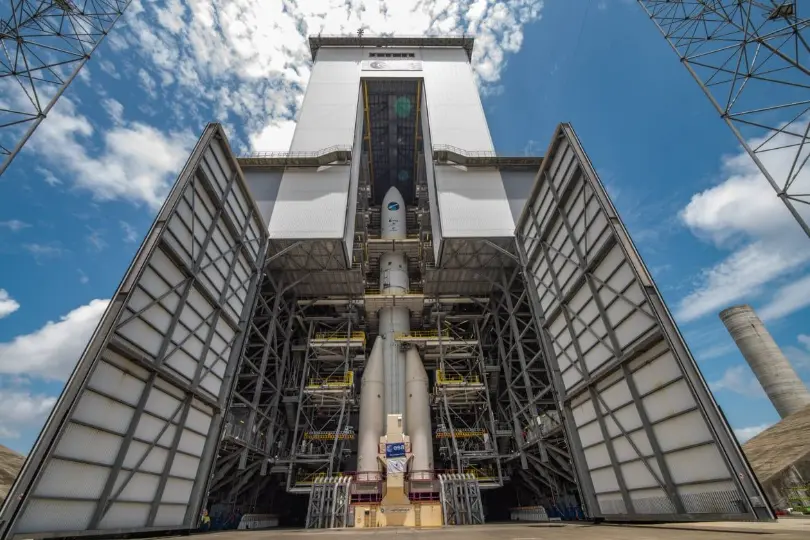
European Space Agency and Arianespace at a crossroads
The European Space Agency (ESA) faces a crossroads as it works to prepare flights of the Vega-C and Ariane 6 as early as this December. While technicians in Europe and French Guiana are preparing these rockets and their payloads for flight, ESA and Arianespace are grappling with major changes in the space launch industry over…
-

ESA’s Hera spacecraft launches on SpaceX’s Falcon 9 rocket as Hurricane Milton takes aim at Florida
An artist’s rendering of the Hera spacecraft along with CubeSats Milani and Juventas around the asteroid, Dimorphous. Graphic: ESA The European Space Agency and SpaceX managed to find good enough weather right in the nick of time to launch a mission to a binary asteroid Monday morning. The Hera mission is a follow-on operation, which…
-

ESA’s Hera mission launched to asteroid binary as Falcon 9 returns to flight
The European Space Agency’s (ESA) Hera mission, which is traveling to asteroid Didymos and its moon Dimorphos as a follow-up to NASA’s Double Asteroid Redirection Test (DART) mission, beat weather odds and successfully launched atop a SpaceX Falcon 9 rocket. This flight, the 95th Falcon flight of 2024, was the first Falcon 9 mission to…
-
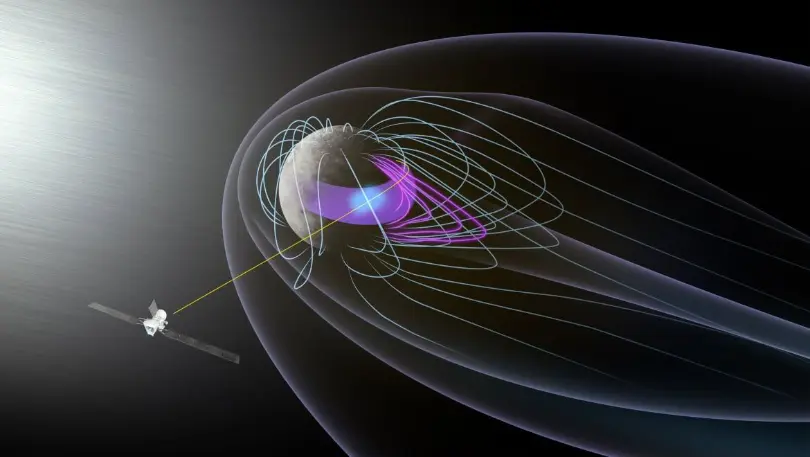
Scientists use data from BepiColombo flyby to discover features within Mercury’s magnetosphere
In June 2023, the joint European Space Agency (ESA) and Japanese Aerospace Exploration Agency (JAXA) BepiColombo mission performed a flyby of its target planet — Mercury. During the flyby, the spacecraft experienced a variety of phenomena mainly caused by the planet’s magnetic field. BepiColombo measured these phenomena, providing scientists with a preview of Mercury’s magnetic…
-

ESA’s Hera mission progresses towards launch pending Falcon 9 readiness
An artist’s rendering of the Hera spacecraft alongside the CubeSats, Juventas and Milani. Graphic: ESA The European Space Agency is on the cusp of launching its first planetary defense mission, a complement to NASA’s 2022 Double Asteroid Redirection Test (DART) mission. The goal of these missions is to understand how Earth can be protected from…