
Tag: ESA
-
Launch Roundup: Vulcan takes second flight; Hera mission set to study asteroid
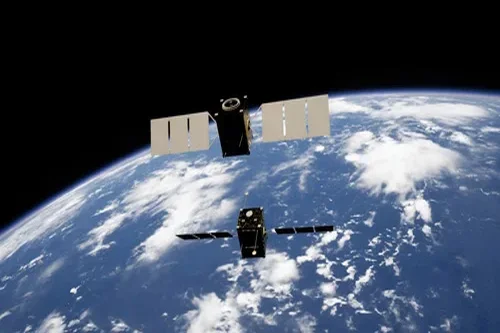
The United Launch Alliance (ULA) has launched its Vulcan Centaur rocket for the second time. The successful, if dramatic, mission saw Vulcan carry an inert payload to orbit alongside some experiments and demonstrations and should complete its certification process with the U.S. Space Force (USSF). SpaceX has delayed missions this week following an off-nominal deorbit…
-
NASA and ESA missions unexpectedly collaborate to reveal what accelerates solar winds
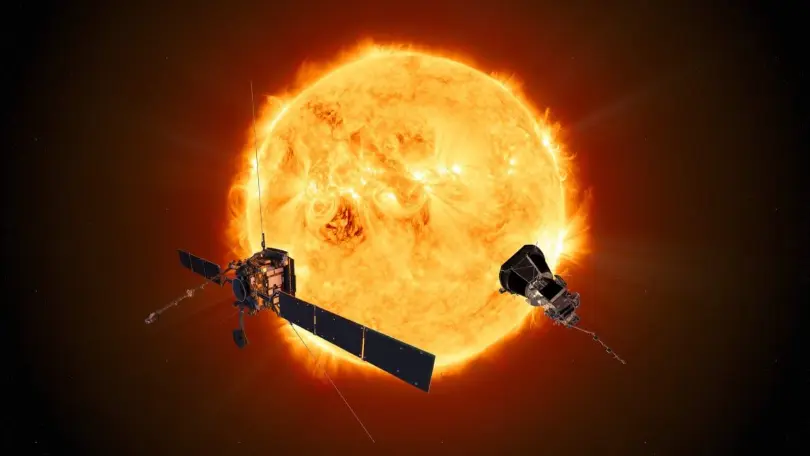
As the solar wind moves away from the Sun, it cools slower than expected and accelerates. Where the energy that powers this phenomenon comes from has long been unknown. NASA’s Parker Solar Probe and the European Space Agency’s (ESA) Solar Orbiter, when they coincidentally lined up to observe the same solar wind stream, provided scientists…
-
ESA completes swan song of its Vega rocket with Sentinel-2C launch
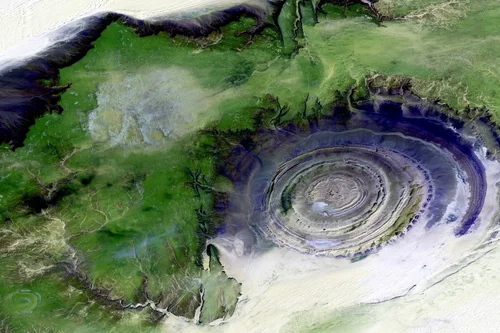
Sentinel-2 in the Vega launch tower. Image: ESA-CNES-ARIANESPACE/Optique vidéo du CSG–T. Leduc Update 10:52 p.m. EDT: Arianespace confirmed successful deployment of the Sentinel-2C spacecraft. The European Space Agency (ESA) completed its transition to its Vega-C rocket with the final launch of its first-generation Vega rocket. The mission, dubbed VV24, carried an Earth-imaging satellite to a…
-
Gaia detects more than 350 possible asteroid moons
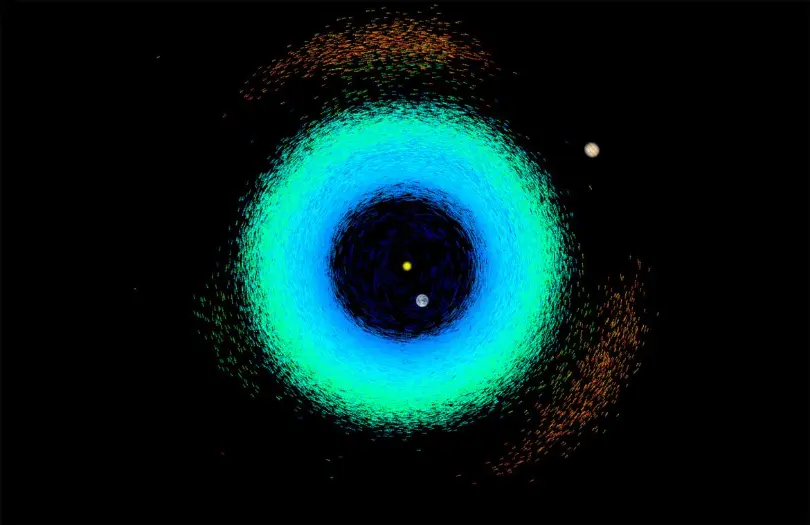
Astronomers have found more than 350 possible moons around asteroids by analyzing data from the European Space Agency’s Gaia space telescope. While asteroids known to have moons, also known as binary asteroids, have been studied by Gaia before, this is the first time the telescope has been used to discover new binary asteroids. “Binary asteroids…
-
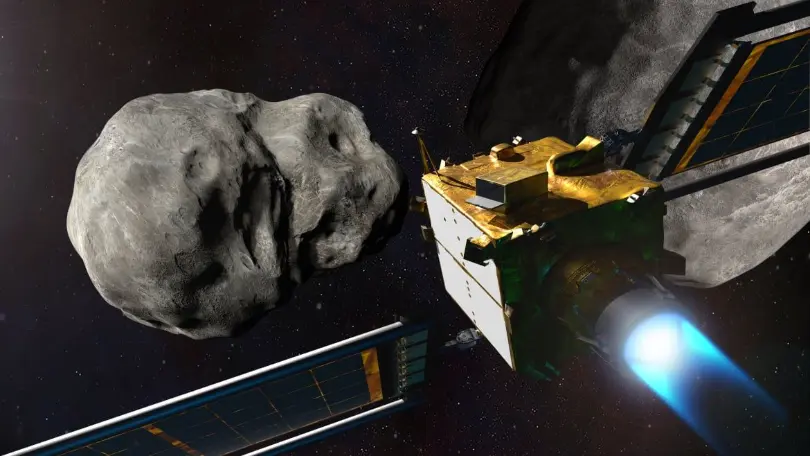
Using data from DART’s impact, scientists investigate characteristics of Dimorphos and Didymos
In September 2022, NASA’s Double Asteroid Redirection Test (DART) mission successfully slammed into the side of asteroid moonlet Dimorphos. Initial data from the event indicated that DART had successfully altered the orbit of Dimorphos and achieved its primary mission goal — to assess how much a spacecraft could deflect an asteroid through a transfer of…
-
Falcon 9’s return to flight reminds spaceflight industry of past anomalies
Nearly every rocket that has flown has had an anomaly. With thousands of components that all need to work in perfect harmony to have a successful mission, there is likely to be one component that is unable to perform every once in a while. While witnessing an anomaly in spaceflight is not as improbable as…
-

Astronomers use Hubble to discover rare intermediate-mass black hole in Omega Centauri
Using the joint NASA and European Space Agency (ESA) Hubble Space Telescope in low-Earth orbit, an international team of astronomers has discovered a rare black hole within Omega Centauri — the largest and brightest known globular cluster in the Milky Way. Globular clusters are large collections of stars and other cosmic material that can span…
-
Ariane 6 successfully launches on maiden flight from French Guiana
Europe’s new heavy-lift rocket, Ariane 6, has successfully launched on its maiden flight. Liftoff occurred one hour into a four-hour launch window on Tuesday, July 9, at 19:00 UTC. Ariane 6 launched from the Ensemble de Lancement Ariane-4 (ELA-4) launch pad at the Guiana Space Centre in Kourou, French Guiana. The payload for this mission…
-

Launch Roundup: SpaceX flies more customer payloads and Ariane 6 debuts
As many as four SpaceX Falcon 9 missions and the long-delayed inaugural flight of Ariane 6 make up the roster for this week’s launch schedule. The four SpaceX missions will be split evenly between Starlink and two payloads for other customers. At least one of the SpaceX missions is likely to be affected by the…
-

European Space Agency launches inaugural Ariane 6 rocket, encounters upper stage issue
Europe’s new rocket Ariane 6 powered Europe into space taking with it a varied selection of experiments, satellites, payload deployers and reentry demonstrations that represent thousands across Europe, from students to industry and experienced space actors. Image: M. Pédoussaut/ESA Update 7:30 p.m. EDT: An anomaly with the Auxiliary Propulsion Unit on the rocket’s upper stage…