
Tag: Euclid
-
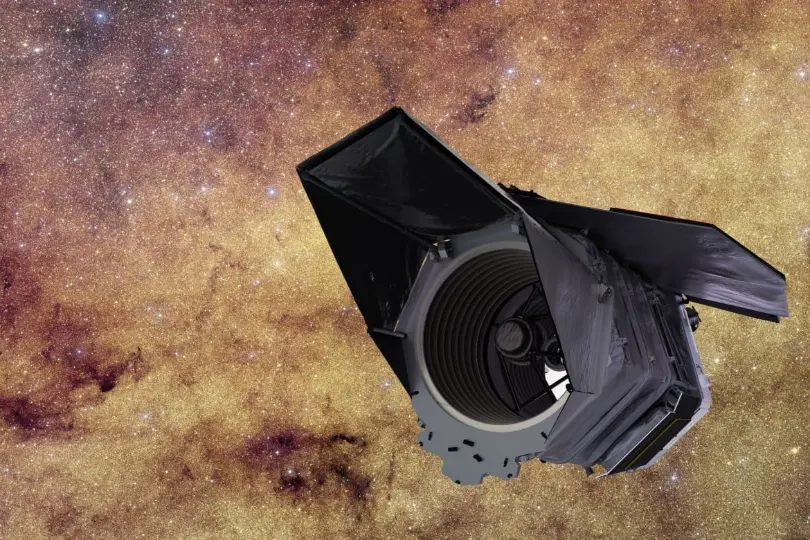
Euclid studies Milky Way center, supports future Roman observations
The European Space Agency (ESA) recently released a new picture of the center of the Milky Way galaxy, an area known as the galactic bulge. Containing over 60 million stars, the picture, taken by ESA’s Euclid space telescope, represents the largest and most detailed photo of this region to date. Euclid observed the area outside…
-

Space Science in 2026: New lunar explorers, Mars missions, and space telescopes
With many missions on the manifest, the new year promises to be packed with space science. Two interplanetary spacecraft will arrive at their destinations as another Mars window opens in late 2026. Meanwhile, multiple space telescopes have their launch dates set for this year, and the schedule promises an increased cadence for lunar missions. The…
-
Euclid reveals an Einstein ring around a nearby galaxy
Using the European Space Agency’s Euclid space telescope, astronomers have accidentally found a complete Einstein ring around a nearby galaxy known as NGC 6505. This optical effect shows a distorted image of a far-away galaxy as a ring around a separate galaxy in the foreground. NGC 6505’s proximity to Earth and the completeness of its…
-

ESA reveals Euclid’s first five images
The European Space Agency (ESA) has released the first full-color images from Euclid, the agency’s latest space telescope designed to study the nature and distribution of dark matter and dark energy in the universe. During a video broadcast on Nov. 7, scientists, engineers, and agency officials unveiled the telescope’s first five images. The images reveal…
-
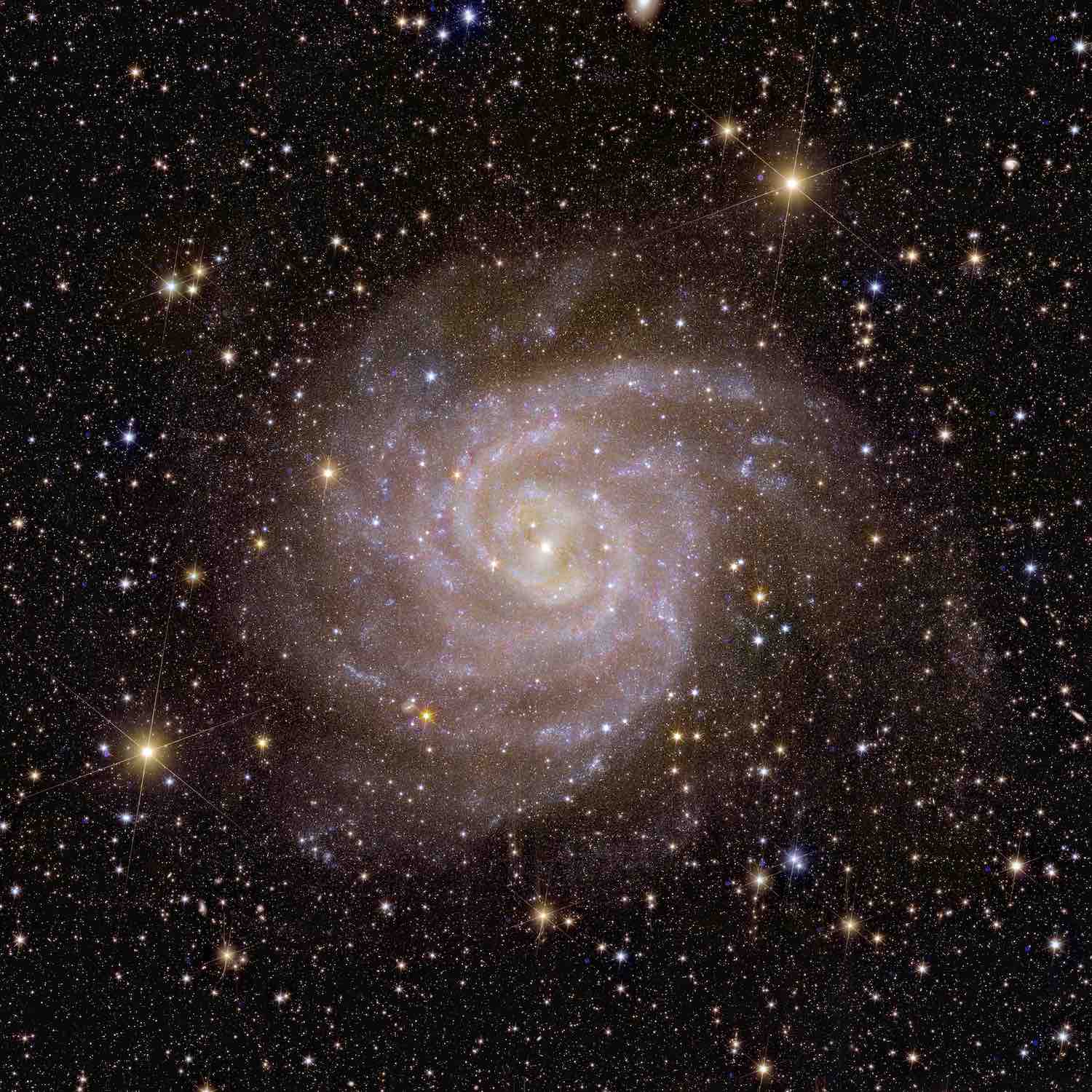
Scientists show off the wide vision of Europe’s Euclid space telescope
The European Space Agency released the first five science images from the Euclid space telescope Tuesday, showing how the wide-angle observatory will survey familiar cosmic wonders like galaxies and stars to study the unseen dark energy and dark matter that dominate the Universe. Stationed nearly a million miles (1.5 million kilometers) from Earth, Euclid will…
-
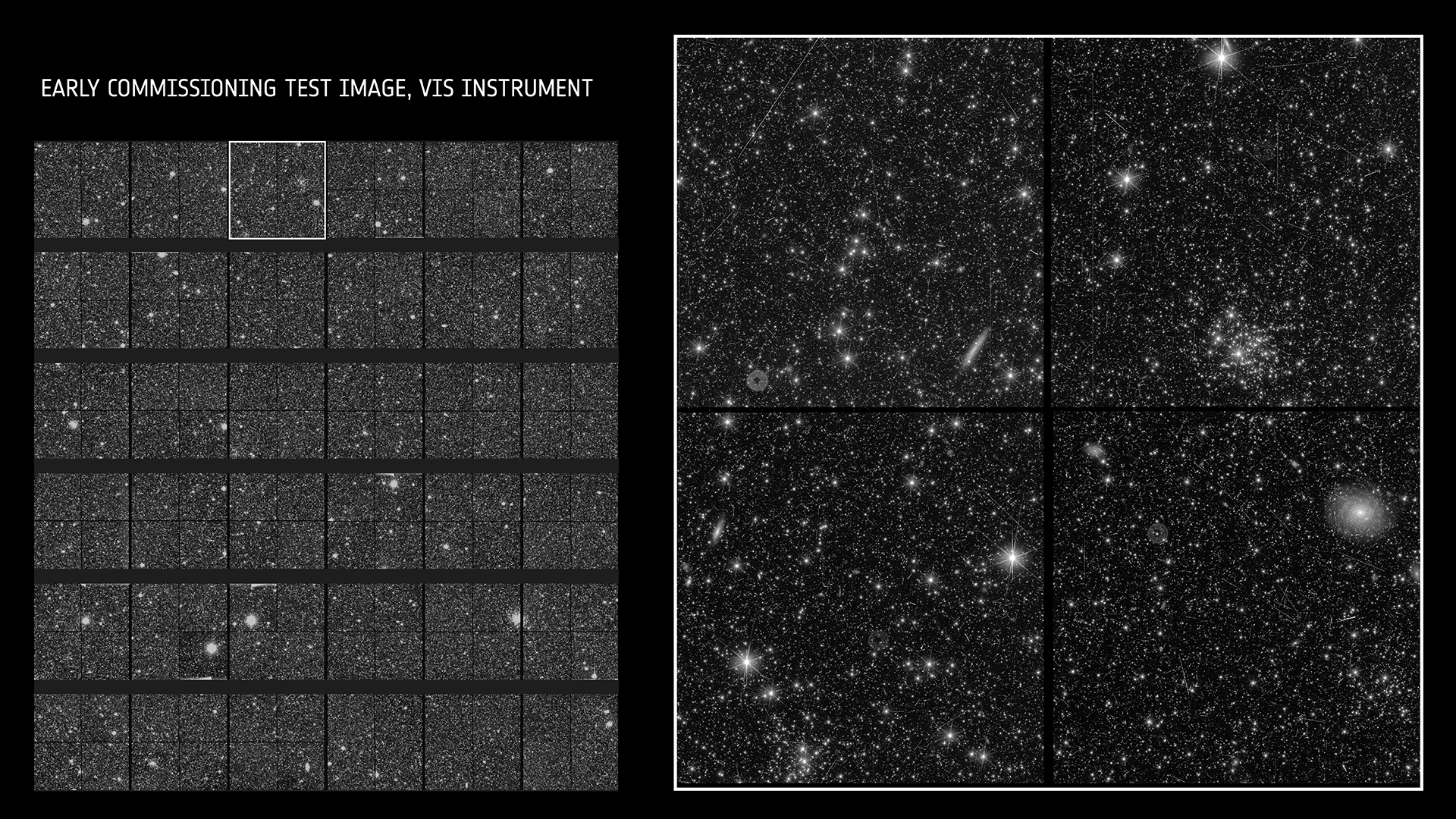
Europe turns its new $1.5 billion space telescope on, and happily it works
Nearly one month after launching into space, a European telescope has begun taking its first images and data of the Universe. And to the delight of scientists at the European Space Agency, everything seems to be working rather well. As part of the months-long commissioning phase, both the telescope’s visual and infrared-light cameras have started…
-
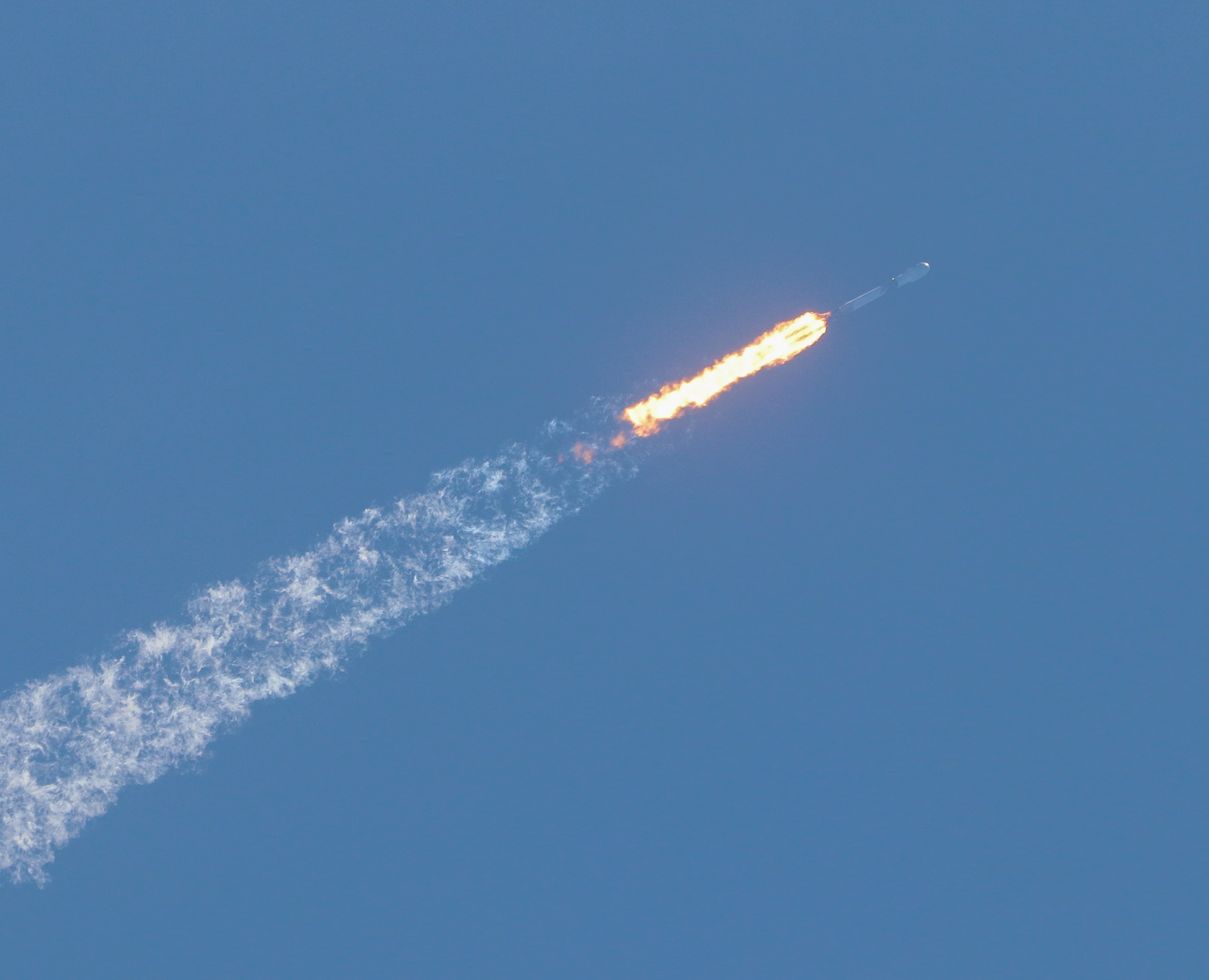
SpaceX launches groundbreaking European dark energy mission
A European Space Agency telescope launched Saturday on top of a SpaceX Falcon 9 rocket from Florida to begin a $1.5 billion mission seeking to answer fundamental questions about the unseen forces driving the expansion of the Universe. The Euclid telescope, named for the ancient Greek mathematician, will observe billions of galaxies during its six-year…
-
SpaceX launches ESA’s Euclid Telescope to explore the dark universe
SpaceX launched its 45th mission of the year, carrying the Euclid telescope from the European Space Agency (ESA). Liftoff was Saturday, July 1, at 11:12 AM EDT (15:12 UTC) from Space Launch Complex 40 (SLC-40) in Florida. ESA’s Euclid will observe a large portion of the sky and deep into the past of the universe…
-
SpaceX launches European ‘dark energy telescope’ to help unravel cosmology’s biggest mysteries
A SpaceX Falcon 9 rocket thunders away from the Cape Canaveral Space Force Station, boosting the European Space Agency’s Euclid space telescope on a trajectory to deep space where it will probe the nature of dark energy and dark matter. Image: Adam Bernstein/Spaceflight Now. The European Space Agency launched its $1.5 billion Euclid space telescope…
-

Launch Roundup: Virgin Galactic performs crewed suborbital mission; SpaceX launches Euclid
Four launches are planned for the week of June 24 to July 1. The Russians opened the launches, with a Meteor weather satellite riding a Soyuz rocket on Tuesday, June 27, while Virgin Galactic flew its Galactic 01 crewed suborbital mission Thursday, June 29. Firefly’s Alpha rocket was thought to be making its first operational…