
Tag: exoplanets
-
How the ‘Dune’ science-fiction saga parallels the real science of Oregon’s dunes
Timothée Chalamet and Rebecca Ferguson star in “Dune,” a movie based on sci-fi author Frank Herbert’s book. The tale draws in part upon Herbert’s experiences in the Pacific Northwest. (Warner Bros. Photo) The deserts of Abu Dhabi and Jordan play starring roles in the blockbuster sci-fi movie “Dune,” which premieres this week in theaters and…
-
JWST completes tests to simulate rigors of launch
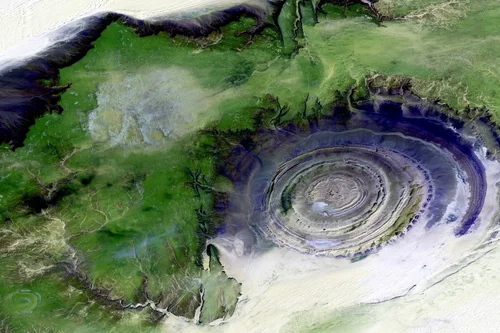
The fully-assembled James Webb Space Telescope is lifted at a Northrop Grumman facility in Redondo Beach, California, during recent environmental testing. Credit: NASA/Chris Gunn The fully-assembled James Webb Space Telescope has completed testing in Southern California to verify the $10 billion mission can withstand the sound and shaking it will see during launch scheduled late…
-
Far out! Xplore teams up with JPL and Aerospace Corp. on gravity-lens telescope
An artist’s conception shows Xplore’s advanced solar sail for NASA’s Solar Gravity Lens Focus mission. (Visualization by Bryan Versteeg, SpaceHabs.com / via Xplore) NASA has awarded a $2 million grant to the Jet Propulsion Laboratory, The Aerospace Corp. — and Xplore, a Seattle-based space venture — to develop the design architecture for a far-out telescope…
-

Astronomers offer a solution to Hubble Space Telescope’s case of the disappearing planet
More than a decade ago, Fomalhaut b was considered one of the first exoplanets to be directly imaged — but now it’s vanished, and scientists suspect it was actually nothing more than a huge cloud of dust created by a cosmic smashup. The disappearing act in the Fomalhaut star system, 25 light years away in…
-

New Earth-sized planet ‘rescued’ from Kepler mission’s old data — and it may be habitable
An artist’s conception shows Kepler-1649c orbiting around its host red dwarf star. (NASA / Ames Research Center Illustration / Daniel Rutter) An alien Earth that just might be habitable has been discovered in years-old records, thanks to sharp-eyed astronomers who gave the data a second look. The exoplanet, known as Kepler-1649c, is only 6% wider…
-

SETI and other alien-hunting strategies are dealing with new tools — and new troubles
Two PANOSETI telescopes are installed in the recently renovated Astrograph Dome at the Lick Observatory in California. PANOSETI will use a configuration of many SETI telescopes to allow simultaneous monitoring of the entire observable sky. (© Laurie Hatch Photo via UCSD) The search for extraterrestrial intelligence, better known as SETI, is taking advantage of a…
-
NASA uplinks final command to deactivate Spitzer telescope
Artist’s concept of the Spitzer Space Telescope seen against the infrared sky. Credit: NASA/JPL-Caltech/R. Hurt (SSC) NASA declared the Spitzer Space Telescope’s 16-year mission complete Thursday after sending final commands for the spacecraft to enter hibernation as it drifts farther from Earth. The Spitzer Space Telescope, one of NASA’s original four “Great Observatories,” studied the…
-
NASA prepares to shut down one of its ‘Great Observatories’
Artist’s concept of NASA’s Spitzer Space Telescope, backdropped by an image of the infrared sky. Credit: NASA/JPL-Caltech NASA will say goodbye to the Spitzer Space Telescope this week after more than 16 years observing the most distant galaxies ever detected, planets orbiting other stars, and star-forming clouds of dust and gas. Spitzer, one of NASA’s four…
-
New discoveries from NASA’s TESS mission include potentially habitable exoplanet
Artist’s illustration of TOI 700 d, the first Earth-sized habitable-zone planet discovered by NASA’s Transiting Exoplanet Survey Satellite. Credit: NASA’s Goddard Space Flight Center Scientists crunching data from NASA’s orbiting TESS planet-hunting observatory have discovered a potentially habitable Earth-sized world circling a star a bit more than 100 light-years from the sun, the first such…
-
NASA’s TESS probe chalks up its first Earth-sized planet in habitable zone, plus a ‘Tatooine’ planet
Astronomers report that NASA’s Transiting Exoplanet Survey Satellite, or TESS, has detected its first Earth-sized planet lying in its parent star’s habitable zone, plus its first planet orbiting two stars. The Earth-sized planet, known as TOI 700 d, is orbiting a cool M-dwarf star a little more than 100 light-years from Earth in the southern…