
Tag: Gamma-ray bursts
-
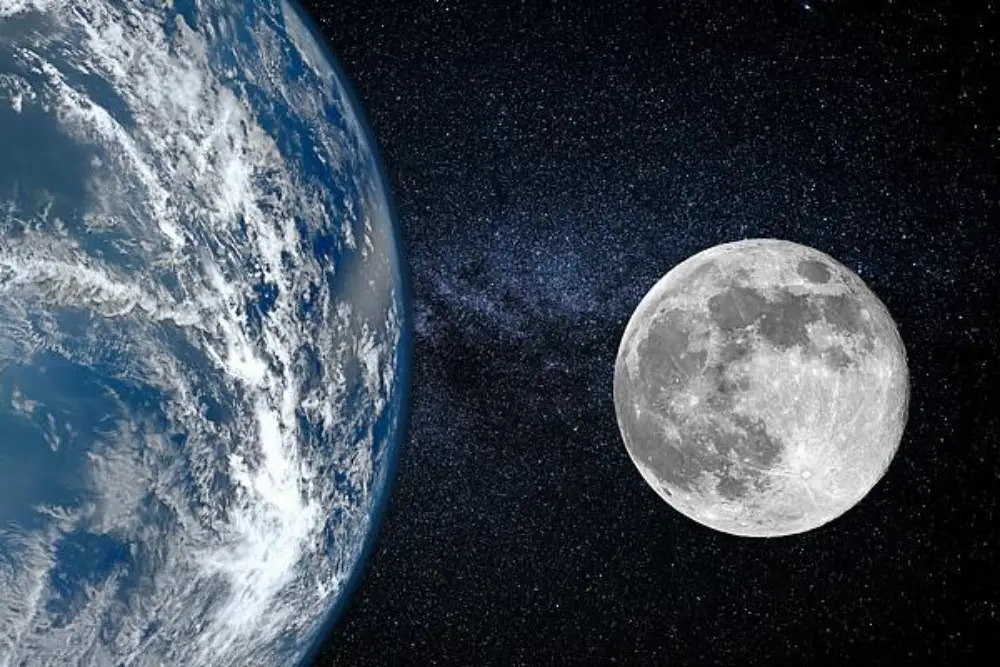
China Launches International Earth-Moon CubeSat Constellation to Support Future Lunar Bases
China has formally launched the International Earth-Moon CubeSat Constellation Big Science Program, which aims to deploy 30 CubeSats across cislunar space in six batches. The preliminary schedule targets the completion of all launches and deployments around 2030. The satellites will conduct space-environment monitoring, gamma-ray burst observations and lunar-resource surveys, generating data intended to support future…
-
China launches two small satellites for gravitational wave research
A Long March 11 rocket lifts off from the Xichang space base with the GECAM mission. Credit: CAS Two small Chinese satellites designed to detect gamma-ray bursts associated with gravitational waves launched Wednesday on a Long March 11 rocket, beginning an astrophysics research mission to study black holes and neutron stars. The Gravitational Wave High-energy Electromagnetic…
-
A cosmic first! Gravitational waves and telescopes reveal the clash and flash of neutron stars
An artist’s conception shows two neutron stars merging, and sending out radiation as well as gravitational waves in the process. (NSF / LIGO / Sonoma State University Illustration / A. Simonnet) For the first time ever, researchers have recorded the cataclysmic smash-up of two neutron stars by virtue of their gravitational waves as well as…
-
Chinese astronomy satellite placed into orbit by Long March rocket
China’s Long March 4B rocket lifts off Thursday with the Hard X-ray Modulation Telescope. Credit: Xinhua China’s first X-ray astronomy satellite launched Thursday on a mission to survey the Milky Way galaxy for black holes and pulsars, the remnants left behind after a star burns up its nuclear fuel. The Hard X-ray Modulation Telescope will…