
Tag: James Webb Space Telescope
-
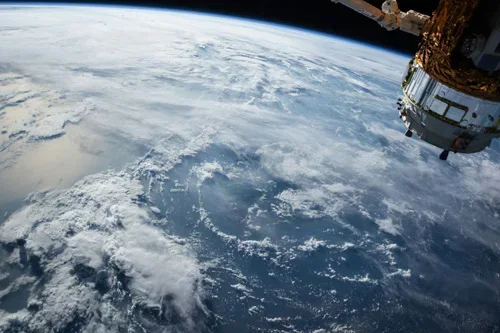
Webb finds never-before-seen structures above Jupiter’s Great Red Spot
Using the joint NASA, European Space Agency (ESA), and Canadian Space Agency (CSA) James Webb Space Telescope, a group of scientists has discovered a variety of never-before-seen features in Jupiter’s upper atmosphere. The features were found in the atmospheric region above the iconic Great Red Spot—a high-pressure region in Jupiter’s atmosphere that produces a massive…
-
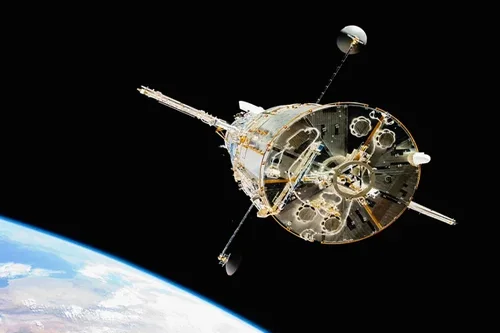
Webb identifies surprising carbon-rich ingredients around young star
Using the joint NASA, European Space Agency (ESA), and Canadian Space Agency (CSA) James Webb Space Telescope, a team of international scientists studied a disk of cosmic material surrounding an extremely low-mass star. The results from the investigation show the richest hydrocarbon chemistry ever observed within a protoplanetary disk, which is a disk of gas,…
-
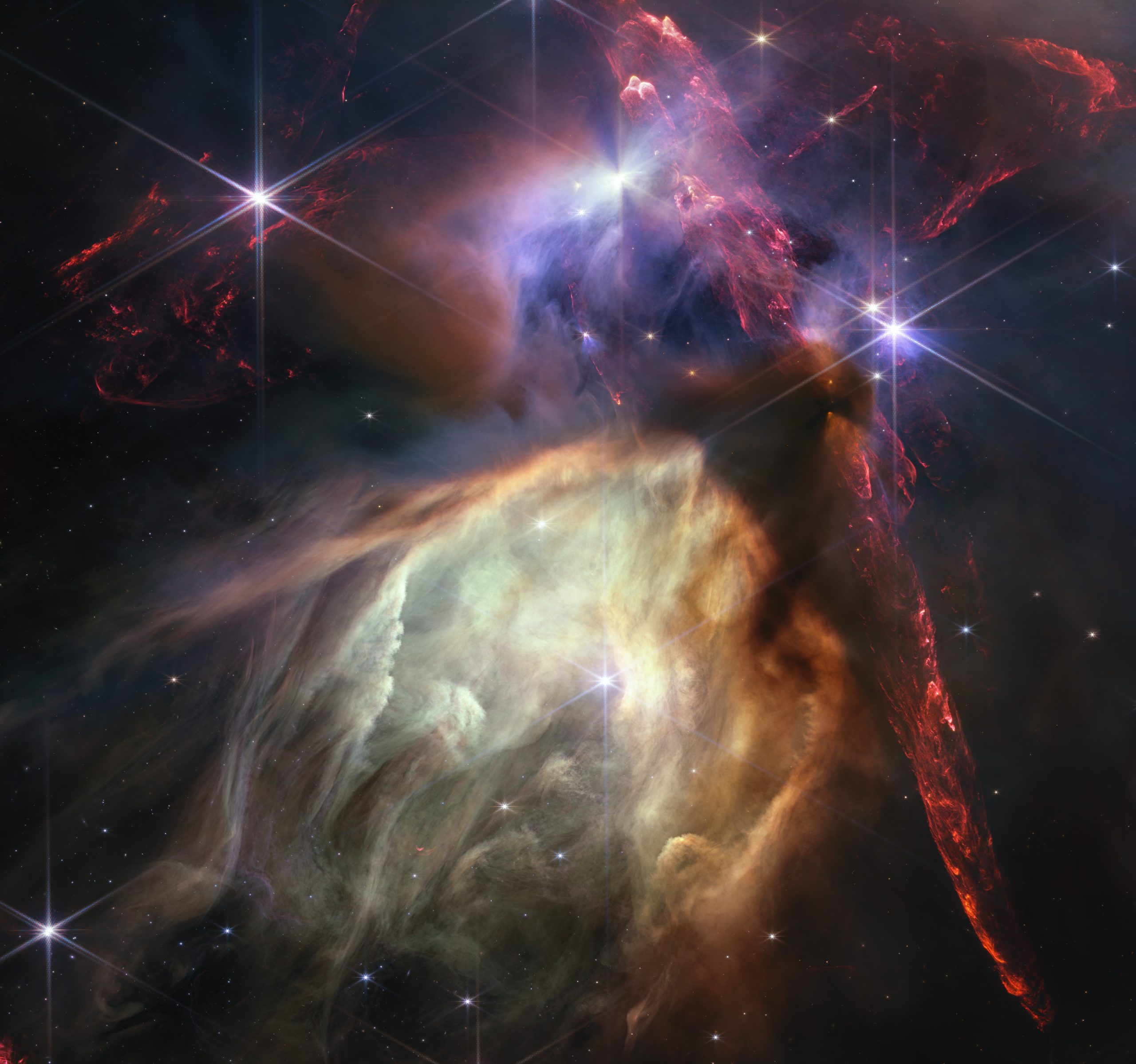
How the Webb and Gaia missions bring a new perspective on galaxy formation
In a feat of galactic archeology, astronomers are using ever more detailed information to trace the origin of our galaxy—and to learn about how other galaxies formed in the early stages of the Universe. Using powerful space telescopes like Gaia and James Webb, astronomers are able to peer back in time and look at some…
-
Using Hubble and Webb, scientists investigate galaxies responsible for the reionization of the universe
Utilizing the infrared-sensitive instruments of the joint NASA, European Space Agency, and Canadian Space Agency James Webb Space Telescope, as well as observations from the Hubble Space Telescope, scientists recently collected the first spectroscopic observations of some of the oldest galaxies in the universe, some being born during the first one billion years of the…
-
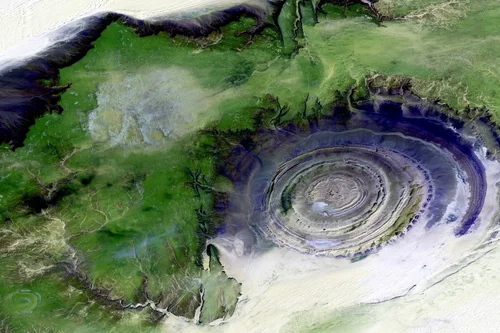
Webb discovers neutron star within supernova remnant
Using the joint NASA, European Space Agency, and Canadian Space Agency James Webb Space Telescope (JWST), an international team of astronomers has found evidence of a neutron star in the remnants of a recent supernova. The supernova, called SN 1987A, was first observed on Feb. 24, 1987, and occurred 160,000 light-years from Earth in the…
-
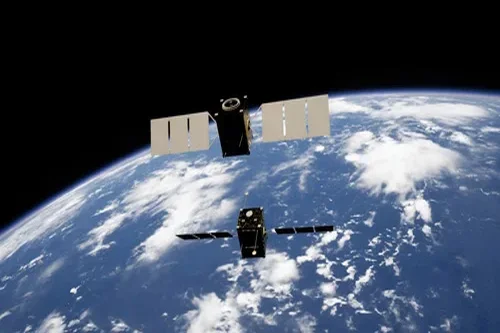
Webb discovers potential aurorae on brown dwarf
Silently floating through the universe are cosmic objects that are both too large to be planets and too small to be stars. Called brown dwarfs, these substellar objects are among the most captivating objects in the universe, and their low surface temperatures mean that most of the light they emit is infrared and thus can…
-
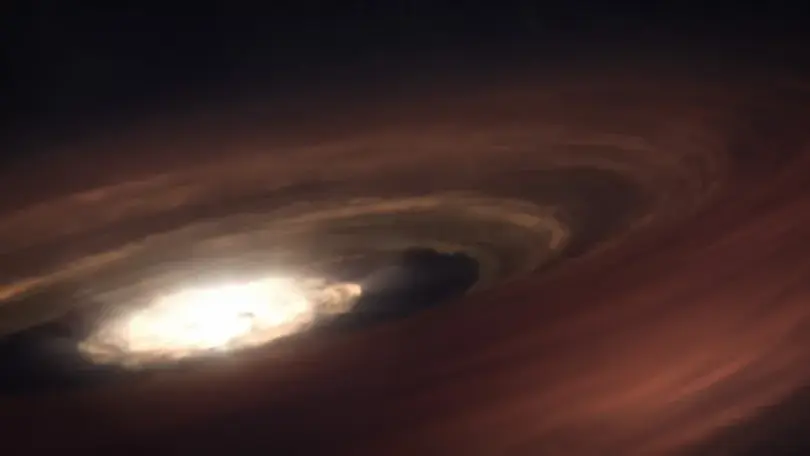
Webb detects neon in young star system, provides insight into planet formation
In 2008, observations from NASA’s now-retired Spitzer infrared space telescope hinted at the presence of neon within the protoplanetary disk of Sun-like star SZ Chamaeleontis (SZ Cha). However, Spitzer’s instruments could not confirm whether this reading was correct. Over a decade after Spitzer’s results were published, the joint NASA, European Space Agency, and Canadian Space…
-
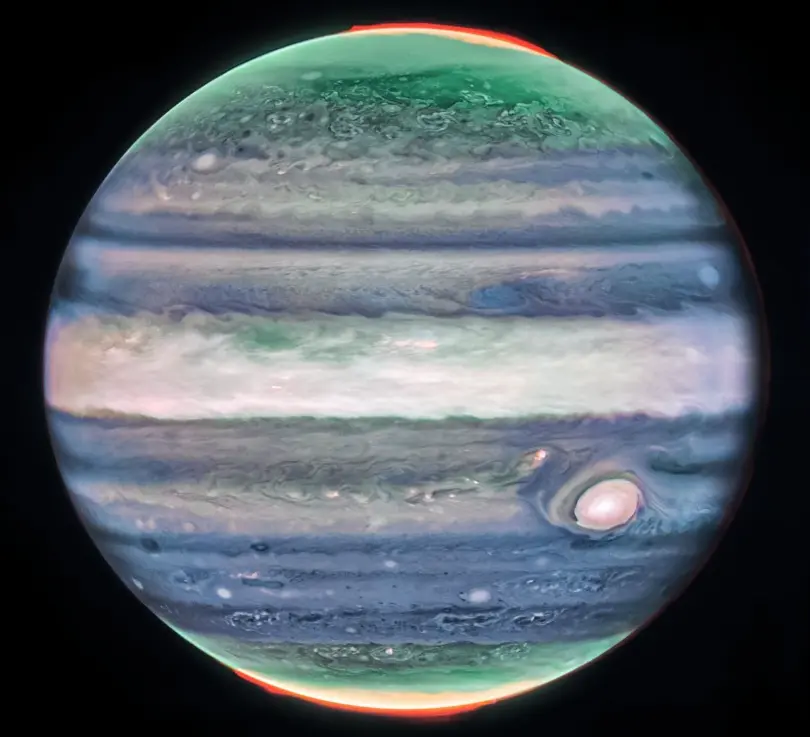
Using Webb, scientists measure high-speed jet stream in Jupiter’s atmosphere
Scientists recently discovered a high-speed jet stream at Jupiter’s equator using the joint NASA/European Space Agency/Canadian Space Agency James Webb Space Telescope. Webb’s images helped the team of scientists track fine details through the planet’s atmosphere, allowing them to measure these winds for the first time. The newly discovered jet stream will provide scientists with…
-
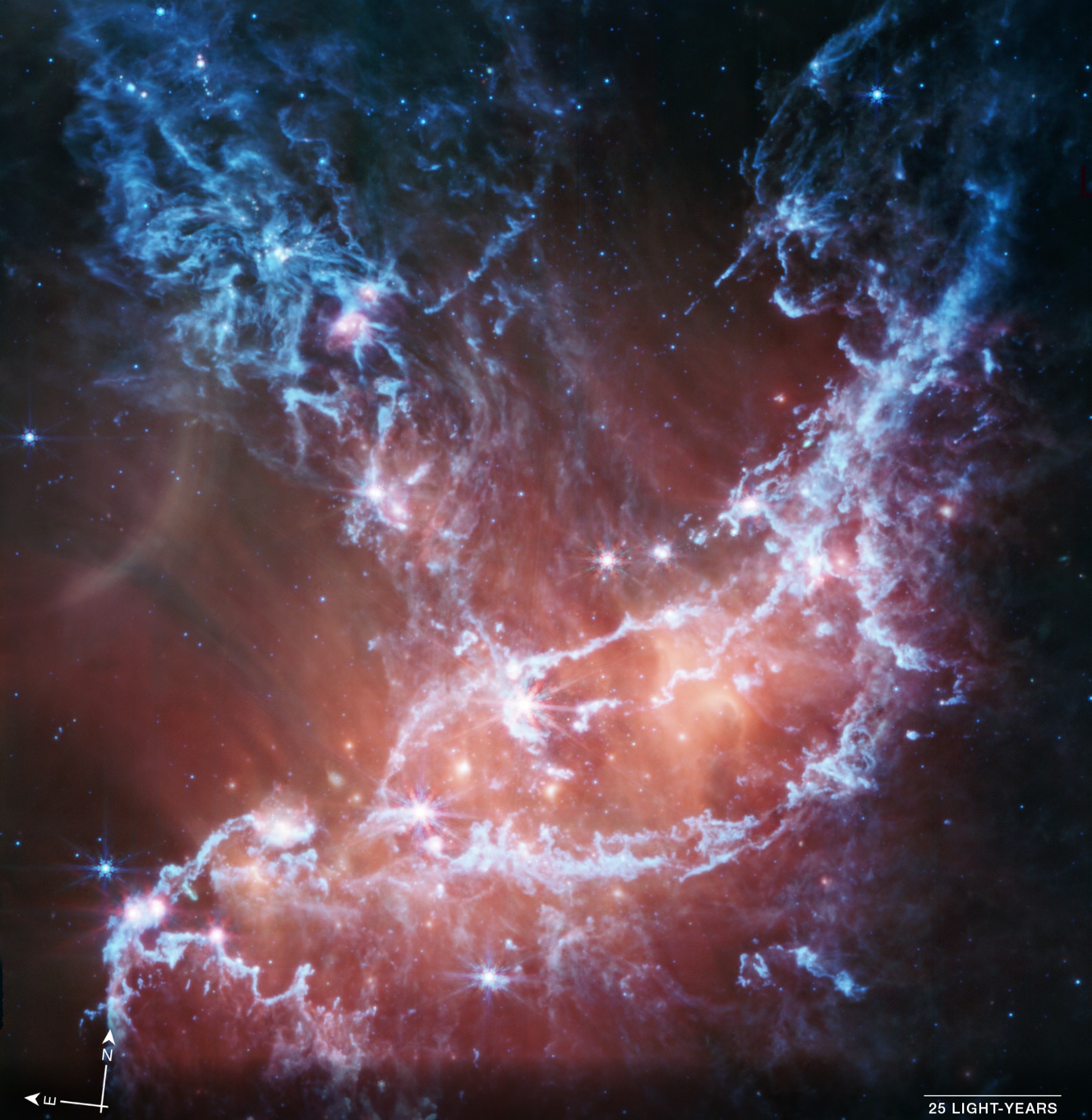
Daily Telescope: A look at a young star cluster in a nearby galaxy
Welcome to the Daily Telescope. There is a little too much darkness in this world and not enough light; a little too much pseudoscience and not enough science. We’ll let other publications offer you a daily horoscope. At Ars Technica, we’re going to take a different route, finding inspiration from very real images of a…
-
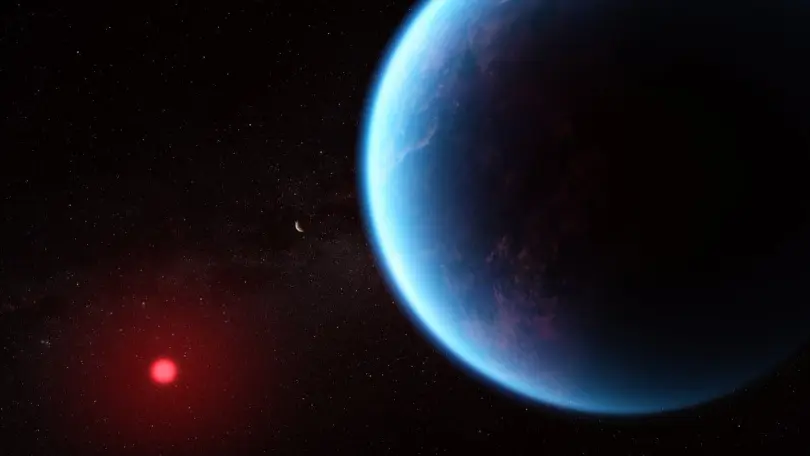
Using Webb, scientists discover carbon dioxide and methane in habitable-zone exoplanet
Using the joint NASA/European Space Agency/Canadian Space Agency James Webb Space Telescope, scientists have discovered the presence of carbon-bearing molecules within the atmosphere of exoplanet K2-18 b. Methane and carbon dioxide are among these carbon-bearing molecules. The discovery of the molecules is allowing scientists to better understand K2-18 b. The planet has been the subject…