
Tag: James Webb Space Telescope
-
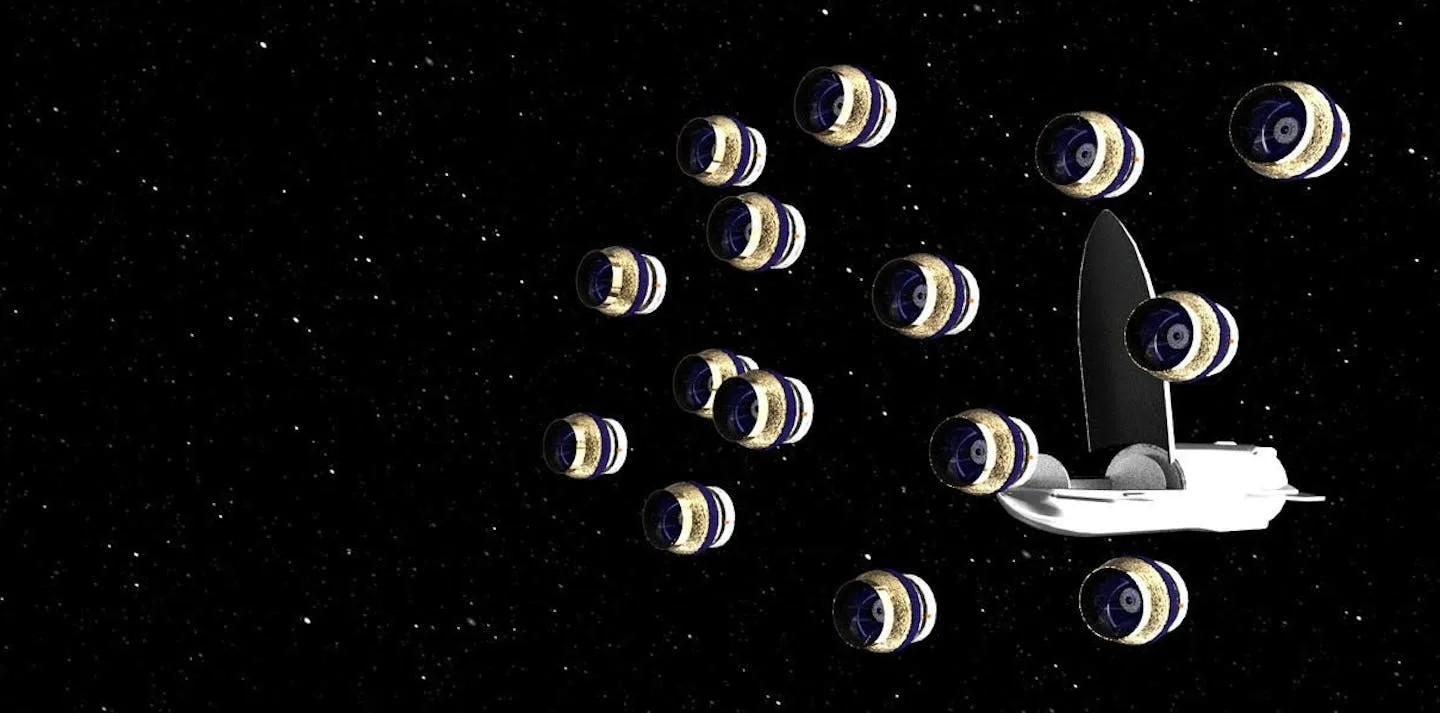
A new, thin-lensed telescope design could far surpass James Webb
Astronomers have discovered more than 5,000 planets outside of the solar system to date. The grand question is whether any of these planets are home to life. To find the answer, astronomers will likely need more powerful telescopes than exist today. I am an astronomer who studies astrobiology and planets around distant stars. For the…
-
Using Webb, scientists discover the most distant active supermassive black hole
Utilizing the infrared-sensitive instruments of the joint NASA/European Space Agency (ESA)/Canadian Space Agency (CSA) James Webb Space Telescope, a group of scientists has discovered the most distant active supermassive black hole to date. Located within a galaxy named CEERS 1019 — that existed just 570 million years after the formation of the universe — the…
-
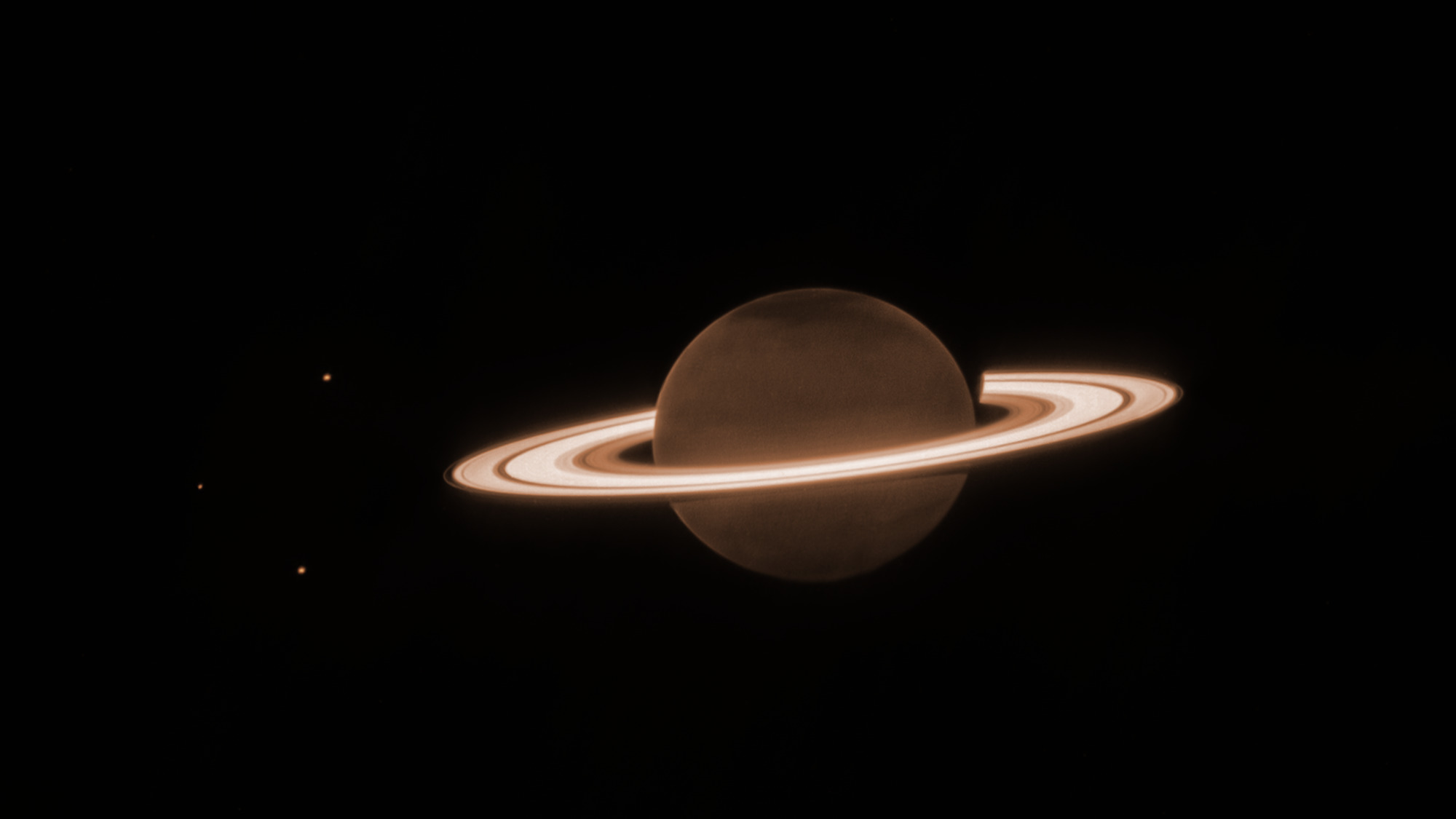
Saturn’s rings steal the show in new image from Webb telescope
The James Webb Space Telescope has observed Saturn for the first time, completing a family portrait of the Solar System’s ringed planets nearly a year after the mission’s first jaw-dropping image release. Webb’s near-infrared camera took the picture of Saturn on June 25. Scientists added orange color to the monochrome picture to produce the image…
-

With Webb, scientists make first detection of carbon molecule in protoplanetary disk
With new data collected by the joint NASA/European Space Agency/Canadian Space Agency James Webb Space Telescope, an international team of scientists has — for the first time ever — detected a carbon molecule within the protoplanetary disk of a star located in the Orion Nebula. The molecule, called methyl cation (CH3+), is quite unique. The…
-
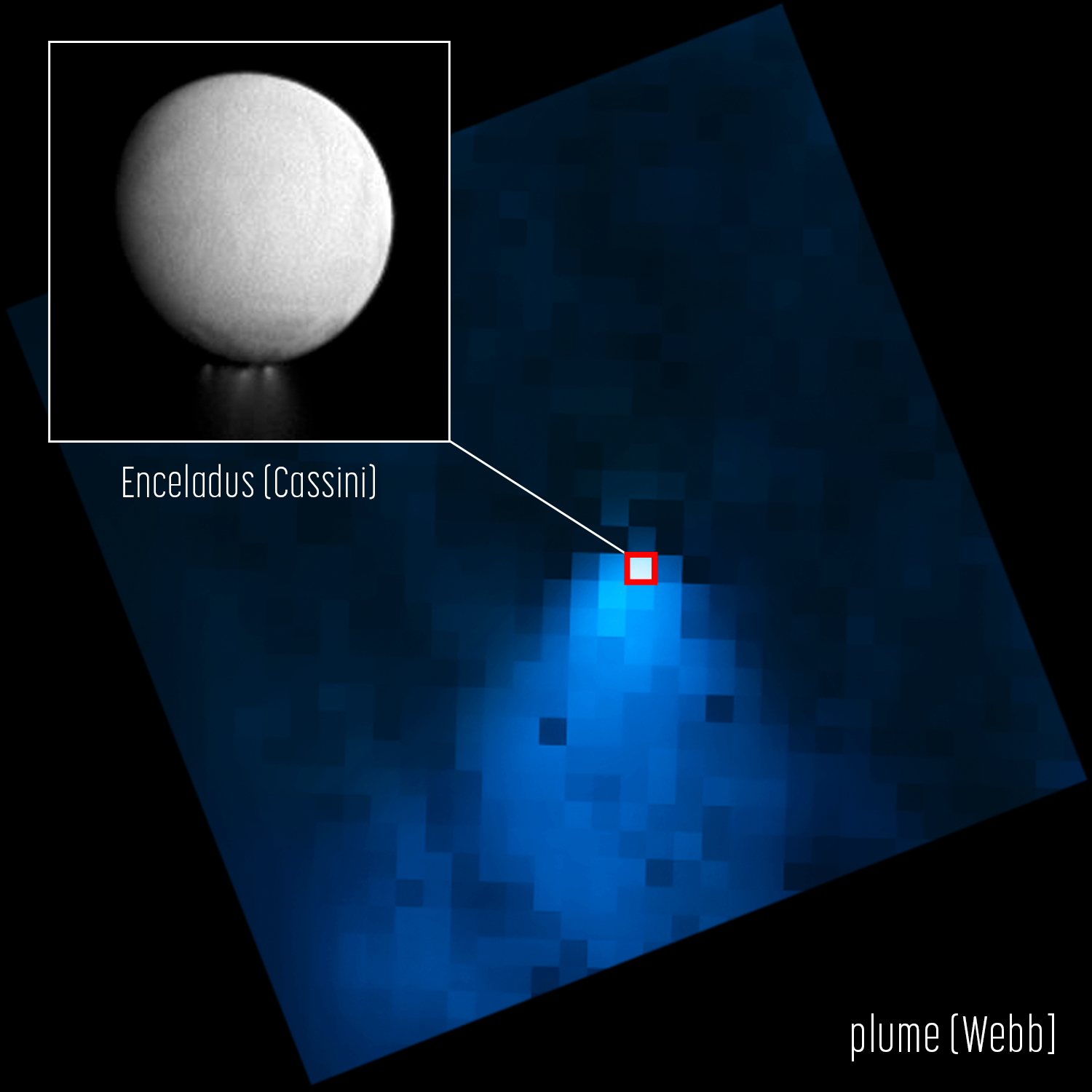
Megaplume of water vapor erupting on Enceladus caught by Webb Telescope
Enceladus, a frozen moon orbiting Saturn, has caught the interest of scientists because of the plumes of water vapor that erupt from its icy crust, which are possible evidence for a subsurface ocean. And an ocean means it has the potential for life (at least life as we know it). Now NASA’s James Webb Space…
-
Webb unveils the secrets of the early universe via deep field, peers into stellar nurseries
With help from the joint NASA/European Space Agency/Canadian Space Agency James Webb Space Telescope (JWST), scientists are peering deep into the universe and uncovering secrets that were previously hidden from visible and X-ray telescopes. The JWST advanced deep extragalactic survey (JADES) utilized Webb’s incredible deep-field surveying abilities to create a deep field that shows over…
-
Webb spots vast plume of water vapor spewing from Saturn’s moon Enceladus
A plume of water vapor jetting from the south pole of Saturn’s moon Enceladus stretches 20 times the size of the moon itself, feeding a vast torus around the ringed planet. Inset: Enceladus as imaged by the Cassini orbiter. Image: NASA, ESA, CSA, STScI, and G. Villanueva (NASA’s Goddard Space Flight Center). Image Processing: A.…
-
Webb directly images young star’s asteroid belt; discovers two additional dusty disks
Using the joint NASA/ESA/CSA James Webb Space Telescope, a group of astronomers has directly imaged three dusty disks — the outermost being an asteroid belt — surrounding a young star. The outermost of the disks was first discovered by NASA’s Infrared Astronomical Satellite in 1983 and has since been imaged in detail by the Hubble…
-
Using JWST, scientists observe silicate clouds and measure the temperature of exoplanets
With help from the joint NASA/ESA/CSA James Webb Space Telescope, two teams of scientists have made groundbreaking, first-of-their-kind discoveries on two exoplanets. One team utilized the immense power of Webb’s Mid-Infrared Instrument (MIRI) and Near-Infrared Spectrograph (NIRSpec) instruments to observe and characterize clouds and molecules in the atmosphere of an exoplanet located 40 light-years away.…
-
Webb telescope sees the prelude to a supernova
The luminous, hot star Wolf-Rayet 124 (WR 124) is prominent at the center of the James Webb Space Telescope’s composite image combining near-infrared and mid-infrared wavelengths of light from Webb’s Near-Infrared Camera and Mid-Infrared Instrument. Credits: NASA, ESA, CSA, STScI, Webb ERO Production Team A new image from the James Webb Space Telescope shows a rare…