
Tag: Planetary Science
-
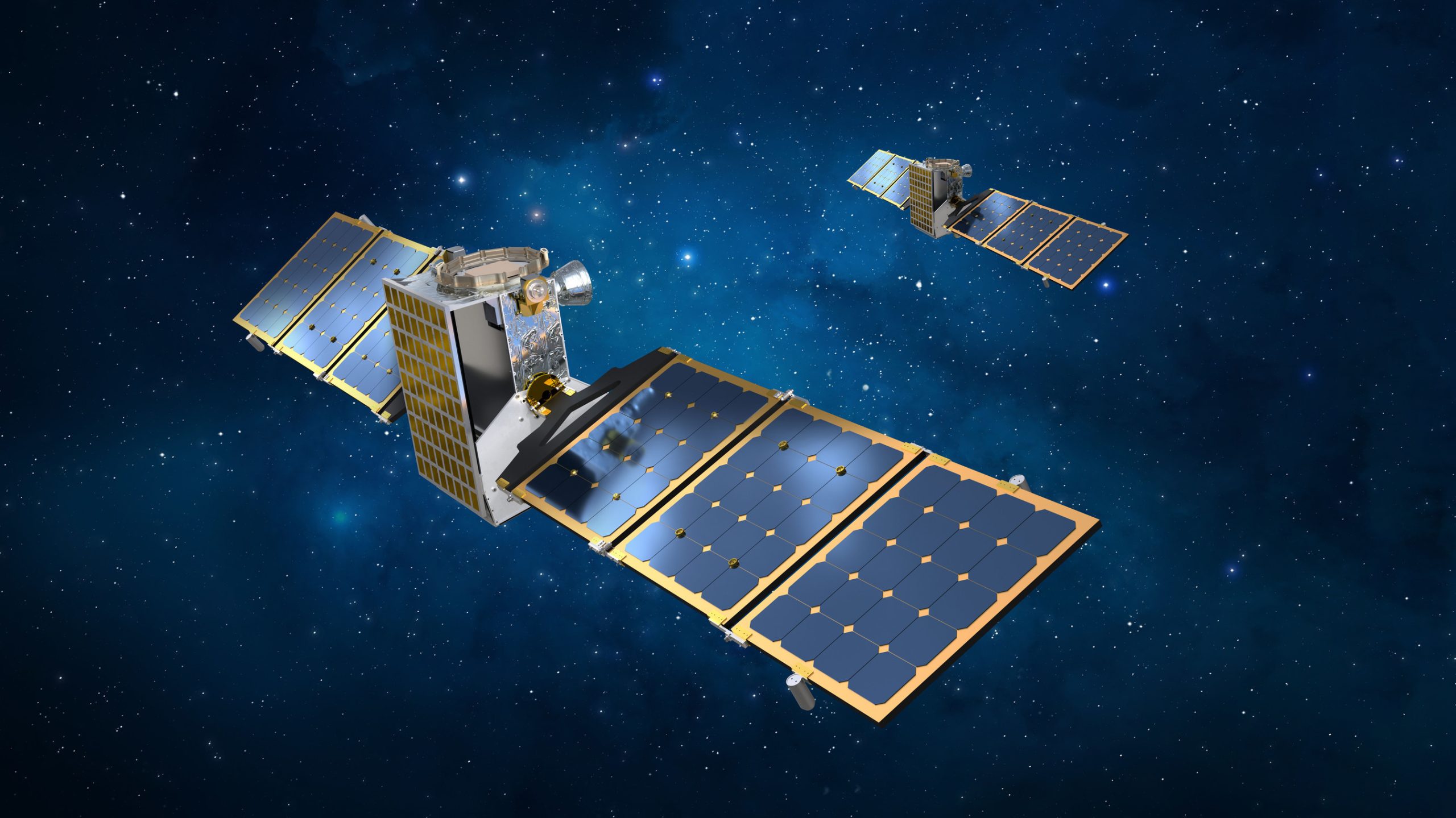
NASA decides not to launch two already-built asteroid probes
Two small spacecraft should have now been cruising through the Solar System, on their way to study unexplored asteroids, but after several years of development and nearly $50 million in expenditures, NASA announced Tuesday the probes will remain locked inside a Lockheed Martin factory in Colorado. That’s because the mission, called Janus, was supposed to…
-
Cassini data reveals the presence of phosphorus in Enceladus’ ocean plumes
A team of scientists, using archival data from NASA’s now-retired Cassini mission, has discovered the presence of phosphorus in the massive plumes of water being ejected from the southern regions of Saturn’s moon Enceladus. Phosphorus — a chemical element essential for life and often considered a building block for life — is locked inside of…
-
Megaplume of water vapor erupting on Enceladus caught by Webb Telescope
Enceladus, a frozen moon orbiting Saturn, has caught the interest of scientists because of the plumes of water vapor that erupt from its icy crust, which are possible evidence for a subsurface ocean. And an ocean means it has the potential for life (at least life as we know it). Now NASA’s James Webb Space…
-
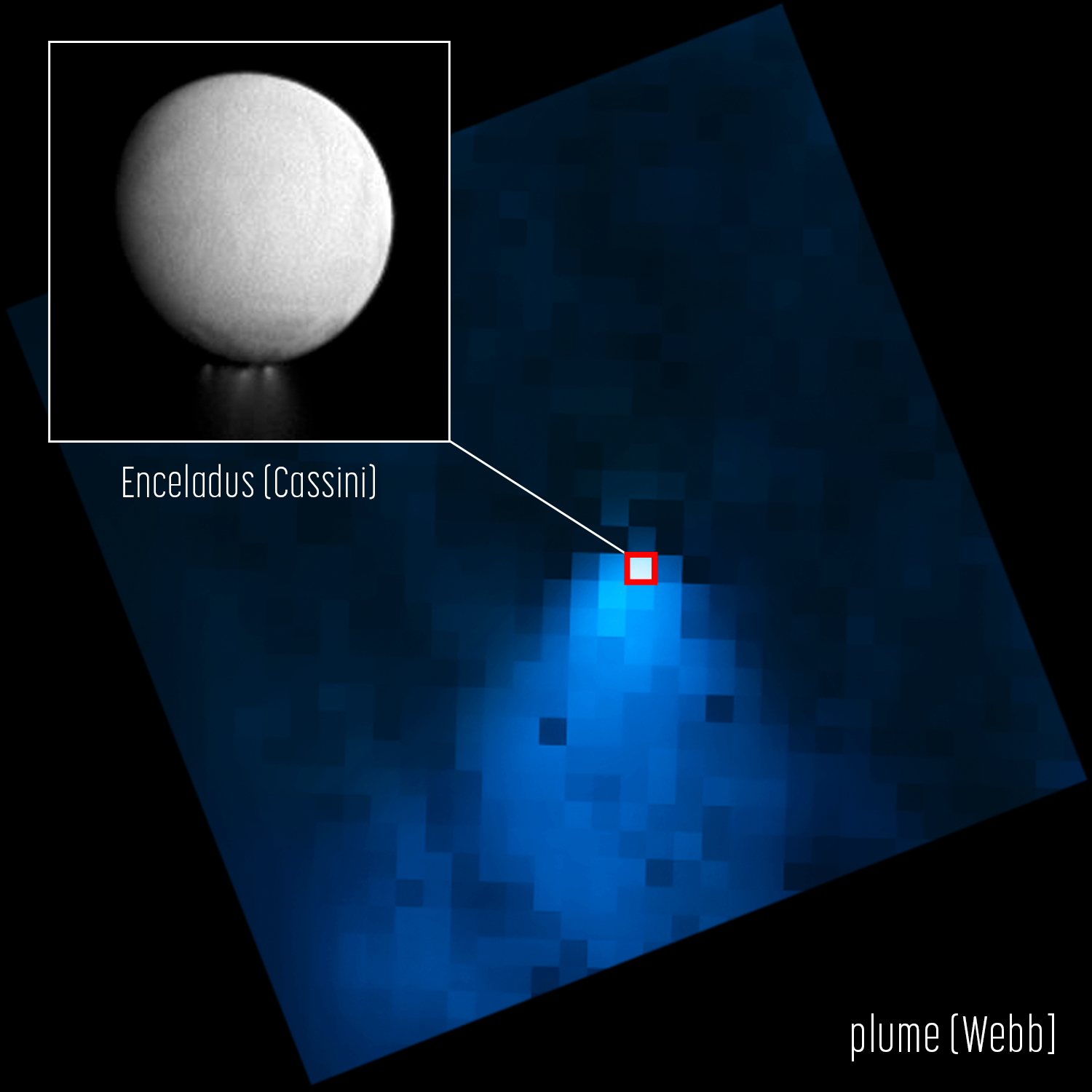
Webb spots vast plume of water vapor spewing from Saturn’s moon Enceladus
A plume of water vapor jetting from the south pole of Saturn’s moon Enceladus stretches 20 times the size of the moon itself, feeding a vast torus around the ringed planet. Inset: Enceladus as imaged by the Cassini orbiter. Image: NASA, ESA, CSA, STScI, and G. Villanueva (NASA’s Goddard Space Flight Center). Image Processing: A.…
-
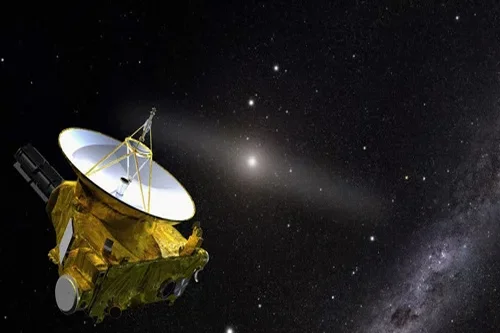
Using data from Spitzer and TESS, scientists discover exoplanet littered with volcanoes
Using data collected by NASA’s retired Spitzer Space Telescope and NASA’s Transiting Exoplanet Survey Satellite (TESS), a team of scientists has discovered an exoplanet that could potentially be covered with volcanoes. The exoplanet is Earth-sized, and the team’s results suggest that the gravitational pull of a neighboring exoplanet could be causing an increase in volcanic…
-
Using data from Spitzer and TESS, scientists discover exoplanet littered with volcanoes
Using data collected by NASA’s retired Spitzer Space Telescope and NASA’s Transiting Exoplanet Survey Satellite (TESS), a team of scientists has discovered an exoplanet that could potentially be covered with volcanoes. The exoplanet is Earth-sized, and the team’s results suggest that the gravitational pull of a neighboring exoplanet could be causing an increase in volcanic…
-

South Korean orbiter returning spectacular views of lunar landscapes
South Korea’s Danuri spacecraft captured this view of Tsiolkovskiy crater March 22 on the far side of the moon. Credit: Korea Aerospace Research Institute Nearly halfway through its primary mission, South Korea’s first spacecraft to explore the moon has been collecting data and snapping pictures of lunar landscapes and craters since maneuvering into orbit late…
-
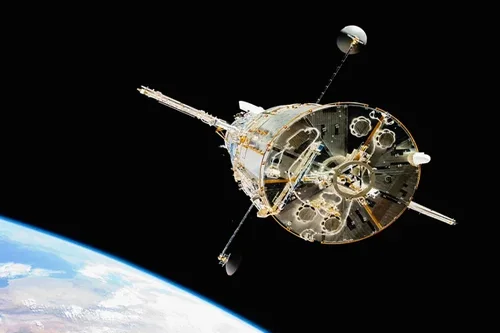
Jammed radar boom on Jupiter-bound JUICE probe finally freed
Artist’s concept of the Jupiter Icy Moons Explorer with all its antenna deployed. Credit: European Space Agency After three weeks of intense analysis and troubleshooting, European Space Agency flight controllers have finally succeeded in freeing a jammed 52-foot (16-meter) boom critical to the Jupiter-bound JUICE probe’s ice-penetrating radar instrument. The Jupiter Icy Moons mission –…
-

NASA’s Lunar Flashlight CubeSat mission ends before entering orbit around moon
This screenshot from NASA’s Eyes on the Solar System 3D visualization tool shows Lunar Flashlight making its close approach with Earth late on May 16. The CubeSat was expected to pass about 40,000 miles (65,000 kilometers) from our planet’s surface over Brazil’s east coast on May 17.Credits: NASA/JPL-Caltech NASA’s small Lunar Flashlight spacecraft, sent to…
-
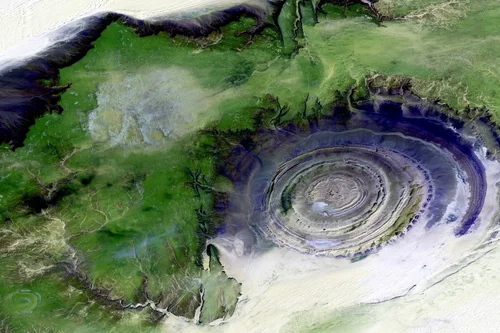
Webb directly images young star’s asteroid belt; discovers two additional dusty disks
Using the joint NASA/ESA/CSA James Webb Space Telescope, a group of astronomers has directly imaged three dusty disks — the outermost being an asteroid belt — surrounding a young star. The outermost of the disks was first discovered by NASA’s Infrared Astronomical Satellite in 1983 and has since been imaged in detail by the Hubble…