
Tag: Saturn
-
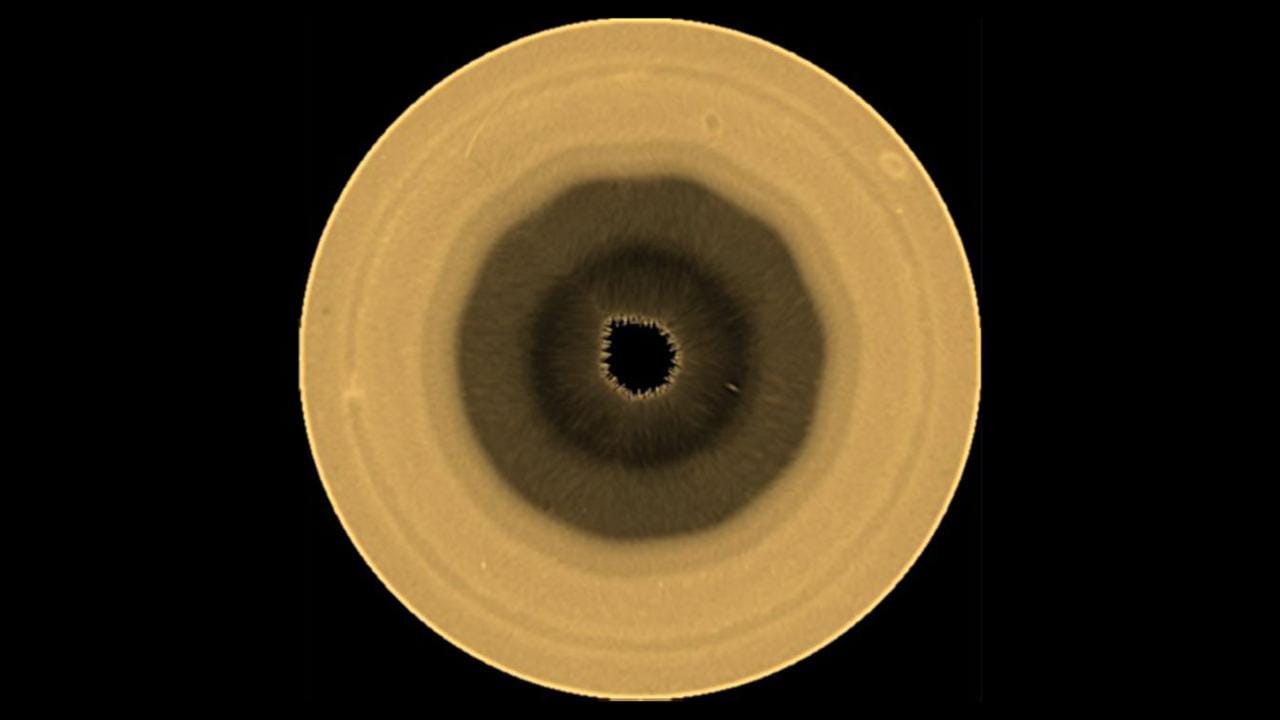
Saturn’s South Polar Decagon: What Could Have Created Hubble’s Newly Identified Atmospheric Wave?
NASA’s Hubble Space Telescope has revealed a giant, evolving ten-sided atmospheric wave around Saturn’s south pole—the first large, regular-sided jet pattern observed in the planet’s southern hemisphere. Known as a decagon, the feature appears in observations dating back to 2023 and has become increasingly distinct, offering scientists a rare opportunity to track the development of…
-
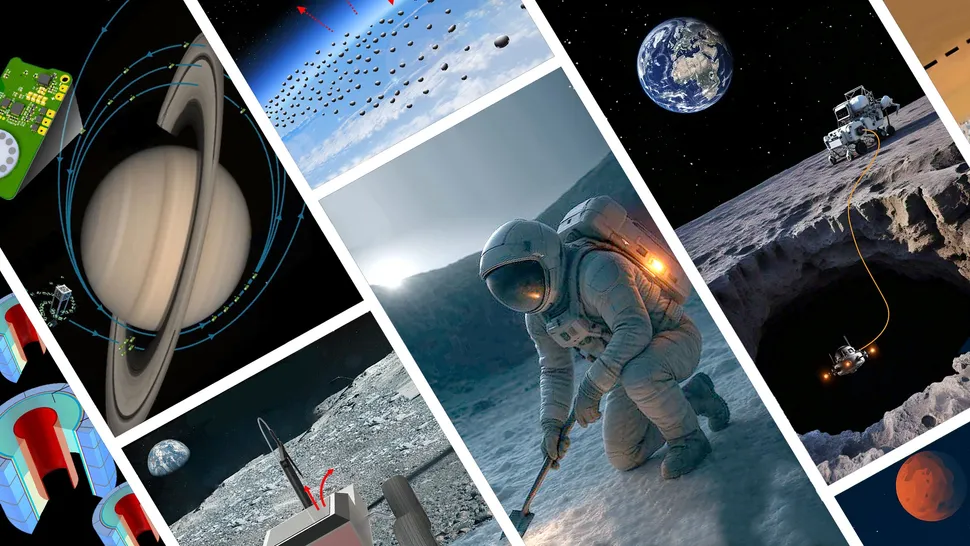
NASA Backs 18 Visionary Space Concepts, Including a Swarm of 10,000 Femtosatellites for Saturn Exploration
NASA has selected 18 early-stage technology concepts for funding under its 2026 NASA Innovative Advanced Concepts (NIAC) program, supporting a diverse portfolio of futuristic ideas ranging from lunar cave exploration and Venus-hardened spacecraft to a proposed fleet of 10,000 miniature satellites designed to probe Saturn’s rings. The agency announced on July 29 that the 18…
-
Humans to Titan Summit Asks if Robots Go First
Will Humanoid Robots Reach Titan Before Humans Do? The first-ever Humans to Titan Summit, held June 11–12 in Boulder, Colorado, reached a conclusion that undercuts its own premise: AI-powered humanoid robots may be a more practical vanguard for Saturn’s largest moon than flesh-and-blood astronauts. Pascal Lee — chairman of the Mars Institute, planetary scientist at…
-
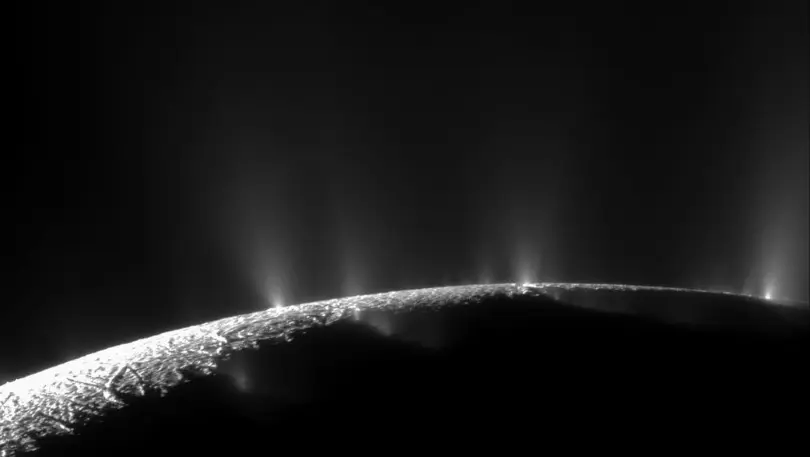
Scientists use Cassini data to discover new molecules in Enceladus water jets
Located around Saturn is the icy moon Enceladus — one of the most interesting and potentially habitable moons in the solar system. NASA’s Cassini mission extensively studied Saturn and its moons from 2004 to 2017 and, in 2005, revealed large geyser-like jets extending from Enceladus’ south pole. Later studies would suggest that a massive subsurface…
-
Webb, Keck observe Titan; find clouds and carbon molecule in northern hemisphere
By combining data from the Keck II telescope and the joint NASA/European Space Agency/Canadian Space Agency James Webb Space Telescope, a group of scientists observed cloud convection in the northern hemisphere of Saturn’s moon Titan — the first time such atmospheric activity has been observed in the region. A majority of Titan’s methane lakes and…
-
New research provides explanation for the origin of Saturn’s rings and icy moons
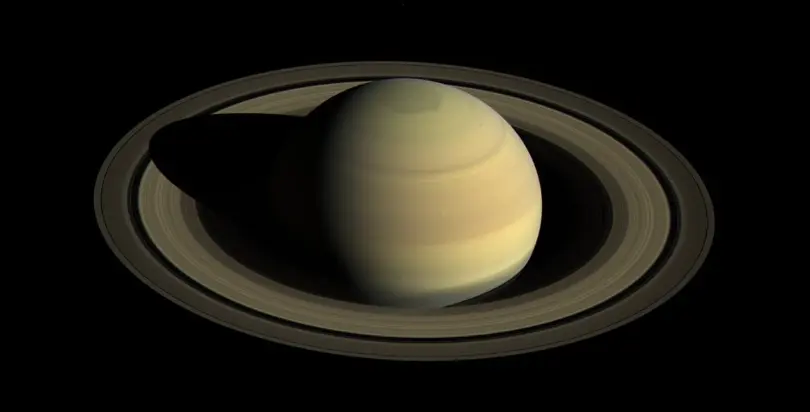
Recent research conducted by NASA and its partners using supercomputer simulations is shedding light on the origins of Saturn’s iconic rings and mysterious icy moons. Scientists believe the rings began forming from a massive impact between two icy moons, all the way back when dinosaurs were still roaming around the surface of Earth. The massive…
-
Cassini data reveals the presence of phosphorus in Enceladus’ ocean plumes
A team of scientists, using archival data from NASA’s now-retired Cassini mission, has discovered the presence of phosphorus in the massive plumes of water being ejected from the southern regions of Saturn’s moon Enceladus. Phosphorus — a chemical element essential for life and often considered a building block for life — is locked inside of…
-
Webb spots vast plume of water vapor spewing from Saturn’s moon Enceladus
A plume of water vapor jetting from the south pole of Saturn’s moon Enceladus stretches 20 times the size of the moon itself, feeding a vast torus around the ringed planet. Inset: Enceladus as imaged by the Cassini orbiter. Image: NASA, ESA, CSA, STScI, and G. Villanueva (NASA’s Goddard Space Flight Center). Image Processing: A.…
-

Arriving at Titan: How Dragonfly’s Entry, Descent, and Landing will differ from Mars missions
Since the focus on Martian exploration ramped up in the mid-1990s, most of the familiarity with the Entry, Descent, and Landing (EDL) sequence of landers and rovers to the surface of other planets has taken place against the backdrop of Mars. But when NASA‘s upcoming Dragonfly mission arrives at Titan for its own EDL, it…
-

Following in the footsteps of Saturn, SLS prepares for test flight
As NASA’s Space Launch System (SLS) rocket stands ready for its first test flight next week, the Artemis program prepares to follow in the footsteps of Apollo, which first carried humans to the Moon in the 1960s. SLS will fly uncrewed just once before carrying astronauts around the Moon on Artemis II, while the Orion…