
Tag: Saturn
-

Titan impact craters reveal connections to planetary weather, set the stage for Dragonfly
Titan, the atmosphere-shrouded moon of Saturn, has captivated scientists’ attention since its formal discovery on 25 March 1655. While in-situ observations of the moon ended in September 2017 when the Cassini spacecraft was purposely plunged into Saturn’s atmosphere at the end of its mission, data from the 13 year scientific voyage continues to reveal information…
-
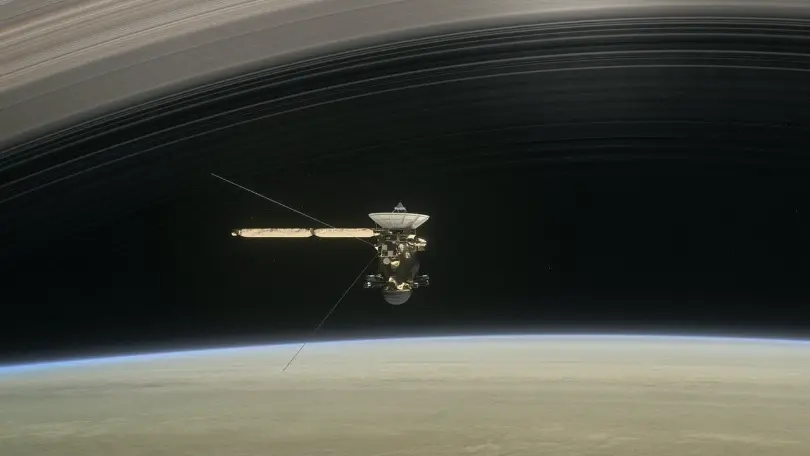
Cassini data sheds light on Saturn formation and Enceladus habitability
While its mission ended just over three years ago, data from NASA’s Cassini spacecraft continues to help scientists unlock the mysteries of the Saturnian system that contains more than 80 identified moons. In particular, new and updated research has helped determine the drift rate of Titan away from Saturn, in turn leading to a better…
-
ESA’s Huygens probe landed on Saturn’s moon Titan 15 years ago
This mosaic of three frames taken by Huygens during its descent to Titan provides unprecedented detail of a ridge area, including a network of river channels. Credit: ESA/NASA/JPL/University of Arizona Fifteen years after accomplishing the first-ever landing on Saturn’s moon Titan, lessons learned from the European Space Agency’s Huygens spacecraft continue aiding designers of future…
-

Astronomers spot 20 more moons of Saturn — and want you to help name them
This artist’s conception shows the 20 newly discovered moons orbiting Saturn. (Illustration courtesy of Carnegie Institute for Science. Saturn image courtesy of NASA / JPL-Caltech / Space Science Institute. Starry background courtesy of Paolo Sartorio / Shutterstock.) Saturn has pulled ahead of Jupiter again in the moon discovery race, thanks to a batch of 20…
-
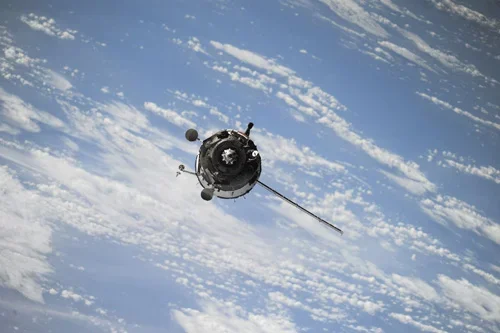
Cassini answers Titan secrets, NASA plans helicopter mission to cloudy world
Even though Cassini ended its mission nearly two years ago, data from all of the spacecraft’s flybys of the Saturnian moon Titan continue to help scientists unlock the mysteries of this world shrouded by a thick, dense atmosphere. Now, NASA is planning a return to this extreme object of interest in the solar system –…
-

NASA picks Dragonfly mission to send a nuclear drone to Saturnian moon Titan
An artist’s conception shows the Dragonfly probe on the dunes of Titan. (NASA / JHUAPL Illustration) NASA has chosen to commit up to $850 million to creating an interplanetary probe unlike any seen before: a rotor-equipped spacecraft that will fly through the smoggy atmosphere of Titan, Saturn’s biggest moon. The Dragonfly mission will be managed…
-
NASA approves development of flying drone to explore Saturn’s moon Titan
Artist’s concept of the Dragonfly mission to Saturn’s moon Titan. Credit: NASA NASA officials announced Thursday that the agency will move forward with the development of a plutonium-powered robotic quadcopter drone to explore Saturn’s moon Titan, a hazy world covered with dunes and methane lakes that scientists say is reminiscent of the ancient Earth. The…
-

Cassini still reveals Saturn’s secrets more than a year after its mission’s end
Cassini’s flagship mission to the ringed planet Saturn ended over a year ago, but data from the craft’s Grand Finale tour of the Saturnian system continues to allow scientists to unlock the mysteries surrounding the sixth planet in our solar system. Among the discoveries after the end of Cassini’s mission include a firm understanding of…
-

Saturn’s clouds run deep, rings may rain organics
Artist’s illustration of Saturn’s internal structure. Credit: NASA/JPL-Caltech Saturn’s clouds have roots deeper inside the planet’s atmosphere than scientists previously thought, and Saturn’s rings — now believed to have formed in the last 200 million years — appear to be raining organic molecules down on the planet, according to observations made by NASA’s Cassini spacecraft…
-
Saturn’s night side caught in “ringshine”
A patch of Saturn’s atmosphere was captured in this view from Cassini’s wide-angle camera on Sept. 14, 2017. Credit: NASA/JPL-Caltech/Space Science Institute In the final hours of its pioneering mission, NASA’s Cassini spacecraft opened its cameras to gaze down on Saturn, recording views of a nighttime cloudscape illuminated by sunlight reflected off countless tiny ice…