London-based Acme Space said it plans to begin flight testing its balloon-rocket hybrid launch vehicle in the new year, as it prepares for commercial in-orbit manufacturing missions targeted for 2027. The company said it is already working with two unnamed pharmaceutical firms to develop protein crystal growth payloads for its first operational flights.
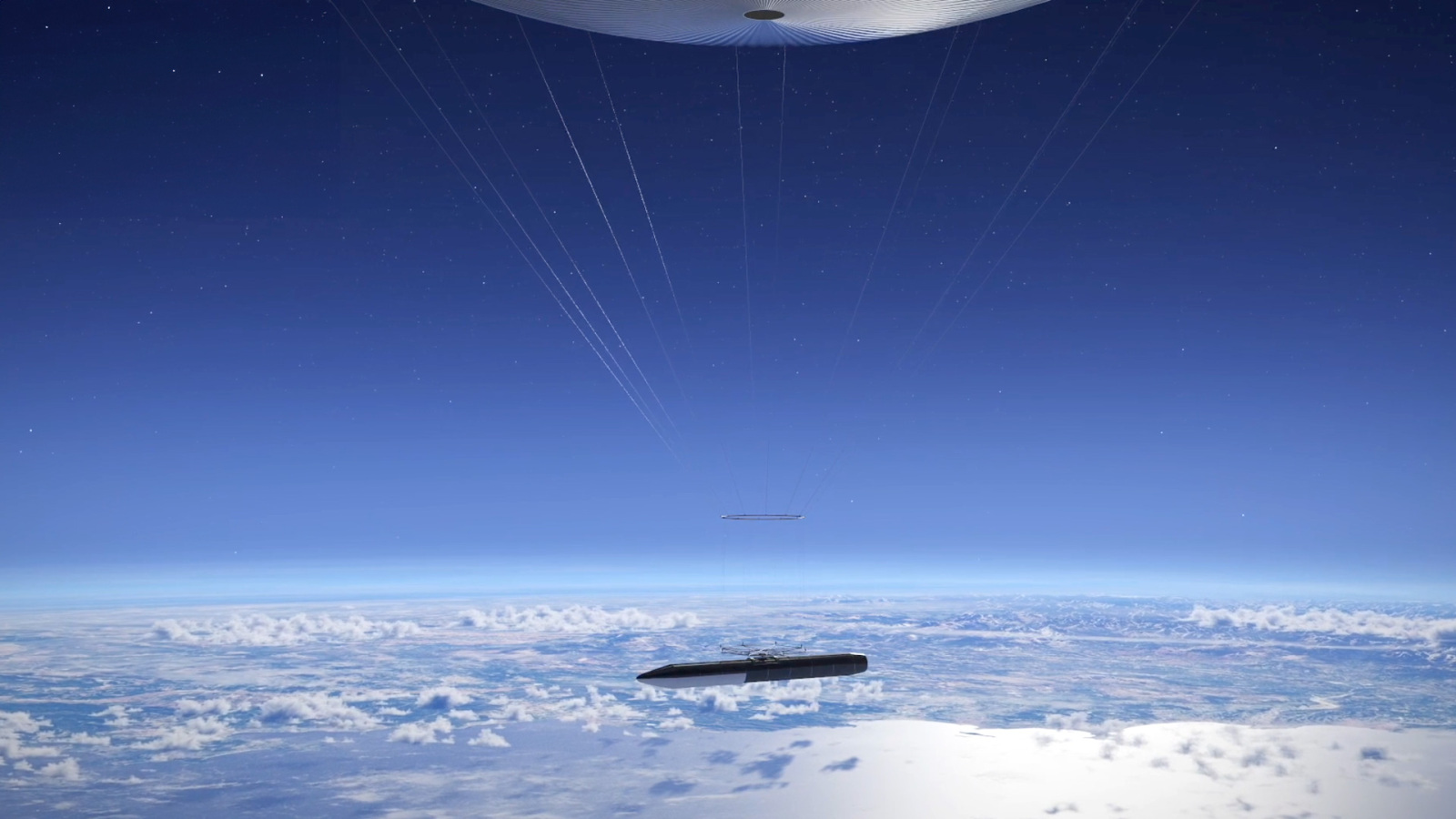
The vehicle, known as the Hyperion Orbital Factory Vehicle, uses a hydrogen-filled high-altitude balloon to lift a liquid-fuelled rocket through the densest layers of Earth’s atmosphere. At an altitude of about 19 miles, the rocket — powered by methane and liquid oxygen — is released and boosts the payload to roughly 60 miles. The main stage then separates and returns to Earth, while the second stage inserts the payload into orbit between about 185 and 310 miles. After remaining in orbit for two to three weeks, the system is designed to assist with returning the payload to Earth.
Acme says the system is designed to carry payloads of up to 200 kilograms but stressed that it does not intend to compete directly in the increasingly crowded launch services market. “There is a lot of competition from rocket launchers and prices are really going down,” Acme Space Chief Executive Thomas Guryca told SpaceNews. “They are going to get really low with Starship and for us, since we only have 200 kilos of payload, offering launch wouldn’t be enough.”
Instead, the company is positioning itself as a specialist provider of orbital manufacturing services. In addition to pharmaceutical research, Acme said it is exploring the production of ZBLAN optical fibres, which have previously been manufactured aboard the International Space Station and are known to exhibit fewer impurities and greater uniformity when produced in microgravity. The company said such materials could form part of its long-term commercial offering if its manufacturing platform proves viable.
To validate its technology, Acme plans to conduct a suborbital drop-and-recovery test in the first half of 2026. The test will involve lifting the rocket to altitude using the balloon before igniting the engines and returning the vehicle to Earth for recovery. If the test is successful, the company plans to proceed with full orbital demonstration missions ahead of the start of commercial operations in 2027.
Acme said its longer-term ambition is to develop fully reusable launch and recovery systems capable of supporting dedicated in-orbit manufacturing facilities.