Amazon’s satellite internet venture, Amazon Leo, said it has begun shipping its high-end user terminals to selected enterprise customers, marking a significant step toward launching its global broadband network as competition with SpaceX’s Starlink intensifies.
The service, previously known as Project Kuiper, is entering an enterprise preview phase that will allow companies to test production-grade hardware and software. Amazon said the process will help teams refine solutions for industry-specific applications ahead of broader availability.
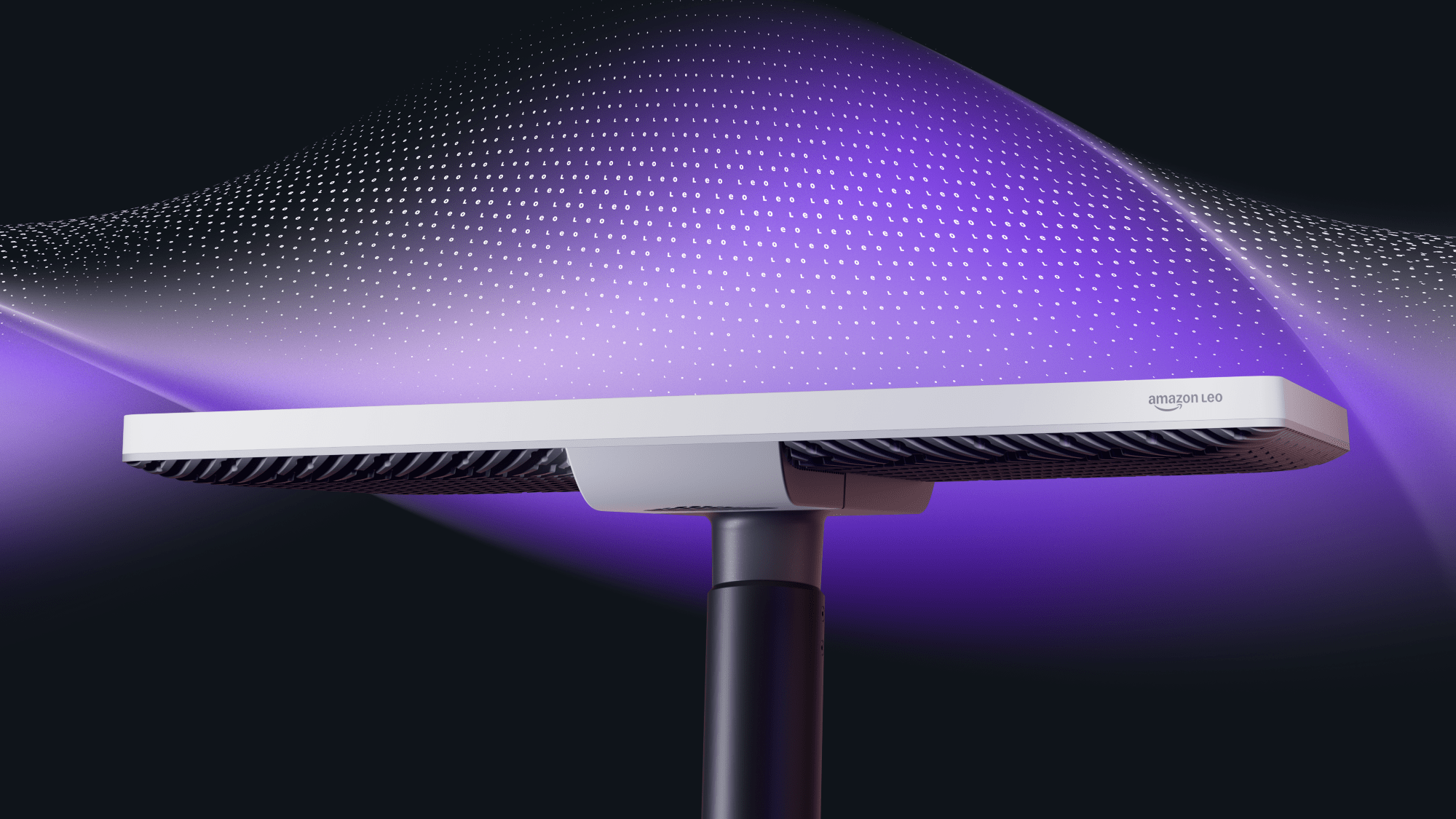
The company disclosed new performance details for the first time, saying its Leo Ultra tier will provide download speeds of up to 1 gigabit per second and upload speeds of up to 400 megabits per second. The 20-by-30-inch antennas are powered by a custom silicon chip designed to support uses such as videoconferencing, real-time monitoring and cloud integration.
“Amazon Leo represents a massive opportunity for businesses operating in challenging environments,” said Chris Weber, vice president of consumer and enterprise business for Amazon Leo. “We’re excited to provide them with the tools they need to transform their operations, no matter where they are in the world.”
Amazon said the service will connect directly to Amazon Web Services and other cloud environments, enabling customers to move data privately from remote sites without using the public internet.
In addition to the Ultra tier, Amazon plans two lower-cost options. Leo Nano, with a 7-inch antenna, will offer download speeds of up to 100 Mbps, while the mid-range Leo Pro will use an 11-inch antenna supporting up to 400 Mbps. Leo Ultra and Leo Pro hardware is now being shipped to select companies for testing, with additional participants to be added as network capacity grows. Pricing has not been disclosed.
Companies listed as partners or early users include JetBlue, Vanu Inc., Hunt Energy Network, Connected Farms and NBN Co. Other previously announced partners include Verizon, Vodafone and Vodacom, L3Harris, NTT and SKY Perfect JSAT in Japan, as well as DIRECTV Latin America and Sky Brasil.
Hunt Energy plans to use the service for connectivity at its infrastructure sites. “The combination of Amazon Leo bandwidth capabilities and the secure private link is exactly what we needed,” said Hunter Hunt, CEO of Hunt Energy Holdings.
JetBlue said it intends to use Amazon Leo to strengthen its in-flight Wi-Fi offering. “Choosing Amazon Leo reflects our commitment to staying ahead of what customers want most when traveling, such as fast, reliable performance and flexibility in our free in-flight Wi-Fi,” JetBlue President Marty St. George said.
Amazon has launched 153 production satellites into low Earth orbit over the past year and plans to deploy more than 3,000 for its first-generation constellation. Under its U.S. Federal Communications Commission license, half must be launched by mid-2026, a target analysts expect may prompt Amazon to seek an extension.
Rival SpaceX has deployed more than 9,000 Starlink satellites and serves over 8 million customers globally. Both companies build their spacecraft in the Seattle area.