1. Structural system
The main load-bearing structure of satellites generally uses “carbon fiber panels + aluminum honeycomb core” sandwich panels, which are assembled through screw or glue joints and have been maturely used for more than ten years. The core advantage is excellent lightweight properties (high specific strength, high specific stiffness), which can meet the strict requirements of spacecraft on structural weight and performance. Before 2015, it was mainly dominated by institutions within the system (such as 501, 703, etc.), and the price was relatively high, almost 40,000/square meter. With the rapid development of commercial aerospace in recent years, the demand for satellites has increased significantly. Some commercial companies have successfully participated in this market, which has driven the large-scale production of upstream materials and supply chain competition, causing the price of aluminum honeycomb panels to have dropped to 0.5-2 million yuan/square meter. From the perspective of usage, the amount of structural panels used in satellites is directly related to their size and quality. Small satellites generally only require 3-5 square meters of aluminum honeycomb panels, while the main structure of large satellites (taking about 800 kilograms as an example) is generally composed of 6 large panels, with a total required area of about 50-60 square meters. Based on this estimate, the structural plate material cost of a single such satellite (roughly calculated based on the current median price) has dropped from the historical millions of yuan to the level of hundreds of thousands of yuan.
2. Thermal control system
In traditional spacecraft (especially low-orbit or medium-orbit satellites), the thermal control system has long relied on aluminum shell-ammonia heat pipes because of its stable performance, light weight, and corrosion resistance in the operating temperature range of –70°C to +60°C. Ammonia can still effectively phase change at low temperatures, which is enough to meet the heat dissipation needs of early loads. However, as the power density of spaceborne electronic equipment increases (such as phased array radar, high-throughput communication payloads), the local heat flow can reach 50–200 W/cm², and the thermal conductivity capacity of traditional aluminum-ammonia heat pipes is approaching the limit. For this reason, copper-water heat pipes (applicable temperature range +20°C to +150°C) and copper-acetone heat pipes (applicable –30°C to +80°C) are gradually introduced. As a key component that efficiently conducts chip heat to the mounting board, the heat pipe is usually the single most valuable product in the thermal control subsystem. The matching vapor chamber achieves rapid lateral diffusion of local heat by pre-embedding capillary channels in the mechanical housing and improves the overall heat distribution efficiency. Taking a load that costs about 2 million yuan as an example, the supporting value of thermal control components (including vapor chambers and heat pipes) is usually more than 100,000 yuan. It is worth noting that the cost of the thermal control system does not increase linearly with load power or total cost, but presents a “step-like” characteristic. In the power range from a few hundred watts to 1–2 kW, as long as the structural space, heat dissipation area and passive thermal control architecture of the satellite platform do not fundamentally change, the investment in thermal control is relatively fixed.
3. Attitude and Orbit Control System
The attitude and orbit control system is mainly used for attitude and orbit control. The core components include star sensors, sun sensors, gyroscopes, magnetic components, and reaction wheels. Star sensors provide ultra-high-precision three-axis attitude information by identifying and comparing the positions of stars in the field of view. The technical barriers are relatively high. Generally, 2-3 units are used on a satellite, and the price of a single unit is around 300,000-350,000. Traditionally, it is mainly provided by the system (such as 8 03, 502). In recent years, with the successful intervention of commercial aerospace companies (such as Tianyin Electromechanical, which has supplied batches to Galaxy Aerospace, Changguang Satellite, etc.) and top universities (such as Tsinghua University and Beihang University), market participants have shown a diversified competitive situation. The solar sensor provides a relatively rough-precision but absolutely reliable attitude reference by detecting the direction of the sun’s vector. It is often used for initial attitude determination of satellites or as a backup for other sensors. The technology is relatively mature and there are many suppliers, including the 803 Institute, the 502 Institute, the Institute of Science and Technology, etc. A satellite generally uses 8 units, and the price of a single unit is about 20,000 yuan. Gyroscopes provide high-frequency, continuous attitude change information by measuring satellite angular velocity, which is the key to achieving fast, high-bandwidth attitude control. Fiber optic gyros have high precision and good reliability. Times Optoelectronics and others are making them. Generally, a satellite uses 2 units, and each one costs about 500,000 yuan. The magnetic component is mainly used to sense the earth’s magnetic field vector and is used to determine the attitude or cooperate with the magnetic torque device to unload the attitude (consumption of angular momentum). Suppliers are relatively concentrated, with 502 and 803 leading high-reliability models. Some commercial aerospace companies are also gradually entering. The price of a set of magnetic components is about 40,000 to 500,000. The reaction wheel is the core actuator of attitude control. Through the forward and reverse acceleration/deceleration of the high-speed flywheel, a control torque is generated to achieve high-precision and smooth adjustment of the satellite attitude. Germany used to monopolize the high-end market, with a unit price of 2-3 million, and one satellite uses 4 units. Now the system (803 Institute, 502 Institute, etc.) and some commercial companies (such as Hunan Lanyue, whose products are used in Tianyi, Galaxy, etc.) have achieved technological breakthroughs and mass production, and the price has dropped to 500,000-600,000/unit.
4. Propulsion system
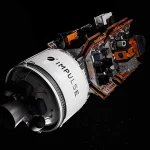
The propulsion system is the core power device for satellites to achieve orbit transfer, position maintenance and attitude control. It is mainly divided into two categories: chemical propulsion and electric propulsion. Chemical propulsion is characterized by large thrust and mature technology, and is suitable for GEO satellite positioning, rapid orbit transfer, emergency maneuvers, etc. The leading units mainly include 510 and 502, focusing on serving major national aerospace missions. The characteristics of electric thrust are high specific impulse, small thrust (not suitable for rapid orbit changes, but very suitable for long-term maintenance of low orbit, such as phase maintenance of starlink and GW constellations, atmospheric drag compensation), and long life (in line with the 5-7 year design life of commercial satellites). The 510 Institute is the largest domestic supplier of aerospace-grade electric propulsion (such as Shijian-20 and a high-orbit satellite), but its products are expensive (1.5 million+) and have a long delivery cycle. Commercial companies focus on “cost-effectiveness + rapid iteration” and replace institute products in non-critical missions or low-orbit constellations. They mainly include Star Space, Yidong Aerospace, and Aotian. The mainstream 40-50 mN electric propulsion price is 800,000-1 million yuan per set. Some key mission satellites use two sets to ensure reliability.
5. Solar Wing
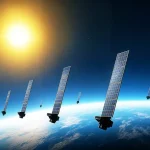
Solar wings mainly include substrates, cells, interconnections and welding, pasting and coating, carbon fiber frames, etc. The substrate is the basic support structure. The rigid substrate uses aluminum alloy or aluminum-based honeycomb panel, with a single square meter of about 20,000-40,000. The flexible substrate base generally uses American DuPont Kapton HN or domestic imitation PI film. Triple-junction gallium arsenide cells (including 300 μm ultra-white glass cover, anti-reflective coating, and bypass diodes) account for 50–65% of the total cost of the solar wing. The unit price depends on the conversion efficiency, radiation resistance level, whether to pre-integrate interconnect strips, etc. 100,000–150,000 yuan/㎡ is the current mainstream price range, 200,000 yuan is a high-orbit aerospace grade, and commercial low-orbit satellites are usually controlled within 120,000 yuan. The interconnection and welding links are charged according to the complete set of replicas, which is about tens of thousands of yuan per set. Thermal conductive glue or silicone rubber is used for pasting and coating, and the cost per square meter is about 10,000. The carbon fiber frame of the flexible solar wing is related to the unfolded support design, and each set is worth about 50,000 to 100,000.
6. Laser terminal
The number of satellite laser terminals depends on the constellation design, and the core is to find the best balance between performance and cost. If the orbital plane and phase difference are not large, two terminals are generally installed, such as Starlink V1.0 and early OneWeb. Under this configuration, two terminals in tandem can establish a stable front-to-back “in-orbit link” in the same orbital plane, forming an efficient space optical bus to minimize cost, weight and power consumption. When cross-orbit communication is required, an additional one is added for “inter-orbit communication”, thereby upgrading to a 3-terminal configuration. The third terminal is usually installed sideways or obliquely to connect adjacent orbital planes (the same inclination but different right ascension of the ascending node). This is also the mainstream choice for large constellations such as the current second-generation Starlink satellites. For more complex constellation architectures, configurations of four or more terminals will be further used to meet the needs of multi-orbit plane connection, network flexibility optimization and system redundancy, which is common in polar orbit + inclined orbit hybrid constellations. Within the system, the price of a set of laser terminals for star networks such as those provided by 704 is RMB 3.3-3.5 million, and for commercial aerospace companies, the price is less than RMB 2 million. The target will be reduced to RMB 1 million/set after future scale-up (referring to a terminal with a communication distance of 100 kilometers and a code rate of 40 to 50 Gbps plus a set of back-end controllers).