In order to promote exchanges and interactions among various subdivisions of commercial aerospace, NiHaoSpace has launched an expert column. Invite industry leaders such as founders, technical leaders, and senior experts from each segment to write articles and share topics such as industry progress, technology paths, and market prospects.
The author of this issue is Wu Shaojun, the founder of Aurora Starcom, sharing with you: “From verification to mass production!” Architecture evolution and industrialization transformation of space laser communication terminals.
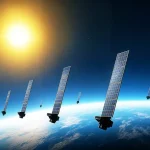
In a live broadcast in August 2025, SpaceX publicly demonstrated the “Starlink” satellite factory for the first time, systematically presenting the automated production lines and core technologies that support the rapid deployment of huge satellite constellations. Among them, the fifth-generation laser communication terminal carried by the “Starlink” satellite has become the focus of attention from the outside world. The terminal adopts an integrated integrated optical circuit design, which highly integrates key components such as optical telescopes, pointing turntables, fast reflectors, and transceiver electronics into a compact, independent standardized module. Each satellite is generally equipped with 3 to 4 such terminals. Based on the overall constellation planning, it can theoretically form more than 16,000 concurrent links, and the design rate of a single link can reach 100 to 200Gbps.
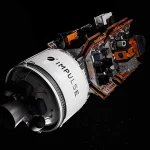
Domestically, space laser communications companies represented by Aurora Starcom also actively adopt integrated integrated designs and achieve technological breakthroughs through rigorous on-orbit testing. Aurora Starcom serves the third-generation laser communication terminal of the Blue Tower Intelligent Project. All precision optical components are fixed on a unified high-stability base, which significantly improves the stability of the system in the environment of launch vibration and on-orbit thermal deformation, while greatly simplifying the production and testing process. This design has been verified in the orbit environment, including achieving 400Gbps inter-satellite communication rate and completing more than 116 hours of continuous uninterrupted communication at a link distance of 1,150 kilometers. The technical indicators have reached the international advanced level, laying the foundation for mass production and cost control.
Leading Chinese and foreign companies have reached the same goal on different core technology routes, jointly revealing that the integrated design of laser communication terminals is an inevitable choice to solve the deployment problems of future giant constellations. The formation of this industry consensus did not happen overnight. Behind it is that after more than ten years, space laser communication terminals have followed a clear evolution path from meeting basic functions, to pursuing engineering reliability, to embracing large-scale mass production.
01
The fourth generation evolution of space laser communication terminals
The technological evolution of space laser communication terminals is a profound architectural change driven by market demand, engineering constraints and technological breakthroughs. This development process fully reflects the strategic transition from feasibility verification to business services to industrial deployment, which can be roughly divided into four iconic stages: from a periscope architecture that focuses on optical path refraction and optical efficiency, to a hierarchical pointing mirror architecture adapted to dynamic platforms, and then to a Kurdish integrated terminal for long-term service, and finally to an era of integrated, mass-produced terminals that support constellation deployment.
Generation 1: Periscope architecture – feasibility verification that lays the foundation
Before 2010, the core task of space laser communications was to verify the basic feasibility of establishing a stable optical link in an orbital environment. Early terminals generally adopted a “periscope-type” architecture, which guided the externally incident laser beam to a fixed and stable large-scale optical platform or telescope focal plane inside the spacecraft through multi-stage refracting mirrors. This design separates the sophisticated and heavy optical receiving and processing equipment from the external pointing mechanism to improve system stability and ensure optical coupling efficiency.
The European Space Agency’s (ESA) SILEX project is an important result of this phase, achieving the world’s first inter-satellite laser link data transmission. Technology verification satellites such as Japan’s ETS-VI also use similar solutions. Although the feasibility of establishing an on-orbit laser communication link has been successfully verified, this type of terminal is bulky and heavy, making it difficult to meet subsequent miniaturization and low-cost needs.
Second Generation: Pointing Mirror Architecture – Flexible Link Building to Respond to Dynamic Scenarios
From 2010 to 2016, with the feasibility verification completed, the research focus turned to solving the problem of rapid capture and stable tracking under dynamic platforms. Therefore, the “pointing mirror type” architecture was born, using a coarse and fine two-level pointing system: coarse pointing is usually completed by a two-dimensional pan/tilt for large-scale search and rough alignment; fine pointing is achieved by a fast deflection mirror for high-frequency, small-scale precise adjustment to compensate for spacecraft vibration and relative motion.
The OPALS deployed by the National Aeronautics and Space Administration (NASA) on the International Space Station in 2014 and the LLCD project in 2013 are representative achievements of this stage. This generation of terminals has made breakthroughs in dynamic tracking capabilities and link reliability, but the mechanical and control complexity is high, and the integration difficulty and cost are still high, which limits the miniaturization and popularization of the system.
The third generation: Kurdish-style integrated terminal—towards long-term service business applications
From 2016 to 2021, the focus of laser communication terminal design will shift from demonstration verification to long-term and stable commercial services. The typical solution at this stage draws on Coude’s optical path design, which directs the beam into an internal space with controlled thermal and structural stiffness, and highly integrates the telescope, pointing system, tracking unit and electronic equipment into an independent mechanical housing to improve thermal stability and system reliability. During this period, terminals generally used the theodolite two-axis gimbal to achieve a wide range of coarse pointing, and combined it with a fast swing mirror to achieve high-precision narrow beam tracking. The theodolite architecture is characterized by a clear structure, mature control logic and high stiffness. It is a commonly used mechanical implementation scheme for medium and large-aperture Kuder-type optical systems, thus improving the reliability and maintainability of long-term on-orbit service.
This includes the STPSat-6 satellite of the National Aeronautics and Space Administration’s (NASA) “Laser Communications Relay Demonstration” (LCRD) project. As the first technology demonstration system to perform multi-year two-way optical relay in geosynchronous orbit, it has verified the long-term operation capabilities of the Kurdish integrated terminal. Europe’s “European Data Relay System” (EDRS) has been relaying data from low-Earth orbit satellites to the ground at a rate of 1.8Gpbs in almost real time since 2016, demonstrating mature industrial relay capabilities.
Kuder-style integrated terminals have significant advantages in reliability and long-term service, but their complex subsystems and high manufacturing costs still make them more suitable for high-value relay satellites or scientific exploration missions, rather than directly for ultra-low-cost large-scale constellations.
The fourth generation: Integrated integrated optical circuit architecture – supporting the mass production revolution in the constellation era
After 2020, giant low-orbit satellite constellations such as SpaceX’s “Starlink” have put forward extreme cost control and production capacity requirements for laser communication terminals, promoting the rapid development of the “integrated integrated optical circuit” architecture. This type of terminal highly integrates key subsystems such as optical telescopes, pan-tilt systems, fast reflectors, and transceiver electronics into compact standardized modules. The number of components is reduced to about 11, which is significantly simplified compared with traditional architectures.
The fifth-generation Starlink laser communication terminal disclosed by SpaceX and the third-generation laser communication terminal launched by Aurora Starcom are typical representatives of this route. This design evolves the terminal from a “precision scientific research instrument” to a “standard industrial product” that can be produced in an assembly line, significantly reducing the cost of a single machine and the complexity of integration, and paves the way for global communication networks in large-scale satellite constellations.
02
“Integrated integrated optical circuit” has become the mainstream of the industry
“Integrated integrated optical circuit” has become the mainstream of the industry, which is driven by internal technical factors, market demand and national strategy. From SpaceX’s large-scale mass production practice to the choice of many companies around the world, it has been fully demonstrated that this architecture is becoming an industry consensus.
The inevitable choice for constellation scale. Taking the deployment scale of more than 8,000 satellites in the “Starlink” plan as an example, terminals with traditional standard structures are difficult to meet the high production demand of mega-constellations due to long assembly, integration and testing cycles and high costs. Integrated design makes assembly line mass production a reality by simplifying the process and improving the level of automation, fundamentally solving the engineering bottleneck of large-scale deployment.
Intrinsic needs for performance and stability. Highly dynamic inter-satellite links have extremely high requirements on the stability and pointing accuracy of terminals. The integrated design improves structural rigidity and thermal stability by shortening the optical path and reducing alignment surfaces, and enhances micro-vibration resistance and on-orbit adaptability, thus ensuring long-term stable communications.
Interface standardization and construction of industrial ecology. Integrated terminals are easy to form standardized optical, electrical, thermal and data interfaces, and can quickly adapt to different satellite platforms like “plug and play” devices, laying the foundation for the construction of an open industrial ecosystem.
Strongly driven by national policies and industrial competition. Developing an integrated information network between space and ground has become a strategic consensus among major aerospace countries. In the context of global competition, taking the lead in mastering low-cost, high-performance, mass-produced integrated terminal technology means occupying the strategic commanding heights of future space infrastructure construction.
The development of space laser communication terminals reflects the development pattern from feasibility verification to meet basic functions, to stable and reliable engineering applications, to constellation mass production to meet market demand. Driven by the triple drive of commercial mega-constellation demand, international industrial competition and strategic policies of various countries, integrated integrated optical circuits have become an irreversible mainstream trend with their advantages in cost, performance, production capacity and standardization. This not only breaks the bottleneck of manufacturing and assembly, but also promotes the transformation of space laser communication terminals from “laboratory equipment” to “standardized industrial products”, laying a solid foundation for the future construction of global satellite Internet, deep space exploration and space-terrestrial integrated information networks.
About the author
Wu Shaojun, Chairman and General Manager of Aurora Starcom, Ph.D. of the Chinese Academy of Sciences, MBA of Peking University, Distinguished Professor of Beijing University of Posts and Telecommunications, former researcher and chief model designer of the Space Application Center of the Chinese Academy of Sciences, has presided over many major national special projects such as the “Manned Space Station Application Information System”, and is a key technical talent of the Chinese Academy of Sciences. He is an important promoter and practitioner of my country’s space laser communication technology; he founded Beijing Aurora Starcom Technology Co., Ltd. in 2020.