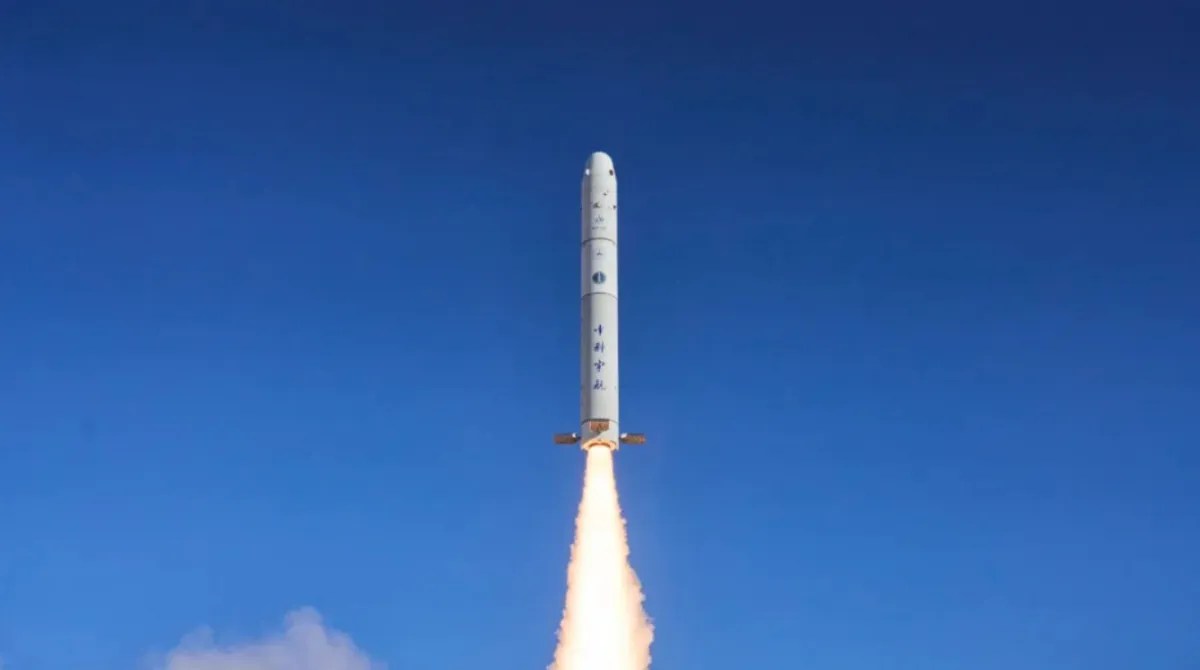
Chinese commercial aerospace firm CAS Space has completed a successful test flight of its Lihun-1 Y1 suborbital vehicle, a step toward developing space tourism and commercial microgravity applications, according to a report by Xinhua.
The test flight saw the capsule reach a maximum altitude of 120 kilometres before returning safely to the Jiuquan launch site using a parachute recovery system. Engineers verified key technologies during the mission, including aerodynamic braking and a high-precision landing system, confirming the vehicle’s operational reliability, the company said.
CAS Space described the Lihun program as a cost-effective platform designed to support a range of commercial activities. The company said the vehicle is capable of providing more than 300 seconds of stable microgravity, making it suitable for both suborbital space tourism and scientific research.
During the flight, the capsule carried experimental equipment from the Institute of Mechanics, Chinese Academy of Sciences, which was used to test laser additive manufacturing under microgravity conditions. CAS Space said the results showed the platform could support future orbital manufacturing applications.
The mission also carried biological payloads, including rose seeds that were exposed to space conditions. Researchers plan to study potential genetic mutations, with the aim of developing new plant varieties and establishing a gene bank of so-called “space roses,” Xinhua reported.
Deputy chief designer Wang Yincheng said the company intends to expand the Lihun family of suborbital vehicles. Current development efforts are focused on life-support technologies and emergency rescue systems, key requirements for future crewed suborbital flights.