Startup Catalyx Space has secured $5.4 million in seed funding to accelerate the development of space infrastructure, including satellite buses and reentry platforms. The funding round, led by Outlander VC, also included participation from Arka Venture Labs, Lex Reddy, KDX Management LLC, and several other investors.
Founded last year by Rifath Shaarook in India, Catalyx has already launched its first spacecraft in collaboration with the Indian Space Research Organisation (ISRO) to demonstrate its satellite separation system and other subsystems. Shaarook confirmed that a second spacecraft is planned for launch in December or January, carrying multiple sensors, with a 100 kg spacecraft scheduled for next year.
Shaarook highlighted the company’s goal to simplify space business operations: “I started the company last year primarily because of frustration during my PhD with how slow it is to deploy new systems in space and bring them back. The mission is to build the complete backend infrastructure layers so the customers can focus on the application.” He added that Catalyx aims to make space applications—from manufacturing to communications—as easy to deploy as software.
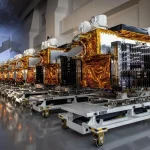
Catalyx is developing a satellite bus called Cosmotron and a Rex reentry capsule, intended for uses including hypersonic testing, pharmaceutical, and biotech material science. The company follows a vertically integrated approach, building its systems in-house, and is currently constructing a 25,000-square-foot facility in Ahmedabad, India, to centralize development, testing, and design.
Outlander VC’s junior partner, AJ Smith, praised the company’s execution: “A lot of space companies and founders claim to have a ‘move fast and break things’ mentality, but very few of them are actually operating at the type of cadence with the type of quality that Rifath and Catalyx are.” Catalyx’s team currently numbers 30 employees, with plans to expand to 45–50 by 2026.
The company aims to address fragmentation in the space sector by offering a complete infrastructure to operate, iterate, and return from orbit, enabling businesses, governments, and educational institutions to deploy assets more efficiently.