01
Industry overview this month
In April 2026, global commercial aerospace will further enter the low-orbit constellation rush deployment window stage. 1. SpaceX continues to maintain the advantage of Starlink with high-frequency launches, and Amazon Leo has significantly accelerated the pace of network construction. The global low-orbit communication resource frequency orbit competition has further heated up. 2. China’s commercial aerospace industry shows the characteristics of accelerating network construction and solving engineering problems in parallel. The Qianfan constellation started networking again after a few months, the GW State Grid constellation continued to be deployed stably; Tianlong 3 made its first flight, and China’s large-capacity recyclable rocket entered the high-intensity engineering verification stage. 3. In the capital market, funds continue to be concentrated in satellites and rockets, but the problem of uneven hot and cold conditions in the upstream and downstream of the industrial chain is beginning to emerge. 4. Many local governments have issued special industrial policies, the industry standard system has been further improved, and China’s commercial aerospace is gradually shifting from project-driven to industrial system-driven.
02
Hello Space Global Commercial Aerospace Data
Overview of key commercial aerospace data in April 2026:
03
Launch and Orbit Situation
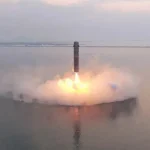
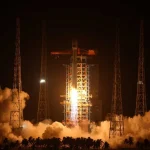
In April 2026, a total of 31 space launches were carried out around the world, and 397 spacecraft were put into orbit. Among them: China: 8 launches (1 failure) United States: 18 launches (1 failure) Russia: 4 launches Europe: 1 launch China and the United States account for the majority of global space launches. Tianlong 3 failed on its first flight. The Blue Origin first-stage booster was successfully reused, but the payload failed to successfully enter orbit and the launch mission failed.
04
Constellation networking progress
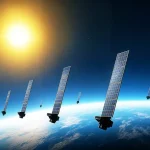
In April, China Star Network launched five satellite Internet low-orbit satellites into orbit through one launch; as of the end of April, the cumulative number of GW State Grid constellations launched reached 168, and the network construction progress is progressing steadily. Yuanxin Satellite launched 18 satellite Internet low-orbit satellites into orbit through one launch; as of the end of April, the cumulative number of Qianfan constellations launched reached 126, and the network was established again after half a year. SpaceX has sent 231 Starlink satellites into predetermined orbits through 9 launches and continues to build high-frequency networks. Amazon launched 90 Amazon Leo constellation satellites into predetermined orbits through three launches, accelerating network construction to cope with deadline pressure.
Hello Space Observer
The most obvious change in April is that global low-orbit constellations have begun to enter the capacity competition stage. In the past, the industry generally believed that the core of constellation construction was the number of satellites. However, as countries speed up network construction, the real bottleneck begins to shift to rocket launch capabilities, especially stable, low-cost, and high-frequency transportation capabilities.
At present, with the exception of SpaceX, most of the world’s constellations are still highly dependent on external transportation capacity and have obvious insufficient transportation capacity. Amazon Leo, GW State Grid Constellation, Qianfan Constellation, etc. all face similar problems. In the next few years, whoever can take the lead in solving low-cost high-frequency transmission will truly have the ability to build large-scale networks.
05
Investment, Financing and Capital Markets
In April 2026, a total of 21 financing incidents occurred in the global commercial aerospace field, totaling more than 9.48 billion yuan. Among them, the Chinese market: 12 financings, with an amount exceeding RMB 2.95 billion. Main flow of funds: Satellite overall Rocket overall Constellation operation
Hello Space Observer
Financing in April showed a trend worthy of attention: funds continue to be concentrated on rockets and satellites as a whole, but the imbalance between hot and cold in the upstream and downstream of the industrial chain has begun to intensify.
At present, the industry generally pays more attention to more deterministic directions such as whole rockets, whole satellites, and constellations. However, investment in underlying links such as engines, core loads, measurement and operation control, ground systems, and downstream links such as satellite applications is still obviously insufficient.
In the short term, it is easier for companies as a whole to gain capital attention; but in the long term, the true competitiveness of commercial aerospace still depends on the maturity of the supply chain and industry synergy. In the future, the industry may have a phased problem of “the overall economy is running too fast and supporting equipment is too slow to catch up”.
06
Progress of China’s commercial aerospace engineering
Most progress in China’s commercial aerospace engineering in April focused on key components of rocket engines: Tianlong 3 failed in its first flight; multiple rocket engines from multiple companies completed testing of key components; Tianhui Aerospace’s “QL-1” staged combustion pumping cycle rocket engine completed high-working-condition short-range testing; the China Aerospace Lijian-2 large liquid launch vehicle super factory was completed and put into production.
Hello Space Observer
The failure of Tianlong-3’s first flight was one of the most watched events in China’s commercial aerospace industry in April.
Compared with small and medium-sized rockets, large-capacity recyclable rockets have higher coupling complexity for engines, structures, controls, and ground systems, and the engineering challenges are far greater than those of previous models.
From an industry perspective, such failures are not necessarily a bad thing. As many companies enter the stage of high-capacity rockets, future industry competition will increasingly rely on system engineering capabilities, quality systems and rapid zeroing capabilities, rather than just single-point technological breakthroughs.
07
SpaceX news
In April, Falcon 9 launched 11 times and put 233 spacecraft into orbit, 9 of which were Starlink satellite launches. On April 7, SpaceX revealed its IPO plan. The initial public offering plans to raise US$75 billion and its valuation is expected to reach US$1.75 trillion. Preparations are also being stepped up for the twelfth test flight of Starship. On April 15 and 16, SpaceX conducted a full-engine, full-time static ignition test of the Starship V3 spacecraft S39, and a full-engine static ignition test of the super-heavy booster B19. Test flights are expected in mid-May. On April 23, the U.S. Space Systems Command awarded SpaceX a contract worth $57.3 million to develop a new “inter-satellite communication system” based on the Link-182 waveform.
Hello Space Observer
The most noteworthy thing about SpaceX in April is that Starship V3 has begun to enter the continuous engineering verification stage.
Once the starship truly enters a stable reuse cycle, its single deployment capability, unit cost and satellite delivery efficiency may further widen the gap with other launch systems around the world. For global low-orbit constellations, this means that network competition may further escalate from quantity competition to transport capacity system competition.
At present, China’s commercial aerospace has formed a certain foundation in the field of small and medium-sized liquid rockets, but there are still obvious gaps in terms of large-capacity reuse, launch frequency, and supply chain maturity.
08
Conclusion
As Starlink continues to launch at high frequencies, Amazon Leo accelerates, and China’s Qianfan Constellation and GW State Grid Constellation continue to build networks, many countries are competing for limited orbits, frequencies, and market space. Who can complete networking faster, more stably, and at lower cost has become the core of industry competition. Against this background, the importance of rocket launch capabilities is rapidly increasing. Whether China’s large-capacity rockets are intensively entering the engineering verification stage or countries are accelerating the construction of local launch capabilities, they are essentially competing for infrastructure dominance in the future low-orbit era. In April, China’s commercial aerospace industry overall still maintained its pace of advancement. Although Tianlong-3 failed in its first flight, it also reflected that China’s commercial aerospace industry has begun to enter the deep-water area of large-capacity, reusable rockets. At the same time, more and more countries are beginning to re-emphasize the construction of their own aerospace infrastructure to reduce their dependence on SpaceX. Global commercial aerospace competition is gradually evolving from enterprise competition to competition between industrial systems and national capabilities.
Special reminder
For more complete industry data, corporate dynamics and trend analysis, we have compiled it into the “Commercial Aerospace Dynamics Monthly Report for April 2026 (Full Version)” PDF for reference by corporate members, research institutions and industry practitioners.
Industry companies are welcome to join the “Nihao Space Membership Program” to obtain the full monthly report and more commercial aerospace industry research content.
Hello Space “Commercial Aerospace Monthly”
Continuously track global commercial aerospace key data, industry dynamics and industry trends every month.