Last week, the windshield of a United Airlines 737 flying from Denver to Los Angeles suddenly broke at an altitude of 10,000 meters, and it was suspected that it was hit by space debris.
Today we are going to talk about: Does space junk hit a plane? A new trillion-level aerospace industry is breaking out!
After investigation, it was found that the passenger plane had actually hit a weather detection balloon. Does that sound relieved? But this incident made people truly feel for the first time: the sky above the earth is really getting more and more “crowded”.
Although this time it is not space debris, similar risks are indeed becoming more and more real. In the past few decades, humans have launched tens of thousands of satellites and left countless debris in orbit. These space “junk” are becoming new hidden dangers affecting earth security and space activities. Behind this, a new trillion-level aerospace industry is emerging – space situational awareness (SSA) and on-orbit services.
01
Why is this serious?
Let’s first introduce a concept, what is space debris? Space debris, also called space junk, refers to various man-made wastes and their derivatives in the earth’s orbit, ranging from rocket debris and abandoned satellites to coating debris, screws, etc., flying around the earth at high speed.
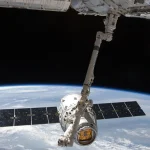
As human space activities become more and more frequent, there are more and more space debris in the Earth’s orbit. Currently, there are more than 36,000 monitorable debris above 10 centimeters floating in Earth orbit, as well as hundreds of millions of tiny debris. The International Space Station adjusts its orbit an average of 25 times a year to avoid debris. In the six months to the end of May 2025, Starlink satellites performed 144,404 evasive maneuvers. Space debris is no longer just a “scientific problem”, but a space transportation safety crisis.
Even more terrifying is the “Kessler effect” – when the density of objects in low-Earth orbit reaches a certain level, the debris generated by object collisions will trigger more collisions, eventually turning the entire orbit into a “garbage patch.” If left unchecked, the return of space debris to Earth will threaten human security. It will not only become a reality but also become more frequent. More importantly, space will become a “forbidden zone” for humans in a few decades.
02
Who is monitoring this space junk?
In order to avoid disasters, humans began to build a “space traffic management system” – space situational awareness.
To put it simply, space situational awareness means monitoring all objects in the Earth’s orbit, using radar, telescopes, space-based sensors and other means to figure out their positions and trajectories, catalog them, predict risks, and avoid dangerous collisions. Commercial companies currently engaged in space situational awareness business can be roughly divided into three categories: Sensor network operators: provide data collection services by building or operating sensor networks; data analysis service providers: provide data analysis services using data observed by others; comprehensive service providers: provide one-stop services from data collection to data analysis, mission planning, etc.
Representative foreign companies include Leolabs, Slingshot, NorthStar, etc., among which Leolabs provided tracking services for SpaceX’s Starlink satellites during initial deployment and orbital operation;
Domestic Aotian Technology, Kaiyun United, Star Map Measurement and Control, etc. are also accelerating their layout. On September 5, 2025, Kaiyun United successfully launched the first satellite of the “Xinghan Project” Broadcasting Constellation “Kaiyun No. 1”. At the end of September 2025, Star Map Measurement and Control also announced its low-orbit space situational awareness constellation system composed of 144 satellites.
But monitoring is only the first step. When there are more and more space junks, just “seeing” them is no longer enough – we have to actually clean up, repair, and even recycle them.
03
The rise of on-orbit service industry
This is “on-orbit servicing” – simply put, it means refueling, repairing or moving on-orbit objects to achieve life extension, orbit transfer or active cleaning.
On-orbit services include:
1. Space debris cleanup: Use mechanical arms, trawls, magnetic suction, ion propulsion and other methods to capture and deorbit debris. For example, Japanese aerospace company Astroscale’s ELSA-d mission successfully verified technologies such as on-orbit rendezvous, capture, and deorbiting, and ClearSpace’s ClearSpace-1 will also complete its first commercial cleanup mission in 2026;
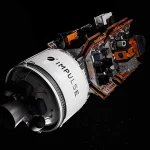
2. On-orbit refueling and maintenance: It means extending the life of satellites, performing on-orbit fuel refueling, component repair and replacement, etc. for high-value satellites. For example, the MEV-1 developed by Space Logistics, a subsidiary of Northrop Grumman, successfully extended the life of the international communications satellite IS-901 by five years. On January 7, 2025, my country’s satellite refueling and life extension service technology verification satellite Shijian 25 was also successfully launched;
3. On-orbit assembly and manufacturing: On-orbit assembly of large antennas, space telescopes, and even space factories. For example, the ForgeStar-1 satellite of the British Space Forge Company has successfully operated in orbit and will verify the feasibility of producing new semiconductor materials and a series of cutting-edge return technologies in a microgravity environment.
Chinese commercial aerospace companies such as Sanyuan Aerospace and Guoyu Xingchen are also accelerating the deployment of on-orbit services.
According to predictions by many institutions, the global on-orbit service market will exceed 10 billion US dollars in 2030, and China will be one of the fastest growing markets.
04
The next trend in commercial aerospace
The United Airlines incident is a warning that the earth is being “knocked on the door” by space debris. The space “after-service market” is becoming the next industry hot spot. In the future, whoever can master core capabilities such as space situational awareness, debris clearance, and on-orbit maintenance will have the “key” to space security, and will also have the say in the space economy.
As humans’ ability to enter space improves, space assets gradually increase, and a large number of new demands and new markets explode, which will become the future focus of the commercial aerospace industry. Nihao Space is planning a special topic called “China’s Top 10 New Commercial Space Tracks in 2025”, including space situational awareness, on-orbit services, space computing, space laser communications, etc., so that more people can see the future of the space economy.