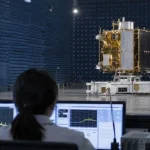
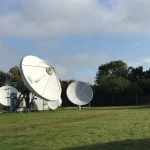
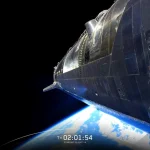
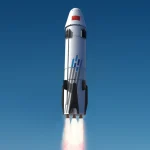
In August 2025, StarNet launched the “Hurricane” mode. Within 27 days, it launched 6 consecutive launches and put 47 satellites into orbit. It used 4 rockets, Chang Liujia, Chang Bajia, Chang 5B, and Chang 12. The satellites put into orbit were from the Fifth Academy, Shanghai Micro and Galaxy Aerospace. Behind this is the “deep accumulation” of China’s entire commercial aerospace industry chain in the past 10 years.
Today let’s talk about China’s “new forces” in commercial aerospace in 2025.
01
Where do “new forces” come from?
Although China began to encourage private capital to enter the aerospace track as early as 2014, China’s commercial aerospace will truly enter “industrial development” around 2020. In 2016, SpaceX formally applied to the International Telecommunications Union to build a Starlink constellation consisting of 12,000 low-orbit broadband communication satellites, registered the Starlink trademark in the United States, and began developing the first generation of Starlink satellites in Washington State. On March 30, 2017, SpaceX’s Falcon 9 completed the first rocket recovery and reuse in human history, lowering the cost of humans entering space from US$20,000 per kilogram to US$3,000 per kilogram. The world is beginning to realize the feasibility of building a 10,000-satellite low-orbit Internet constellation, as well as the strategic significance of low-Earth orbit and communication frequencies as non-renewable resources. In May 2019, Starlink officially launched network launch, announcing that the global competition for frequency orbit resources had officially begun. In order to maintain frequency and orbit and avoid falling behind in the future satellite Internet field, China has begun to consider the feasibility of building a “Chinese version of Starlink”. In April 2021, Starnet Group, funded by the State-owned Assets Supervision and Administration Commission on behalf of the State Council, was formally established and began to demonstrate the construction of the Chinese version of Starlink. Earlier in March 2018, Yuanxin Satellite, which is jointly invested and controlled by a wholly-owned subsidiary of Shanghai State-owned Assets Supervision and Administration Commission, also began to lay out the satellite Internet track. In November 2020, China Star Network officially applied to the ITU for a total of 12,992 GW constellations. During the Fourth China International Import Expo in 2021, the Yangtze River Delta G60 Science and Technology Innovation Corridor released the G60 Starlink Plan, which plans to build a satellite Internet constellation of more than 14,000 low-orbit broadband communication satellites. With the application of two major constellation plans, the domestic upstream industry chain has started a wave of building satellite Internet. In 2020, satellite Internet-related industries such as “recyclable rockets” and “electric propulsion”, “flat-panel communication satellites”, “foldable solar wings”, “inter-satellite laser communications”, “phased array radar”, “stainless steel tanks”, “deep variable thrust rocket engines”, etc., have become hot spots for entrepreneurship in the commercial aerospace field. These innovative enterprises directly driven by satellite Internet constellation networking are what we often call “new commercial aerospace forces.”
02
What are the “new forces”?
Entrepreneurship around “new aerospace forces” with “satellite Internet” as the core also has different characteristics and distinct differences in different development periods. The first is the new aerospace forces directly driven by the “domestic star chain”. For example: Oriental Space, which develops recyclable rockets, was established in 2020. Although the first rocket it developed was also a solid rocket, its first solid rocket, Gravity One, directly targeted the needs of “large transportation capacity” and “satellite networking” and became the world’s largest solid rocket, unlike the concepts of other established rocket companies such as Blue Arrow. Jianyuan Technology, a company in the field of recyclable rocket development, was established in 2020. The “Yuanxingzhe 1” developed by it is the first “stainless steel rocket” in China. “Tianhui Aerospace” in the field of depth variable thrust liquid rocket engines was established in 2021. The Qiaolong One developed by it can not only achieve a depth variable thrust of 50%-110%, but also has an original staged combustion extraction cycle technology with a simple structure and a thrust-to-weight ratio of 160, which is domestically leading. Yidong Aerospace in the field of electric propulsion was established in 2020. The Hall electric thruster developed by it not only meets the needs of lightweight and long-life networking satellites, but the krypton working fluid used is also cheaper than the traditional xenon working fluid, giving it an advantage in networking costs. There are also Starlink in the field of spaceborne 5G base stations, established in 2021; Aurora Starcom, Blue Star Optical Domain, and Helium Star Optical Link in the field of laser communication payloads, all established after 2020; Hainan Commercial Development in the field of network launch, established in 2022; Pioneer Satellite in the field of foldable solar wings, established in December 2019… These new commercial aerospace forces will become the mainstay of China’s satellite Internet in the future. Secondly, when these new technologies driven by satellite Internet achieve breakthroughs, they also give rise to many new demands. For example: Seth Base’s “ultra-low orbit ultra-high-resolution constellation” takes advantage of the orbit-maintaining capability brought about by the ultra-long working time characteristics of electric propulsion to deploy remote sensing satellites in an ultra-low orbit of 200 kilometers, greatly improving the resolution of remote sensing satellites. National Star Aerospace’s “Star Calculation Plan”. As the number of satellites continues to increase, satellites will generate massive amounts of data every day in the future. Space-based computing power can not only use AI technology to process data and improve the utilization of satellite communication bandwidth, but also use the energy of satellite solar wings to save the consumption of fossil energy on the ground. At the same time, the ultra-low temperature of space can be used to solve the cooling needs of large-scale computing power. The SAR payload technology of Zhixing Space has been miniaturized and applied to UAV radar payloads in the low-altitude economic field, which can effectively improve the safety of UAV flight control…
03
write at the end
These new demands arising from new commercial aerospace technologies will also spawn and drive more tens of billions or even hundreds of billions of new industries and new application scenarios, bringing more convenience to human life. The commercial aerospace industry also needs “new forces” that are constantly emerging to complete the industry’s iteration and rapid development.
Next, Nihao Space will also introduce the “new forces” of China’s commercial aerospace in 2025 by industry according to several major categories such as complete satellites and rockets, parts and components, satellite applications, space services, supporting and services.