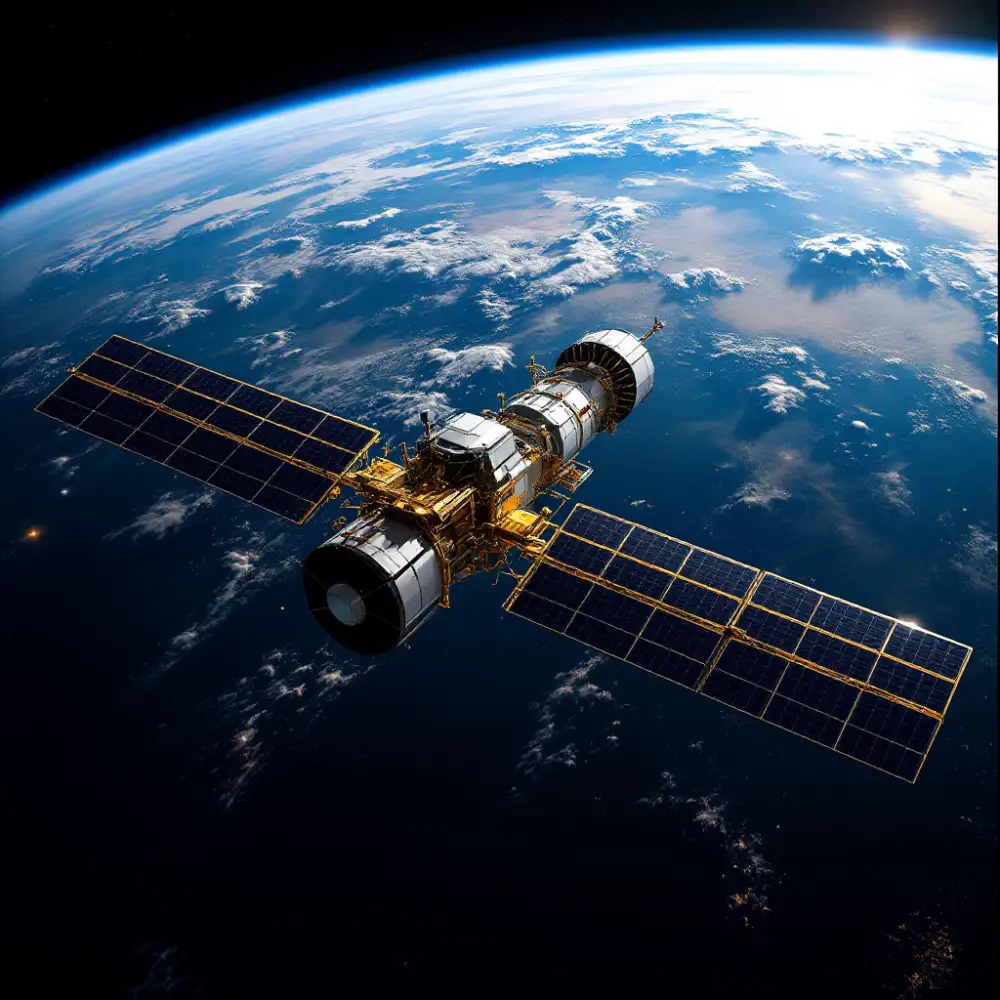
Intuitive Machines’ decision to acquire the former Maxar satellite manufacturing business is beginning to look less like a bet on traditional spacecraft production and more like a strategy to build a vertically integrated space infrastructure company.
The clearest evidence came in August 2026, when Intuitive Machines disclosed that it had secured a commercial contract worth more than $600 million to manufacture three geostationary orbit (GEO) communications satellites. The 30-month agreement, announced as part of the company’s second-quarter financial results, represents its largest non-lunar manufacturing award to date.
The order is significant not only because of its size, but because it directly validates the industrial capabilities Intuitive Machines acquired when it purchased Lanteris Space Systems, formerly Maxar Space Systems, for $800 million in January.
The deal is now being connected to a broader strategy that includes satellite communications, national-security spacecraft, lunar infrastructure, in-space data processing and, eventually, commercial data centers in orbit. Intuitive Machines has also invested $175 million in expanding its satellite communications and data-processing capabilities.
Taken together, these developments suggest that the company is attempting to move beyond its identity as primarily a lunar lander developer and establish itself as a multi-orbit space infrastructure provider.
The $600 Million Order Changes the Economics of the Maxar Deal
On August 13, 2026, Intuitive Machines disclosed that an undisclosed commercial customer had awarded it a contract valued at more than $600 million to manufacture three GEO communications satellites.
The spacecraft are scheduled to be delivered under a 30-month agreement. The customer was not identified, and the company did not disclose detailed spacecraft specifications.
The award nevertheless represents an important milestone because it demonstrates that the manufacturing business acquired from Lanteris can generate large commercial orders independently of Intuitive Machines’ lunar activities.
The acquisition was completed on January 13, 2026. Intuitive Machines paid $800 million before closing adjustments, consisting of $450 million in cash and $350 million in Intuitive Machines Class A stock.
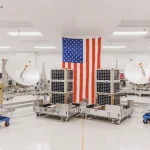
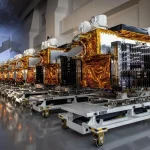
Lanteris brought with it the manufacturing heritage of Maxar Space Systems, including the established 1300-series GEO satellite platform, spacecraft production infrastructure, cleanroom capacity and high-power satellite engineering expertise.
The $600 million order therefore provides an early commercial test of whether Intuitive Machines can translate that inherited industrial base into new business.
It is particularly important because satellite manufacturing is a very different business from lunar landing.
A lunar lander program can involve relatively small production runs, highly customized vehicles and substantial mission-specific engineering. GEO communications satellites, by contrast, are mature commercial products with established customers, suppliers, manufacturing processes and competition.
Winning a three-satellite order suggests Intuitive Machines is gaining access to a market where the former Maxar organization already had decades of flight heritage.
Why the 1300 Platform Matters
The strategic asset inside the acquisition is not simply a factory. It is the accumulated engineering knowledge behind a satellite platform that has been used for commercial and government missions for decades.
The 1300-series architecture traces its heritage to Space Systems/Loral and the long evolution of large GEO communications spacecraft. Through successive corporate transformations, that technology became part of Maxar Space Systems and later Lanteris.
The platform has supported communications missions for customers including SiriusXM and Hughes Network Systems, while related spacecraft technologies have also been adapted for government and civil-space missions.
That heritage matters because large GEO satellites remain technically demanding systems.
A modern GEO communications spacecraft must combine large solar arrays, high-capacity electrical power systems, thermal-control hardware, precision attitude control, propulsion, high-throughput communications payloads and long-duration reliability. Unlike many LEO constellation satellites, GEO spacecraft are expected to operate for years in an environment where servicing is difficult and replacement is expensive.
The platform’s value therefore lies partly in its accumulated design and manufacturing experience.
For Intuitive Machines, acquiring that experience was potentially much faster than developing a new large-satellite bus from scratch.
That is one reason the $600 million contract changes the interpretation of the January acquisition. The transaction initially appeared ambitious because Intuitive Machines was spending $800 million to acquire a satellite manufacturer much larger and more mature than its original lunar business.
The new order provides evidence that the acquired manufacturing organization can immediately participate in high-value spacecraft programs.
From Lunar Landers to a Multi-Orbit Space Prime
Intuitive Machines’ transformation did not begin with the Lanteris transaction.
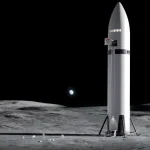
The company was founded around the commercial development of lunar transportation and infrastructure. In February 2024, its Odysseus lander became the first U.S. spacecraft to soft-land on the Moon since the Apollo era, establishing Intuitive Machines as one of the most important commercial participants in NASA’s lunar exploration strategy.
The company subsequently expanded its ambitions from delivering payloads to the lunar surface toward providing communications and infrastructure around the Moon.
The Lanteris acquisition accelerated that transition dramatically.
Before the deal, Intuitive Machines could build and operate lunar spacecraft but had limited exposure to large-scale commercial satellite manufacturing. After the transaction, it gained established LEO, MEO and GEO spacecraft capabilities alongside its lunar systems.
The company described the acquisition as a move toward becoming a vertically integrated space prime capable of building, connecting and operating space systems.
That model is important because spacecraft manufacturing represents only one part of the value chain.
A satellite operator ultimately needs spacecraft, communications networks, ground infrastructure, mission operations, data processing and customers for the resulting services.
Intuitive Machines is increasingly attempting to control several of those layers.
The $175 Million Investment Adds a Second Layer to the Strategy
The company’s January acquisition was followed by another important financial move in February.
On February 25, 2026, Intuitive Machines announced a $175 million strategic equity investment intended to accelerate communications and data-processing capabilities.
The company said the investment would support expansion of its Near Space Network Services activities and the development of capabilities spanning LEO, the Moon and eventually deeper space.
The 1300 platform was specifically identified as a technology base for expanding communications around the Moon, extending capabilities toward Mars and supporting on-orbit data processing and edge computing.
The company also began discussing opportunities for space-based data centers with technology-sector partners.
This creates a logical connection between the new GEO satellite order and the longer-term data-center strategy.
The 1300 platform is designed for high-power spacecraft operations. If computing hardware is eventually placed in orbit, power generation, thermal rejection and communications become fundamental engineering constraints.
Those are precisely the areas in which large satellite buses have decades of experience.
The concept is therefore not simply about putting conventional terrestrial data centers into space. A practical orbital computing platform would need to solve radiation exposure, power availability, thermal management, communications latency, launch mass, maintenance and hardware reliability.
For GEO or cislunar applications, another advantage is proximity to communications infrastructure and persistent access to specific regions of space.
The business case remains unproven, however. The cost of launching, powering and cooling large computing systems in orbit must compete against rapidly improving terrestrial data-center infrastructure.
Intuitive Machines is consequently positioning the capability as a future market opportunity rather than an established revenue stream.
The Backlog Shows the Company’s Business Mix Is Changing
The new satellite order also changes the composition of Intuitive Machines’ business.
The $600 million contract formed the largest component of approximately $920 million in second-quarter bookings, pushing total backlog to roughly $1.8 billion.
Commercial programs represented approximately 49 percent of that backlog, or about $882 million. Civil-space programs accounted for about 37 percent, or $666 million, while national-security work represented approximately 14 percent, or $252 million.
That distribution is notable because Intuitive Machines was previously identified much more strongly with NASA and lunar exploration.
The company is now attempting to build a business in which NASA remains an important customer without being the sole foundation of growth.
That distinction matters for commercial space companies.
Government contracts can provide substantial revenue and technological validation, but commercial satellite orders can create a different type of production scale. Repeated spacecraft manufacturing can spread engineering and factory costs across multiple vehicles and potentially create more predictable utilization of facilities.
The three-satellite GEO order is therefore potentially more valuable strategically than its headline $600 million figure suggests.
If additional customers follow, the acquisition could become the manufacturing foundation for a recurring satellite-production business.
Intuitive Machines Is Also Moving Into National Security Space
The Lanteris acquisition gives Intuitive Machines another major avenue for diversification: defense and national security.
The inherited spacecraft manufacturing business has experience supporting missions involving missile warning and tracking, tactical intelligence, surveillance and reconnaissance, Earth observation and space-domain awareness.
That experience fits directly into the U.S. government’s growing preference for proliferated satellite architectures.
The Space Development Agency’s architecture, for example, relies on large numbers of satellites operating across different orbital layers rather than depending entirely on a small number of extremely expensive spacecraft.
This creates demand for spacecraft manufacturers that can combine reliability with production speed.
Intuitive Machines is now positioned to compete for some of that work while simultaneously pursuing NASA lunar programs and commercial GEO missions.
The model resembles a broader industry shift toward companies that can serve several markets using common spacecraft manufacturing technologies.
The same underlying capabilities — power management, communications, propulsion, thermal control, avionics and production engineering — can support commercial communications satellites, defense spacecraft and cislunar infrastructure, even though the payloads and mission requirements differ.
The Competitive Landscape Is Becoming More Vertically Integrated
Intuitive Machines is not alone in pursuing this model.
SpaceX has demonstrated the strongest version of vertical integration in the commercial space industry, combining spacecraft production, launch, communications services and network operations through Starlink and its broader space business.
Rocket Lab has followed a different path, expanding from launch vehicles into satellite buses, spacecraft components, solar power systems and mission services.
Blue Origin is also building a vertically integrated ecosystem spanning launch, engines, spacecraft and lunar systems.
Meanwhile, traditional major aerospace contractors such as Lockheed Martin, Northrop Grumman and Boeing continue to combine spacecraft manufacturing with mission integration and government contracting.
Intuitive Machines’ strategy differs in scale but shares the same underlying logic: owning more of the value chain can reduce dependence on outside suppliers and allow a company to capture revenue from more stages of a mission.
The challenge is that vertical integration also increases capital requirements and operational complexity.
A manufacturer that owns spacecraft factories, lunar landers, ground infrastructure and data-processing systems has more opportunities to generate revenue — but also more businesses to manage.
The success of the Lanteris acquisition will therefore depend not simply on winning large contracts, but on integrating the organizations and maintaining manufacturing performance while Intuitive Machines expands into unfamiliar markets.
Orbital Data Centers Are a Bigger Bet Than the Satellite Order
The GEO contract is an established business. Orbital data centers are not.
That distinction is important.
Manufacturing three GEO communications satellites is a conventional aerospace activity with known customers, technology and operational requirements. Moving computing infrastructure into orbit represents a much more speculative market.
The strongest argument for orbital computing is that space offers continuous solar energy and potentially new ways to process large quantities of satellite-generated data before sending information to Earth.
For high-volume Earth observation, for example, satellites can generate enormous quantities of imagery and sensor data. Processing some of that information in orbit could reduce the amount of raw data that needs to be transmitted to ground stations.
The same concept could become relevant to defense applications, where rapid processing of sensor information can be more valuable than simply transmitting large raw datasets.
But the engineering obstacles are significant.
High-performance processors generate heat, and heat cannot simply be removed through air convection in vacuum. Spacecraft must radiate waste heat through thermal-control systems. Radiation can also degrade electronics, requiring shielding, fault tolerance or specialized components.
These challenges become more difficult as computing power rises.
That is why Intuitive Machines’ emphasis on high-power satellite platforms and thermal-management capabilities is strategically relevant — but it does not eliminate the fundamental economics that the orbital data-center concept must eventually overcome.
The Real Test Comes After the First Order
The $600 million contract gives Intuitive Machines a strong validation point, but it does not by itself prove that the $800 million Lanteris acquisition will deliver the expected long-term returns.
The next question is whether the company can turn one major commercial award into a repeatable manufacturing business.
That will require successful delivery of the three GEO spacecraft within the 30-month contract period, continued utilization of the inherited production infrastructure and additional orders from commercial and government customers.
At the same time, Intuitive Machines must continue executing its lunar programs.
Its broader strategy increasingly depends on these businesses reinforcing one another rather than competing for management attention and capital.
The company’s lunar activities provide access to NASA and cislunar infrastructure markets. Lanteris provides mature satellite manufacturing. Ground and communications capabilities can connect spacecraft to customers. Data processing could eventually become another recurring service layer.
If those pieces work together, Intuitive Machines could evolve from a lunar transportation company into something closer to a full-service space infrastructure provider.
That would make the Lanteris acquisition strategically important well beyond the satellite factory itself.
A More Ambitious Intuitive Machines Is Emerging
The January 2026 acquisition of Lanteris Space Systems initially represented a major expansion for Intuitive Machines. Eight months later, the rationale is becoming clearer.
The more than $600 million order for three GEO communications satellites provides tangible evidence that the acquired Maxar heritage can generate substantial commercial business. The $1.8 billion backlog demonstrates that the company is building a more diversified portfolio across commercial, civil and national-security markets.
The separate $175 million investment in communications, data processing and future orbital infrastructure points toward an even broader ambition.
Intuitive Machines is effectively betting that the future space economy will reward companies that can build spacecraft, connect them to networks and turn their data into services.
The lunar lander business remains central to that vision, but it is no longer the whole story.
The immediate benchmark is straightforward: deliver the three GEO satellites successfully and win more orders.
The longer-term test is considerably harder — whether Intuitive Machines can integrate lunar transportation, satellite manufacturing, communications networks and orbital computing into a sustainable business model.
If it succeeds, the Maxar-to-Lanteris acquisition may prove to have been less a diversification away from the Moon than the industrial foundation for a much broader space infrastructure company.