China’s commercial launch company LandSpace is aiming to fly a recovered Zhuque-3 first-stage booster again within six months of its landmark August 2026 landing, an aggressive schedule that would mark a major step toward operational rocket reusability in China.
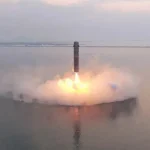
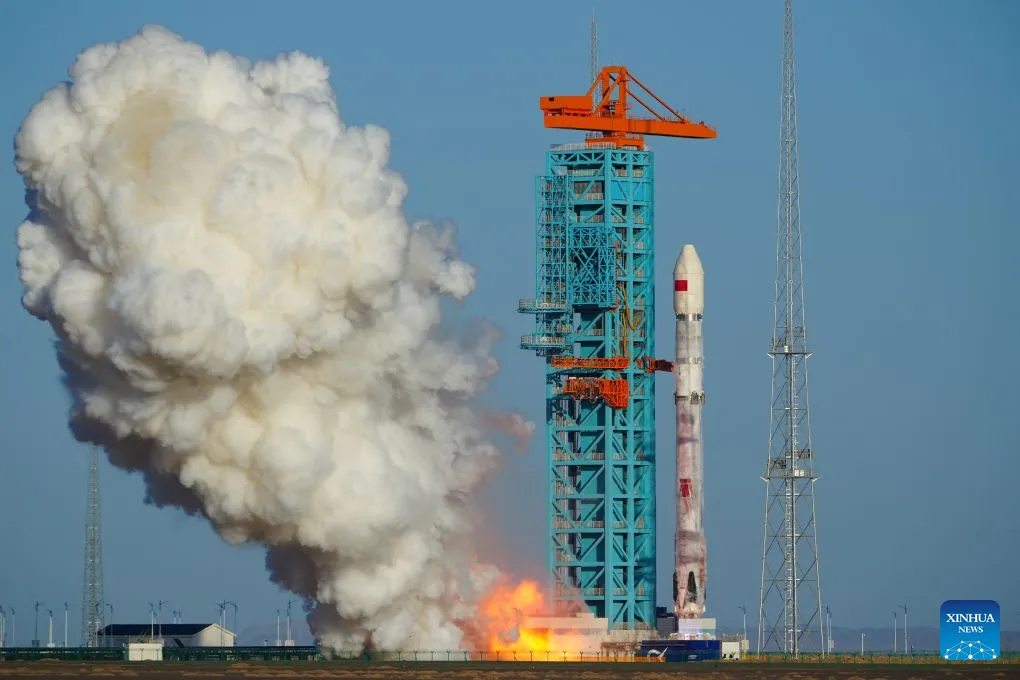
The company achieved a breakthrough on Aug. 18 when a Zhuque-3 first stage successfully returned to Earth and landed vertically on land after launching the Honghu-03 satellite to orbit. The mission marked the first successful ground-based recovery of an orbital-class booster by a Chinese commercial launch company and placed LandSpace among a small group of organizations worldwide that have demonstrated orbital booster reuse technologies.
The recovered stage is now undergoing post-flight inspections and refurbishment as LandSpace works toward its next milestone: proving that the hardware can be turned around and flown again on a commercially relevant timeline.
From Recovery Demonstration to Reuse Operations
Landing a booster is only the first step in building a reusable launch system. The more difficult challenge is demonstrating that the recovered vehicle can be rapidly inspected, refurbished, certified, and returned to flight at a cost advantage over manufacturing a new stage.
LandSpace executives have indicated that the company hopes to refly the recovered Zhuque-3 booster within six months. If achieved, the milestone would move the company beyond recovery demonstrations and into the early stages of operational reusability.
The Aug. 18 mission was the second orbital flight of Zhuque-3. During the rocket’s maiden flight on Dec. 3, 2025, the vehicle successfully reached orbit, but the first-stage recovery attempt ended unsuccessfully after an anomaly during the landing sequence. Despite the failed landing, the flight validated major elements of the rocket’s recovery architecture, including reentry guidance, aerodynamic control systems, thermal protection performance, and landing operations.
The successful recovery on the second flight demonstrated that LandSpace had addressed the issues encountered during the 2025 mission and validated the vehicle’s full booster-return profile.
Zhuque-3 and China’s Methalox Strategy
Zhuque-3 represents the latest step in LandSpace’s effort to establish itself as China’s leading commercial launch provider.
The rocket is a two-stage launch vehicle powered by liquid methane and liquid oxygen, commonly referred to as methalox propellants. The vehicle stands approximately 66 meters tall in its current configuration and uses nine Tianque-series engines on its first stage.
Methane has become increasingly attractive for reusable rockets because it burns more cleanly than kerosene-based fuels, reducing engine contamination and potentially lowering refurbishment requirements between flights. The same propellant combination is used by SpaceX’s Starship system and Blue Origin’s New Glenn, reflecting a broader industry trend toward methane-fueled reusable launch vehicles.
LandSpace previously made international headlines in July 2023 when its Zhuque-2 became the first methane-fueled rocket in the world to successfully reach orbit, beating several Western competitors to that milestone.
The company views Zhuque-3 as its workhorse reusable launcher for commercial satellite deployments, constellation missions, and future cargo transportation applications.
China’s Expanding Reusable Rocket Competition
The successful Zhuque-3 landing comes amid an increasingly competitive race to develop reusable launch systems across China’s space sector.
For decades, China relied exclusively on expendable Long March rockets. However, the rapid rise of satellite megaconstellations and growing commercial launch demand have pushed both state-owned and private firms toward reusability.
LandSpace’s achievement followed another major milestone in July 2026 when China successfully recovered a Long March 10B booster using a sea-based recovery approach. While that mission demonstrated one recovery method, Zhuque-3 employed a landing profile more closely resembling SpaceX’s Falcon 9, using engine-powered descent and deployable landing legs to touch down on solid ground.
Several other Chinese companies are pursuing similar goals. iSpace is developing its Hyperbola-3 reusable launcher, while Galactic Energy continues work on reusable versions of its future launch systems. State-owned rocket developers are also advancing reusable Long March variants intended to support both commercial and national missions.
The concentration of reusable launch projects reflects a broader strategic shift within China’s space industry, where lowering launch costs has become increasingly important as thousands of satellites are planned for deployment over the coming decade.
How LandSpace Compares With SpaceX and Blue Origin
Although the Zhuque-3 recovery is a significant accomplishment, LandSpace still trails the operational experience accumulated by SpaceX and, to a lesser extent, Blue Origin.
SpaceX first landed a Falcon 9 orbital booster in December 2015 and has since transformed reusable launch operations into a routine capability. Some Falcon 9 boosters have flown dozens of times, with turnaround periods measured in weeks rather than months. The company now conducts launch operations at a cadence unmatched anywhere else in the world.
Blue Origin joined the orbital booster recovery club with New Glenn, demonstrating recovery and later reuse of its first-stage hardware.
LandSpace’s six-month reflight target should therefore be viewed as an early developmental milestone rather than a direct challenge to Falcon 9’s operational tempo. Nevertheless, successfully reflighting the recovered Zhuque-3 stage would represent a major validation of the company’s engineering approach and would narrow the gap between Chinese and U.S. reusable launch capabilities.
Industry observers often compare Zhuque-3 to Falcon 9 because of their similar architecture: a two-stage orbital launcher with a reusable first stage returning under powered flight. While Zhuque-3 currently offers lower payload performance than Falcon 9, its design philosophy follows a similar path toward lowering launch costs through hardware reuse.
Supporting China’s Satellite Constellation Ambitions
Reusable launch capability is becoming increasingly important for China’s long-term space plans.
The country is pursuing several large-scale satellite constellation programs intended to provide broadband communications, remote sensing services, and other space-based infrastructure. Deploying thousands of satellites economically will require a substantial increase in launch frequency and a reduction in per-mission costs.
LandSpace has positioned Zhuque-3 as a key vehicle for servicing these future markets. The rocket is expected to support constellation deployments and may eventually play a role in cargo transportation missions connected to China’s Tiangong space station ecosystem.
The company is also developing larger and more capable versions of the Zhuque-3 family, with future variants expected to offer greater payload capacity while retaining reusable first-stage operations.
The Next Critical Test
The Aug. 18 landing was a historic moment for China’s commercial space sector, but the next challenge may be even more important.
Recovering a booster demonstrates that a rocket can survive launch, reentry, and landing. Reusing that same hardware successfully proves whether the business case for reusability actually works.
If LandSpace can inspect, refurbish, and relaunch the recovered Zhuque-3 stage within its targeted six-month timeframe, the company will take a significant step toward establishing a practical reusable launch system. Such a success would strengthen China’s growing commercial launch industry and further intensify global competition in the race to reduce the cost of access to space.
For now, the recovered booster represents both a technological achievement and a test case for the future of reusable launch vehicles in China.
Conclusion
LandSpace’s successful Zhuque-3 landing marks one of the most significant milestones yet for China’s commercial launch industry. By targeting a reflight of the recovered booster within six months, the company is shifting focus from proving that recovery is possible to demonstrating that reusability can be economically viable. Whether Zhuque-3 can achieve rapid turnaround and repeated operations will help determine how quickly China closes the gap with established reusable launch leaders and how effectively it can support the nation’s expanding satellite and space infrastructure ambitions.