The effort forms Phase I of NASA’s Moon Base architecture plan, which runs from now through 2029. Each mission is intended to build on previous flights, improving capabilities and confirming that key systems work before later missions arrive. Regular cargo deliveries through NASA’s Commercial Lunar Payload Services initiative are expected to help establish a reliable lunar supply chain, a capability central to maintaining a long-term robotic and human presence. NASA’s Human Research Program also issued a request for information this week asking what can be learned about human health from astronauts living and working on a Moon Base, signaling planning for sustained stays rather than short visits.
Blue Origin is moving its Blue Moon MK1 lander through integrated testing ahead of its first flight, called Endurance, a new class of commercial lander capable of transporting large payloads. The spacecraft completed a broad series of environmental tests, including a thermal vacuum assessment at NASA’s Johnson Space Center in Houston, and has finished communications checks with the Tracking and Data Relay Satellite System and the Deep Space Network. One of the final major tests before launch integration will involve loading cryogenic propellants.
Firefly Aerospace is preparing Blue Ghost Mission 2, which will sit atop the company’s Elytra orbital spacecraft to form a 22-foot-tall system, nearly three times the height of the spacecraft used for Blue Ghost Mission 1 in 2025. The mission is planned to become the first American landing on the Moon’s far side, carrying three NASA payloads to explore far side geology and the cosmic Dark Ages. Intuitive Machines is preparing its IM-3 mission, its third Nova-C landing, with a lander named Trinity and its first lunar data relay satellite, Altus-1. Trinity will carry five NASA payloads, six commercial payloads, and one civil payload to explore Reiner Gamma, a magnetic surface feature, making IM-3 the first mission to explore the surface of a lunar swirl. Voyager Technologies is testing its infrastructure-class Griffin-1 lander at NASA’s Jet Propulsion Laboratory, scheduled to launch in late 2026 and expected to carry the largest commercial payload ever delivered to the lunar surface.
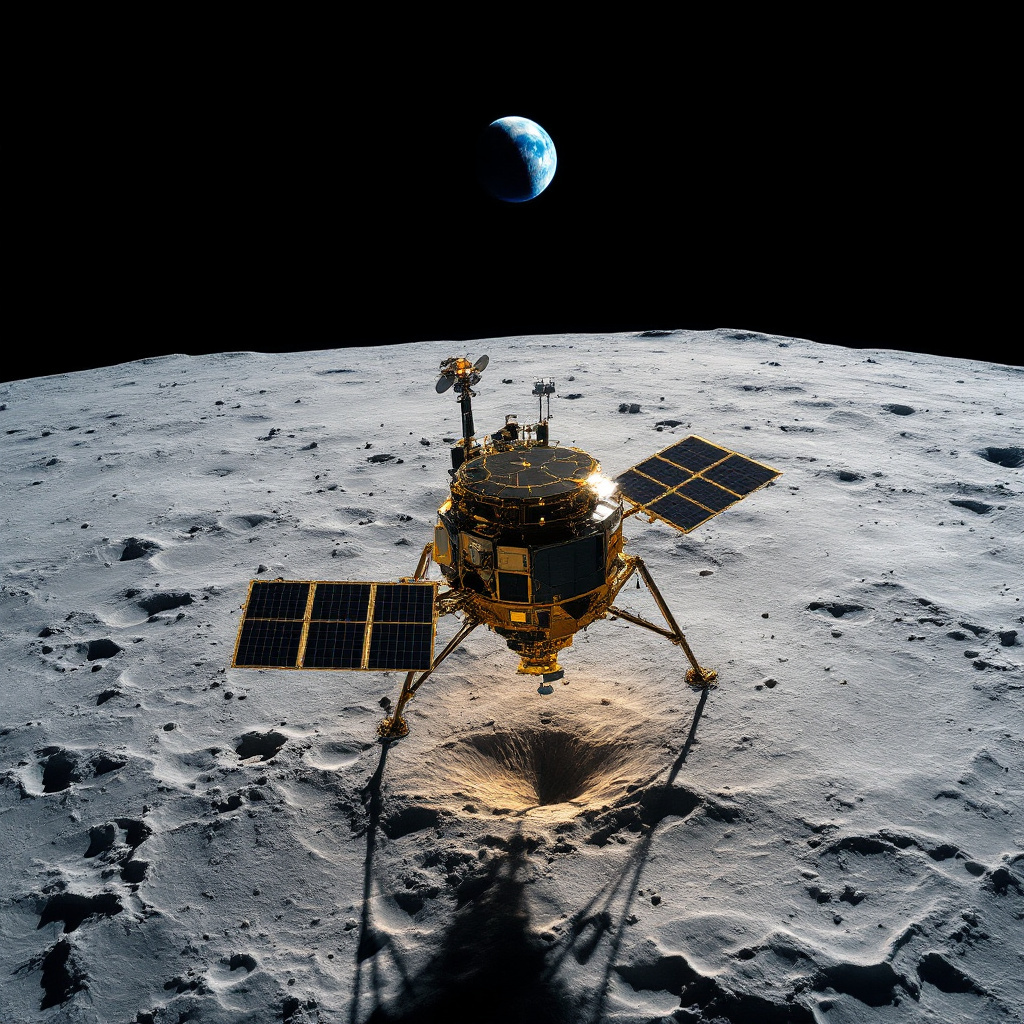
NASA states that these early missions will give the agency opportunities to learn from real lunar operations and make the overall Moon Base architecture more dependable. The landers will help establish the systems, logistics, and surface capabilities that future Moon Base operations depend on, marking what NASA describes as an important step in the expansion of commercial lunar transportation. Each landing brings the agency closer to a sustained human presence on the lunar surface.
Blue Origin is now working through additional integration milestones ahead of the next round of testing on its lander. Intuitive Machines teams are expected to complete final development stages, including engine integration and hot fire testing. Griffin-1 remains on track for its late 2026 launch. NASA’s request for information on human health in a Moon Base context also remains open for response.