On August 11, Nayuta Space officially announced that its reusable liquid rocket R&D center and final assembly and testing base will be established in the Lingang New Area of Shanghai. The move marks a key stage in the engineering verification and maiden-flight preparations for the company’s main vehicle, Xuanniao-R.
China’s commercial reusable rocket companies have largely pursued vertical landing as their preferred recovery approach. Nayuta Space, however, is taking a different technological path.
Nayuta Space will establish two major facilities in Lingang. The final assembly and testing base will be located in the Lingang Lanwan Industrial Park, while the R&D center will be based at Innovation Mofang in Lingang Science and Technology City. The Lanwan facility will handle the full process of final assembly, integration and testing for the Xuanniao-R maiden-flight vehicle and its backup vehicle. The R&D center will focus on key technologies for aerodynamic recovery, including digital simulation and modeling, coordinated electrical integration and control, and structural mechanics testing and validation, with the aim of addressing reliability challenges during the recovery phase.
The facility is expected to accommodate around 80 employees, including approximately 50 R&D personnel. An expansion is planned for 2027 to support the production capacity required for subsequent higher-frequency launches.

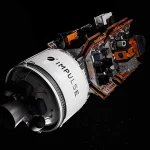
The Xuanniao-R is a liquid-oxygen/methane rocket featuring a stainless-steel airframe. A full-scale test vehicle was completed in early 2026, while the overall rocket design and aerodynamic recovery concept had already passed an industry review in May 2025. In April 2026, the company completed electrical integration testing of the control surfaces in Dezhou, Shandong. The development program has continued to advance through these milestones. Publicly available information indicates that the full-scale test vehicle has also been used for control-surface tests under multiple simulated flight conditions.
Beyond Xuanniao-R, Nayuta Space is also developing the Xuanniao-FR series, covering sounding rockets and launch vehicles for applications including suborbital scientific experiments and commercial satellite launches.

After final assembly and testing at the Lingang base, Xuanniao-R is not expected to launch from Shanghai. Instead, the rocket will be transported by sea to the Haiyang Oriental Spaceport in Shandong, where it is planned to conduct its maiden flight using the semi-fixed offshore launch test platform Oriental Spaceport No. 1 (HOS-1). HOS-1 is part of the expansion of the Haiyang Oriental Spaceport and is designed to support offshore launch operations.
Nayuta Space has previously signed a project agreement with the Haiyang Oriental Spaceport to jointly develop a liquid-rocket offshore launch project. The two sides have reportedly completed technical interface coordination on key areas including launch control procedures and rocket transportation. If realized as planned, the Xuanniao-R mission would represent an early example of combining an aerodynamic recovery architecture with an offshore launch platform in China’s commercial launch sector.
Public information identifies Nayuta Space as a Beijing-based commercial space company headquartered in Daxing District. The company was founded by CEO Li Rui, while co-CTO Wang Shilei has more than a decade of experience in overall spacecraft and launch-vehicle design within China’s aerospace sector. The company has completed multiple rounds of financing and has progressed from design reviews and test-vehicle manufacturing to ground testing, gradually moving its Xuanniao-R concept toward an actual flight program.
The Lingang project also adds an important rocket final-assembly and manufacturing component to Shanghai’s growing commercial space industry. As Nayuta Space gradually expands its production capacity, the project could generate additional demand for precision machining, composite materials, testing and certification, and specialized logistics. It could also create new opportunities for cooperation with high-end manufacturing and testing-service companies in Lingang, further strengthening the area’s ambitions to develop a commercial space industry cluster.
The Xuanniao-R program combines two distinctive elements: an alternative horizontal recovery architecture and a development model linking rocket assembly and manufacturing in Shanghai with offshore launch operations in Haiyang. Its maiden flight could therefore provide an important opportunity to observe how diversified reusable-rocket technologies develop in China. If the planned 2027 expansion of the Lingang facility proceeds, the Shanghai assembly + offshore launch model could also provide additional infrastructure for higher-frequency commercial launch operations.