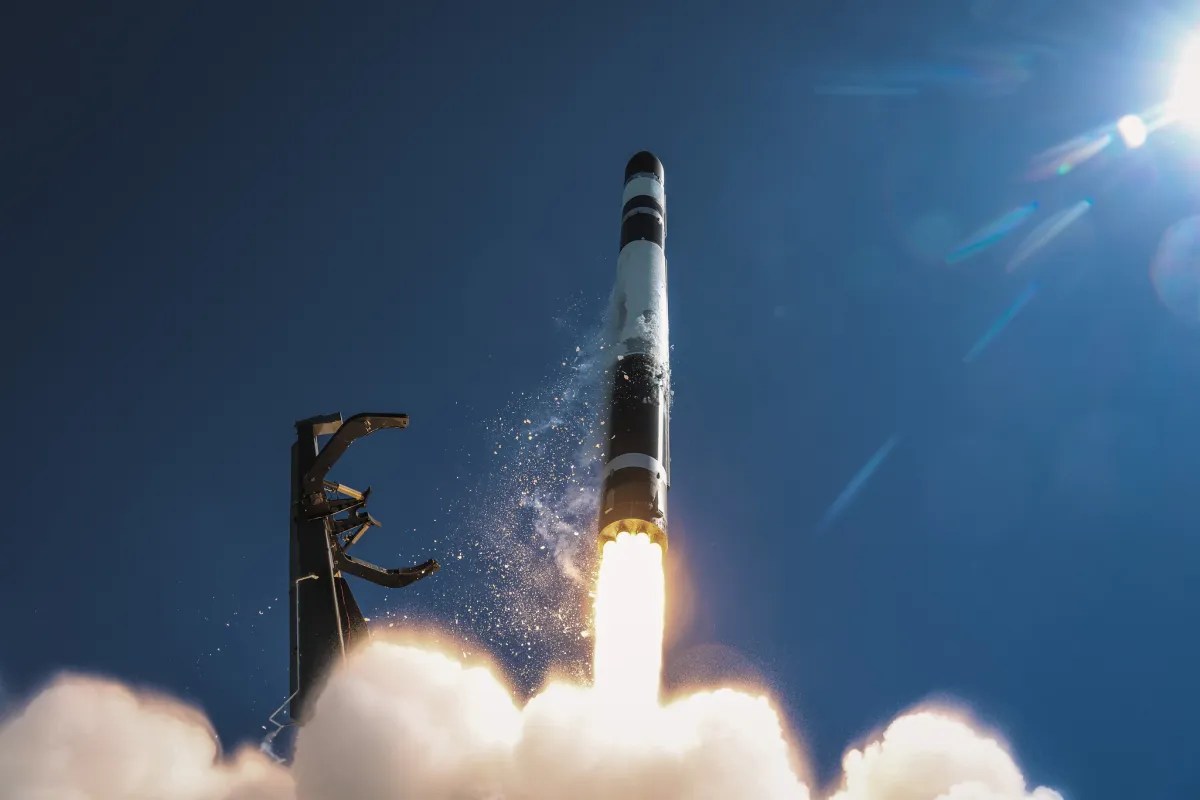
Rocket Lab has secured a new launch contract from NASA to carry out three scientific missions using its Electron rocket, further expanding its government launch portfolio.
The launches will support NASA’s Polarised Submillimetre Ice-cloud Radiometer (PolSIR) and Total and Spectral Solar Irradiance Sensor-2 (TSIS-2) missions, with liftoffs scheduled to begin in 2027 from Rocket Lab’s Launch Complex 1 at the Māhia Peninsula in New Zealand.
Supporting Climate and Solar Science
Under the contract, two Electron launches will deploy PolSIR missions designed to study the formation of ice clouds in Earth’s upper atmosphere, while a third launch will carry the TSIS-2 mission to measure solar irradiance and improve understanding of the Sun’s influence on Earth’s climate.
The agreement extends Rocket Lab’s long-running partnership with NASA, for which the company has been providing launch services for nearly a decade.
Rocket Lab founder and Chief Executive Sir Peter Beck said the Electron launch vehicle continues to support scientific missions requiring dedicated and responsive access to space.
“Electron has become synonymous with reliability, precise orbital accuracy, and on-demand launch capability and we’ve been delivering this for NASA missions for almost a decade.”
Growing Government Launch Portfolio
Rocket Lab said demand for its small satellite launch services continues to grow, particularly for scientific, government and national security missions that require flexible launch schedules.
The company has now booked more than 70 Electron missions, contributing to a contracted backlog exceeding $2 billion.
Expanding Beyond Launch Services
In addition to launch operations, Rocket Lab continues to expand its spacecraft and satellite systems business.
Later this year, the company plans to launch its Photon spacecraft for NASA’s LOXSAT mission, which will demonstrate in-space refueling technologies for future deep-space exploration.
Rocket Lab is also developing its medium-lift Neutron rocket, targeting commercial satellite constellation deployments and government missions as it broadens its launch capabilities.