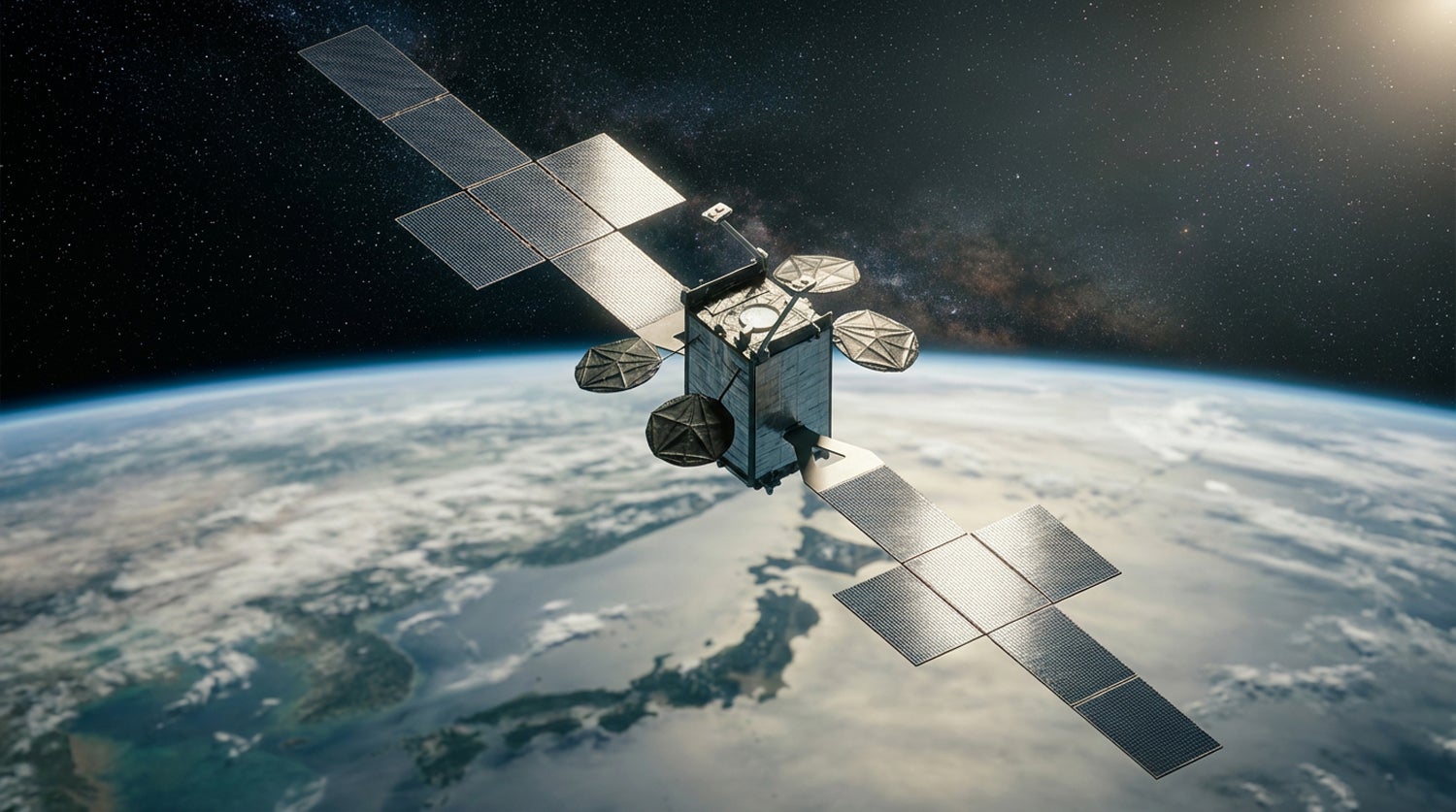
MDA Space has secured a contract from Mitsubishi Electric Corporation to provide key technologies for Japan’s next-generation defense communications satellite, which will replace the country’s Kirameki-2 military communications satellite.
Under the agreement, the Canadian space technology company will supply the satellite’s digital payload, antennas and a range of subsystems. Financial terms of the contract were not disclosed.
Supporting Japan’s Defense Communications Network
The satellite is being developed under a prime contract awarded by Japan’s Ministry of Defense to Mitsubishi Electric in February.
Valued at 123.5 billion yen, the contract covers the development of the satellite and its associated ground systems, with delivery scheduled by March 29, 2030.
According to Mitsubishi Electric, the new satellite will provide greater communications capacity and enhanced resistance to interference compared with the existing Kirameki-2 X-band communications satellite.
International Collaboration
MDA Space said its UK operations will develop the core technology for the satellite’s anti-jamming, multi-beam digital payload, which will feature reconfigurable digital beamforming capabilities that can be updated while in orbit.
The company’s Montréal facility will manufacture and test antenna systems, including the analog repeater, while also supplying heritage hardware for deployable reflector and thruster mechanisms.
Mitsubishi Electric will carry out the satellite’s final assembly, integration and testing in Japan.
Expanding Sovereign Space Capabilities
MDA Space Chief Executive Officer Mike Greenley said the project continues the company’s long-standing relationship with Mitsubishi Electric.
“It’s an honor for us to once again be collaborating with long-time customer Mitsubishi Electric, this time to provide key technology for Japan’s critical defence communication infrastructure.”
“Our advanced dual-use technologies combined with the expertise and reach of our global satellite team ideally position MDA Space to respond to robust demand for sovereign missions with secure and flexible capabilities.”