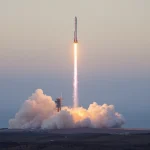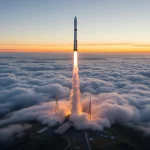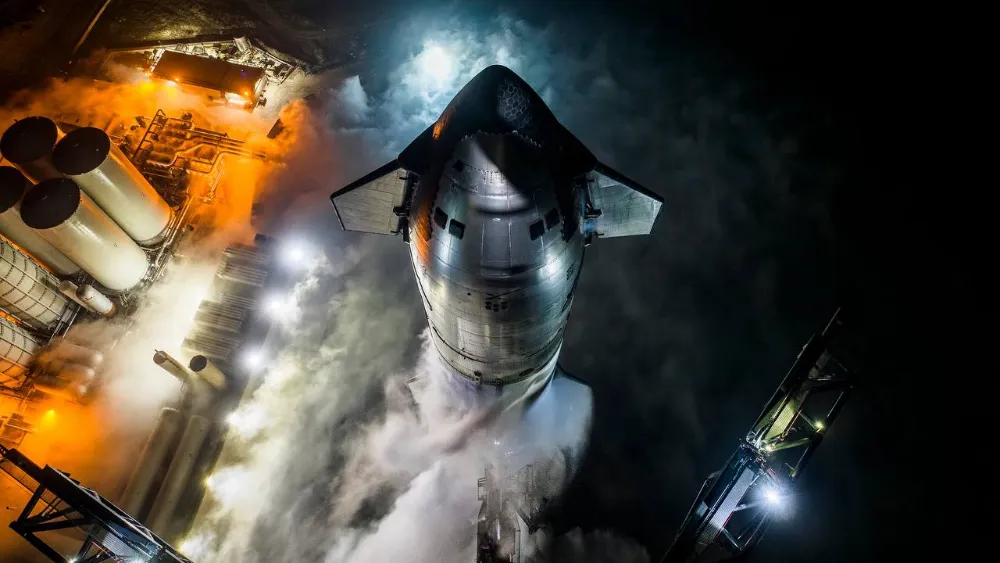
Starship Flight 14, also designated Starlink Group 31-1, is scheduled to lift off at 7:15 am CDT with a 75-minute launch window. Backup opportunities run from Sept. 29 through Oct. 4. The flight follows a suborbital test program that SpaceX pursued specifically to avoid stranding an uncontrolled 52-meter-long, nine-meter-wide, 160-metric-ton vehicle in orbit. Those missions allowed engineers to validate liftoff, stage separation, boost-back and landing burns, near-full ascent burns, payload deployment, and in-space Raptor relights simulating a deorbit burn.
The two most recent flights delivered mixed results. On Flight 12, Booster 19 suffered boost-back issues and was lost during its landing burn, while Ship 39 lost a Raptor Vacuum engine on ascent but still completed its burn, deployed its payload, and made an on-target splashdown in the Indian Ocean. On Flight 13, Booster 20 completed a clean ascent and ignited all engines for boost-back, but ice ingestion cut the burn short and the booster failed to light all engines during its landing burn, exploding in the Gulf. Ship 40 deployed all 20 Starlink V3 satellites, completed reentry, and splashed down intact, a result that surprised SpaceX. Ship 40 is now aboard the vessel Forte in the Atlantic, set to return no earlier than Oct. 8.
Flight 14 uses Booster 21 and Ship 41. Ship 41 carries the newer extended ablative heat shield, which moves the shield back toward the leeward side. Booster 21 has had the aerocovers above its outer 20 Raptor engines removed. SpaceX will not attempt to catch Booster 21, instead aiming for a full ascent, boost-back, and on-target landing burn in the Gulf, similar to Booster 11. Teams want Booster 21 to succeed so they can move into booster reuse as soon as possible.
The primary objective is to reach orbit, deploy 26 Starlink V3 satellites into a 32-degree inclination orbit, then deorbit over the South Pacific and splash down after roughly an eight-hour coast phase. The trajectory threads between Jamaica and Cuba before passing through the Leeward Islands. SpaceX will remain conservative, since teams do not want to leave a ship stranded in orbit.
To fly the mission, SpaceX obtained a revised FAA launch license, No. VOL 23-129 Rev 9.0, along with a separate reentry authorization. The license now splits launch and reentry into two orders under Part 450 of the Federal Aviation Regulations. Order A-1 covers initial liftoff and suborbital flight, while Order A-2 authorizes reentry and splashdown in the Pacific, covering the zone north of Hawaii and the intended zone off the coast of Chile. The authorization applies only to Flight 14.
SpaceX called this a historic mission that could help usher in a new era of spaceflight. The shortened road and beach closure, running only from 4 am to 10 am CDT rather than the 10 to 12 hours of past launches, reflects what SpaceX describes as the confidence and efficiency of its new tank farm and range operations.
SpaceX will need another license modification for Flight 15 and beyond, and the FAA will eventually add LC-39A to the launch license. New launch pads are under construction at Cape Canaveral, with at least 10 planned at Starbase.