1. Falcon 1
(1) Basic information
Falcon 1 is a small rocket developed by SpaceX. It made its first flight on March 24, 2006. The engine failed after 33 seconds of flight and the first launch failed. On September 28, 2008, Falcon 1 successfully launched for the fourth time, becoming the world’s first liquid launch vehicle developed with private funds and successfully put into orbit. All Falcon 1 launches took place from the Reagan Launch Site, which is now decommissioned.
(2) Specific parameters
Falcon 1 is a two-stage rocket. The specific parameters of the rocket are as follows:.
Altitude | Diameter | Mass | Series | Low Earth orbit load (185 km) | Sun-synchronous orbit load
21 m | 1.7 m | 28 t | Two stages | 670 kg | 200 kg
(3) Cost and quotation
The total development cost of Falcon 1 is approximately US$90 million to US$100 million. Since the first two launch missions are part of the US Defense Advanced Research Projects Agency (DARPA) plan to evaluate the suitability of new launch vehicles, the costs of the first two launch missions are funded by the US Department of Defense.
In 2005, Falcon 1 was advertised as costing $5.9 million. In 2006-2007, the price quoted when Falcon 1 was put into operation was US$6.7 million. In late 2009, SpaceX announced the price of Falcon 1 at $7 million.
(4) Launch records
Serial number | Time | Load | Target orbit | Result | Remarks
1 | March 24, 2006 | Falcon Satellite 2 | LEO | Failure | About 33 seconds after launch, the engine failed.
2 | March 21, 2007 | Low-cost telemetry transceiver and autonomous flight safety system demonstration satellite | LEO | Failure | About 7 minutes and 30 seconds after launch, it failed to reach the intended orbit due to premature engine shutdown.
3 | August 3, 2008 | Pathfinder, Tianjie 7, Pharmaceutical Satellite Pilot, Nano Navigation D | LEO | Failure | Because the first-stage thrust was not completely exhausted, the first and second stages collided.
4 | September 28, 2008 | Mouse Satellite | LEO | Success | First success
5 | July 14, 2009 | Razak Satellite | LEO | Success | The only commercial launch of Falcon 1.
2. Falcon 9
(1) Basic information
Falcon 9 is a partially reusable two-stage rocket and the world’s first orbital-level reusable rocket. Falcon 9 launched for the first time in 2010, successfully achieved its first core-stage recovery in 2015, became the first commercial launch vehicle to send astronauts into orbit in 2020, and in 2022 became the rocket with the most launches and the best safety record in U.S. history. Falcon 9 is divided into multiple versions: v1.0 (used from 2010 to 2013); v1.1 (used from 2013 to 2016); v1.2 (full thrust (FT), first launched in 2015, including Block 5 variants). Falcon 9 can currently be launched from Vandenberg Space Force Base and Cape Canaveral Space Force Base.
(2) Rocket composition
1. Fairing
The Falcon 9 fairing is designed and manufactured by SpaceX. It is an aluminum honeycomb core covered with a carbon fiber skin. It has a diameter of 5.2 m, a length of 13 m, and a weight of about 1.9 tons. It was tested at Plum Brook Station in 2013.
2. Core level one
The Falcon 9 v1.2 Block 5-core first stage uses nine Merlin 1D++ engines with a total thrust of 8127 kN. Space-grade supercooled RP-1 kerosene and supercooled liquid oxygen are used as propellants.
3. Core level two
The Falcon 9 v1.2 Block 5-core second stage uses a Merlin 1D vacuum improved version (Merlin 1DV+) engine, with a single vacuum thrust of 95.3 t and a vacuum specific impulse of 348 s.
(3) Specific parameters
Among the multiple versions of Falcon 9, only FT Block 5 is currently in service. The following table shows the relevant parameters:
Height | Diameter | Mass | LEO | SSO
70m | 3.7 m | 549 t | 22.8 t (not recovered) 17.5 t (recovered off-route) | 8.3 t (not recovered) 5.5 t (recovered off-route) 3.5 t (recovered off-route)
(4) Rocket recovery
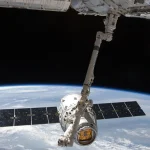
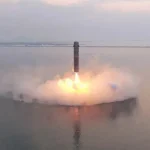
The core stage of Falcon 9 can be recycled and reused. When launching large-mass payloads such as Starlink, it is usually recovered by unmanned ships at sea. When launching small-mass payloads, return-to-site recovery can also be used. In order to complete the rocket recovery, Falcon 9 designed a grid rudder and nitrogen RCS for attitude adjustment.
(5) Analysis of advantages and disadvantages
1. Advantages
Low rail transport capacity is high. Falcon 9’s rocket body has a very high dry-to-mass ratio, and its Merlin engine has the highest thrust-to-mass ratio in the world, making Falcon 9’s low-orbit carrying capacity very high.
Low cost. Falcon 9 has significantly reduced costs through mass production and recycling. According to Musk, the cost can be recovered by recycling it twice.
2. Disadvantages
High-speed rail has poor carrying capacity. The propellant of Falcon 9 is liquid oxygen kerosene, which has a low specific impulse, and the dry-to-mass ratio will decrease in the recovery state, resulting in Falcon 9’s poor high-orbit carrying capacity.
(6) Rockets Quotation
The first-hand Falcon 9 rocket is quoted at US$62 million, and the second-hand Falcon 9 rocket is quoted at US$50 million.
3. Falcon Heavy
(1) Basic information
Falcon Heavy is composed of three Falcon 9 core stages and is capable of placing a payload of nearly 64 tons into low Earth orbit. Falcon 9’s high-orbit carrying capacity is average. If it needs to meet a larger high-orbit launch mission, it needs to bundle a booster to provide more acceleration, and Falcon Heavy can make up for SpaceX’s lack of high-orbit carrying capacity. Falcon Heavy’s booster and core first stage are both recyclable.
(2) Rocket composition
1. Fairing
Currently, the Falcon Heavy’s fairing is identical to that of the Falcon 9, but SpaceX is developing a longer fairing for the Falcon Heavy.
2. Core stage and booster
The core first stage of Falcon Heavy is basically the same as the core first stage of Falcon 9. The booster of Falcon Heavy is basically the same as the core first stage. The core first stage and each booster are equipped with 9 Merlin 1D engines. The difference is that the structure of the core first stage has been strengthened in order to bundle boost.
3. Core level two
The Falcon Heavy’s second stage is identical to the Falcon 9’s second stage.
(3) Specific parameters
1. Structural parameters
height | diameter | width | mass | series
70 m | 3.66 m | 12.2 m | 1420.788 t | Two and a half
2.Performance parameters
Low-Earth orbit loads | Synchronous transfer orbit loads | Geostationary orbit loads
63.8t (theoretical value is not recovered) | 26.7t (theoretical value is not recovered) | 7 tons (theoretical value is not recovered)
(4) Rockets Quotation
In 2018, when the Falcon Heavy made its first flight, the quotes for recycling all the boosters and core stages, recycling only the boosters, and not recycling them were US$90 million, US$95 million, and US$150 million respectively.
In the contract signed between NASA and SpaceX in 2022, the price of using Falcon Heavy to launch the Nancy telescope is approximately US$255 million (including launch services and other mission-related costs).
4. Starship
(1) Basic information
Starship is a fully reusable heavy-lift launch vehicle developed by SpaceX and will be launched for the first time on April 20, 2023. Starship is the first fully reusable launch vehicle. It consists of a first-stage booster (Super Heavy) and an upper-stage “Starship” (Starship). It is equipped with a Raptor (and its vacuum version) engine. The main bodies of Super Heavy and Starship are made of stainless steel.
(2) Rocket composition
1.Super Heavy
Super Heavy is 71 meters tall and equipped with 33 Raptor 2 engines (sea level version).
2.Starship
Starship is 50 meters tall and equipped with three sea-level Raptor 2 engines and three vacuum version Raptor 2 engines. Starship is designed with the capability of on-orbit refueling, so it can be used for deep space exploration.
(3) Specific parameters
Number of stages | Height/m | Diameter/m | Mass/t | LEO capacity (not recycled) | LEO (recycled)
2 | 121.3 | 9 | 5000 | 400 t | 200 t
(4) Rocket recovery
Super Heavy uses return-to-site recovery, using four stainless steel grid rudders to control the attitude landing point, and the launch tower mechanical arm clamps the load-bearing point under the grid rudders to achieve the first and second stage recovery of the rocket.
(5) Launch records
1.First launch
At 13:33 on April 20, 2023, the Starship conducted its first orbital flight test at the Boca Chica launch site (neither the first nor second stage was recovered). The test mission ultimately failed. The reason for the failure was that Super Heavy’s three engines did not start before takeoff or stalled after starting. Shortly after, propellant leaked and caused a fire, followed by an explosion, which resulted in vector control failure. Subsequently, the ground lost active control of the starship, and the starship disintegrated 237.474 seconds after ignition.
2.Second launch
At 13:02 on November 18, 2023, the Starship conducted its second orbital flight test at the Boca Chica launch site (neither the first nor second level was recovered). The difference from the first time was that a water-cooled steel plate spray noise reduction system was added to the launch pad, and the test mission ultimately failed. The reason for the failure was that the Super Heavy exploded due to blockage in the liquid oxygen pipeline after initiating the flip maneuver and boosting the return ignition, causing a propellant leak, and then self-destructed. Starship ejected excess liquid oxygen causing a fire and explosion more than eight minutes after launch.
3. The third launch
At 13:25 on March 14, 2024, the Starship conducted its third orbital flight test at the Boca Chica Launch Site. The test projects included the opening and closing test of the payload bay door, the internal fuel in-orbit transfer technology demonstration, and the engine restart attempt in orbit. Some test projects have been verified. The Super Heavy successfully performed a return ignition. At first, all 13 engines were working. Later, the liquid oxygen pipeline became clogged, causing the engines to shut down one after another. After that, it tried to perform a vertical sea splashdown in the Gulf of Mexico, but it ultimately failed because the landing ignition was not carried out as planned. The on-orbit restart capability verification test of a single Raptor engine was canceled due to excessive roll rates during Starship taxiing.
4. The fourth launch
At 12:50 on June 6, 2024, Starship conducted its fourth orbital flight test at the Boca Chica Launch Site. Super Heavy had one Raptor engine failure 4 seconds after takeoff and during landing and ignition, but both were within the redundancy range, and finally successfully and accurately splashed down in the predetermined sea area. During Starship’s re-entry, the front flaps burned through and the structure was severely damaged. However, it still successfully performed landing and ignition and splashed down in the predetermined sea area.
5. The fifth launch
At 12:25 on October 13, 2024, Starship conducted its fifth orbital flight test at the Boca Chica launch site. Super Heavy successfully performed reentry and landing ignition, and was captured and recovered in mid-air by the launch pad’s robotic arm. During Starship’s re-entry, the front flap again caught fire and burned through, and the rear flap caught fire.
6. The sixth launch
At 22:00 on November 19, 2024, the Starship will conduct its sixth orbital flight test at the Boca Chica launch site. About 35 minutes into the flight, a Raptor engine was successfully ignited for the first time in the weightless vacuum environment of space.