1. The importance of developing reusable rockets
Traditional launch vehicles are one-time use. After each launch, they either fall back to the ground or burn up in the atmosphere, making the cost of humans entering space always high. In the 1960s, Academician Qian Xuesen, the founder of my country’s aerospace industry, proposed the idea of ”recycling launch vehicles” in his book “Introduction to Interstellar Navigation”. However, due to the environment of aerospace development at that time, this idea has never been realized. On December 22, 2015, SpaceX of the United States successfully launched and recovered the Falcon 9 rocket, successfully breaking through rocket reuse technology for the first time and opening up new possibilities for humans to better explore space.
The main benefit of rocket recycling is “cost reduction and efficiency improvement (lowering launch costs and improving launch efficiency).” Taking the Falcon 9 as an example, its total cost is about more than 50 million US dollars, but the cost of the propellant is only more than 200,000 US dollars. After recycling the first and second stages of the rocket, the development cost of the rocket can be spread among multiple launch missions, thereby significantly reducing the cost of a single launch. In addition, traditional disposable rockets need to be remanufactured every time, which not only has a long cycle, but also consumes a lot of resources. It is very different from the high-frequency launch requirements of the current large-scale low-orbit satellite Internet constellation construction. Constellation plans such as StarLink, GW, and G60 all require the launch of tens of thousands of network satellites. The launch frequency and response speed of the rockets are extremely demanding. If the traditional rocket production model is followed, not only will the constellation network cost be extremely high, but it will also be difficult to meet the time requirements of the ITU for constellation deployment.
2. Development history and current situation of reusable rockets at home and abroad
(1) Overseas
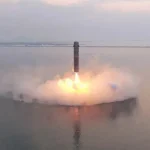
On December 21, 2015, SpaceX successfully launched 11 Orbcomm’s second-generation communications satellites into the predetermined orbit via Falcon 9 at the LC-40 station at Cape Canaveral Air Force Station. About 10 minutes after the rocket was launched, one sub-stage successfully returned and landed vertically at the Cape Canaveral 1 landing zone, achieving the first soft landing and recovery of Falcon 9 on land. This launch mission not only successfully proved the feasibility of rocket vertical recovery technology, but also opened a new era of rocket reusability. On April 9, 2016, SpaceX successfully sent the Dragon spacecraft to the International Space Station via Falcon 9 from Cape Canaveral Air Force Base. About nine minutes after the rocket was launched, a sub-stage separated and then successfully landed on the “Of Course I Still Love You” unmanned recovery ship anchored in the Atlantic Ocean. This launch mission is another more critical and powerful technological breakthrough after the first land recovery in December 2015. It not only proves the feasibility of rocket sea recovery technology, but also lays a solid foundation for subsequent normalized recovery, because compared with land recovery, sea recovery does not need to consume a lot of additional fuel to fly back to the launch site, allowing the rocket to retain more capacity and transport more loads. Currently, SpaceX has deployed two maritime recovery ships, “Just Read the Instructions” (converted from a Marmac 303 barge, with dynamic positioning (DP) capabilities) and “Of Course I Still Love You” (converted from a Marmac 304 barge, with dynamic positioning (DP) capabilities) on the east coast of the United States (mainly used to support missions launched from Cape Canaveral, Florida). The West Coast has deployed the “A Shortfall of Gravitas” recovery ship (converted from Marmac 302 Barge conversion, primarily used to support launch missions from Vandenberg Space Base, California). As of September 2025, the Falcon series rockets have successfully achieved more than 400 maritime recoveries. In addition to SpaceX, Blue Origin built a sea recovery ship named “Jacqueline” to ensure the sea recovery mission of the “New Glenn” heavy-lift recyclable rocket. In early 2023, the construction of the “Jacqueline” maritime recovery ship began in Romania. In September 2024, the “Jacqueline” was completed and arrived at Port Canaveral, Florida, USA. On January 16, 2025, “Jacqueline” was used to support the first orbital launch mission of the “New Glenn” rocket, but the first stage of the “New Glenn” rocket failed to be successfully recovered.
The development of reusable rocket technology in the United States has brought huge survival pressure to the traditional European aerospace industry. In order to cope with the revolutionary challenges posed by SpaceX, European aerospace forces represented by Germany’s Bremen Aerospace (OHB) and France’s Arianespace are also developing their own recyclable technology to cope with current market competition.
(2) Domestic
With the development of my country’s aerospace technology and the continuous emergence of commercial rocket companies, the traditional aerospace “national team” and many private aerospace companies have achieved varying degrees of staged results in reusable rocket technology. On November 2, 2023, Interstellar Glory’s Hyperbola II verification rocket (codenamed SQX-2Y) took off vertically after being ignited at the Jiuquan Satellite Launch Center. After flying to a predetermined height, it achieved a slow, controlled vertical descent through engine thrust adjustment and rocket body attitude control, and finally accurately and stably landed at the predetermined landing site. It successfully completed the first 100-meter-level vertical recovery flight test of a full-scale one-stage reusable rocket in China. On January 19, 2024, Blue Arrow Aerospace successfully conducted a 100-meter vertical takeoff and landing (VTVL) flight test of the Zhuque-3 reusable rocket. On June 23, 2024, the Eighth Academy of Aerospace Science and Technology successfully completed the first 10-kilometer vertical take-off and landing flight test of a reusable launch vehicle at the Jiuquan Satellite Launch Center. On September 11, 2024, Blue Arrow Aerospace successfully completed the ten-kilometer vertical take-off and landing return flight test of the VTVL-1 test rocket. It was the first time to achieve the domestic verification of the in-flight secondary ignition technology of the vertical take-off and landing return rocket, and verified the technology that is closer to actual recovery conditions. In January 2025, the Eighth Academy of Aerospace Science and Technology conducted my country’s first attempt at a 75-kilometer-level vertical takeoff and landing recovery, and adopted the “land launch and sea recovery” model to verify the rocket’s return and recovery technology at higher altitudes. On May 29, 2025, Arrow Technology successfully conducted a sea recovery test of the Yuanxingzhe 1 verification rocket, setting a record for the first domestic technological breakthrough of “liquid oxygen methane + stainless steel + soft landing recovery at sea”. Through the above-mentioned tests, my country’s aerospace enterprises have verified core technologies such as engine depth thrust adjustment, rocket high-precision guidance and control technology, and reentry force thermal environment prediction, allowing the research on reusable rockets to gradually move from the principle verification stage to the engineering application stage. At present, many rocket companies have made it clear that they plan to conduct the first flight of reusable rockets this year or next year, including Zhuque 3, Tianlong 3, Lijian 2, Gravity 2, Hyperbola 3, Pallas 1 and other models. At the same time, Star Glory launched the construction of an unmanned deck barge for the SQX-3 rocket sea recovery test in 2024. On August 5, 2025, my country’s first 10,000-ton launch vehicle recovery ship “Interstellar Return” was successfully launched. The “Interstellar Homecoming” is about 100 meters long, 42 meters wide, has a recovery deck area of 2,400 square meters (40 meters × 60 meters), and a displacement of about 17,000 tons. It is equipped with a DP2-level dynamic positioning system, which can accurately capture in Level 4 sea conditions and sail steadily in Level 5 sea conditions. Hainan International Commercial Space Launch Co., Ltd. also invested 805.91 million yuan to build a reusable rocket maritime recovery system, creating my country’s first commercially operated rocket maritime recovery base.
3. Main problems and gaps in the development of reusable rocket technology in my country
Although my country’s development of reusable rockets has good momentum, it still faces multiple challenges.
(1) Technical level
Technical shortcomings are the primary issue facing my country’s rocket recycling. Rocket recycling and reuse involves multiple complex links such as rocket design, manufacturing, launch, control, return, landing, maintenance, and reuse, especially key technologies such as engine depth thrust adjustment, multiple ignition reliability, and precise guidance control. Technology is the key to the success rate and stability of rocket recovery, requiring a large amount of capital investment and continuous flight verification. However, my country’s traditional aerospace system has long been affected by planned economy thinking, and the assessment system focuses too much on “guaranteing success rate”, which restricts long-term investment in high-risk technological innovation. In addition, commercial rocket companies work independently, and research funds and technical personnel related to rocket recovery and reuse technology are very scattered, making it difficult to focus on relevant technologies through collaborative innovation.
(2) Supervision system and policy environment
The approval process for my country’s aerospace activities is complex and lacks differentiated standards for different mission risk levels. In June 2024, after Tianlong 3 of Tianbing Technology accidentally exploded during power system testing in Gongyi, the competent authorities tightened safety control over the construction of power system test benches and commercial space launches, resulting in multiple project delays for several months, which to a certain extent reduced the efficiency of test verification of commercial rocket recovery and reuse technology. In addition, insufficient policy coordination among various aerospace management departments leads to inefficient resource allocation, which also increases the hidden cost of rocket launch and recovery tests to a certain extent. Although commercial aerospace is included in the government work report as a “new growth engine”, when the policy is actually implemented, private enterprises still have greater subjective initiative. For example, in terms of supporting infrastructure construction, whether it is building a recycling landing site at an inland launch site or building a maritime recycling system in Hainan, private enterprises are more enthusiastic than other departments in promoting solutions. The forward-looking layout awareness of relevant departments still needs to be strengthened.
(3) Funds and talents
The first is funding. Commercial aerospace is naturally characterized by long cycles, high investment, and high risks, and investors generally value companies with “verifiable results” or “visible results.” This also makes it difficult for some commercial rocket companies to obtain sufficient financial support for technical verification. At the same time, the lack of flexibility in the performance appraisal and reward mechanisms within the state-owned system has also reduced the research and development progress and efficiency of commercial rocket recovery technology to a certain extent. Moreover, within the traditional aerospace “national team” system, different institutes are independently responsible for producing various subsystems of rockets, and each link needs to protect its own interests. This not only adds a lot of unnecessary cost burdens, but also weakens the collaborative efficiency of the entire ecosystem. In addition, although private aerospace companies under the market mechanism have a certain degree of flexibility, they also face the problem of unstable talent structure, which affects the development of reusable rockets. In the future, this is a problem that needs to be continuously optimized.