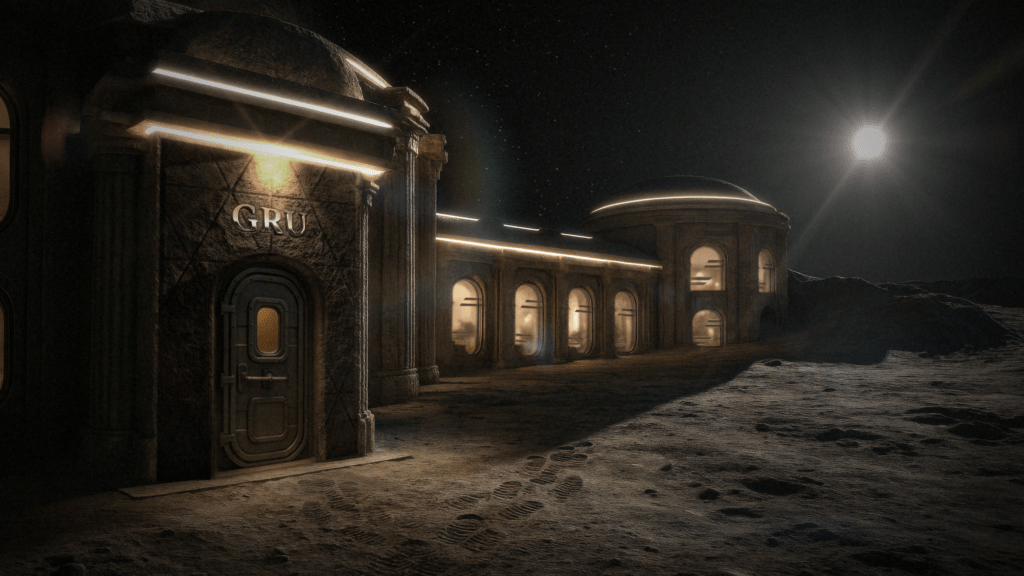
Galactic Resources Utilization (GRU) Space said on Monday it has begun accepting applications from prospective lunar tourists, asking for a $1 million deposit to reserve a place at a planned Moon-based hotel that the startup says could open as early as 2032.
The California-based company, founded in 2025, said the deposit would secure a future slot at a facility it plans to deploy on the lunar surface, although it acknowledged that the project depends on advances in launch costs, lunar transportation and supporting infrastructure that are still under development.
GRU Space was founded by Skyler Chan, a recent graduate of the University of California, Berkeley, and is backed by Y Combinator, with additional support from investors linked to SpaceX and defence technology firm Anduril. The company has also joined Nvidia’s Inception program for startups.
In a white paper shared with industry publication Payload, GRU outlined a three-mission plan intended to demonstrate core technologies and deploy its first hotel module. The approach is designed to align with broader efforts by the United States and its partners to establish a sustained human presence on the Moon in the early 2030s.
The first mission, planned for 2029, would send a small payload aboard a Commercial Lunar Payload Services (CLPS) lander to test an inflatable habitat structure and an in-situ resource utilization (ISRU) process aimed at converting lunar soil into construction material. A second mission, targeted for 2031, would involve a larger lander delivering a subscale habitat to a lunar pit, along with a scaled-up version of the ISRU technology.
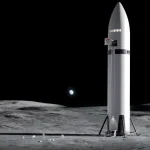
GRU says it aims to deploy its first full hotel module in 2032 using a heavy-lift lunar lander. The initial structure would be manufactured on Earth, equipped with life-support systems, and designed to accommodate up to four guests for stays on the Moon. The company says the structure would be designed to operate for up to a decade.
Beyond that, GRU plans to expand the facility using materials produced on the Moon to build a rigid external shell around the inflatable habitat, reducing the need to transport construction materials from Earth.
Company founder Chan acknowledged that the plan carries significant risk and relies on factors largely outside the company’s control, including reliable crewed lunar transport, regulatory approvals, power generation and communications infrastructure on the Moon.
“This is a big bet. We’re not going to sugarcoat it,” Chan told Payload. “We don’t hide it. We’re very proud of it, actually.”
While several governments and private companies are pursuing lunar exploration and infrastructure projects, commercial lunar tourism remains speculative, with no established timeline for routine human travel to the Moon.