Virginia-based startup Symphony Space has unveiled a new orbital data center platform designed to support artificial intelligence workloads in space, expanding its ambitions beyond hosted payload services and into the rapidly emerging market for space-based computing infrastructure.
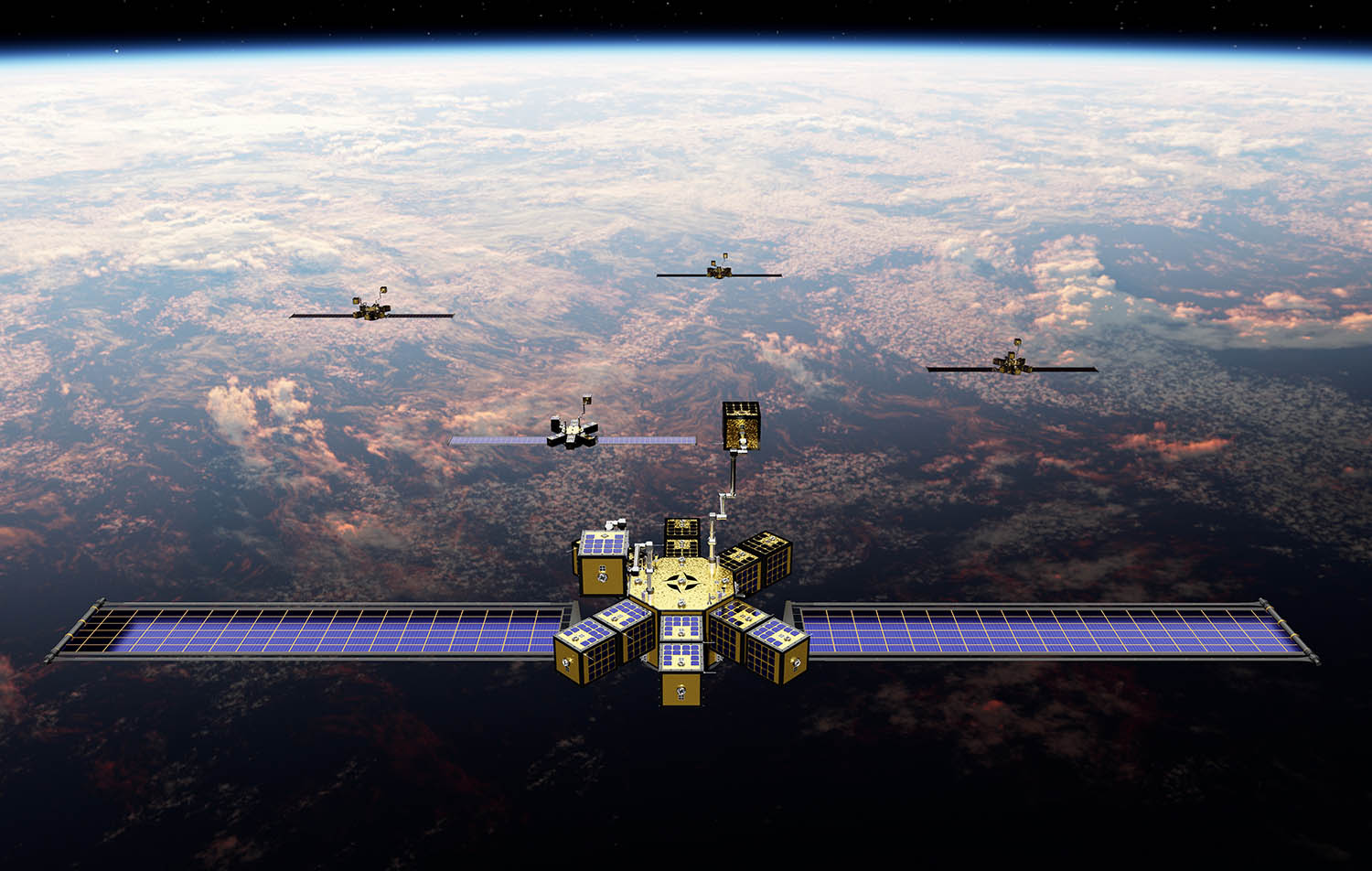
The new platform, known as Adagio-XL, builds on the company’s previously announced Adagio hosted payload satellite and is specifically designed to support high-performance computing applications requiring significantly greater power generation and thermal management capabilities.
Symphony Space said the platform is expected to enter service in late 2029.
Responding to Growing Demand
According to the company, the Adagio-XL concept emerged following discussions with potential customers interested in orbital data center services.
Chief Executive Officer Merry Walker said the company saw demand for a larger and more capable platform tailored specifically to computing applications.
“It’s a reaction to the demand signals that we had received from others interested in working with us,” Walker said.
“They wanted to take this modularity that we’re doing for payload hosting and to focus it on the ODCs. We couldn’t use our existing infrastructure…so we sized it up.”
Higher Power for AI Workloads
While Adagio-XL maintains the same 1,200-kilogram payload capacity as the original Adagio platform, its most significant enhancement is a substantial increase in available power.
The satellite is designed to generate approximately 100 kilowatts of power, with future versions potentially reaching 200 kilowatts.
That represents a major increase from the 12-kilowatt capability offered by the original Adagio platform.
To support power-intensive graphics processing units (GPUs) and artificial intelligence hardware, the spacecraft will also feature expanded radiative cooling systems designed to dissipate heat generated by onboard computing equipment.
In-Orbit Hardware Upgrades
A key feature of the Adagio-XL platform is its ability to replace and upgrade payloads after launch.
Like the original Adagio spacecraft, the new platform will incorporate a robotic arm capable of accepting and integrating new payloads while in orbit.
The capability is intended to address one of the major challenges facing both terrestrial and orbital data centers: rapid hardware obsolescence.
Walker said the ability to regularly update computing hardware could provide significant advantages for operators seeking to maintain access to the latest AI processors.
“Depreciation of data centers is very steep.”
“The chips are being upgraded all the time, and so being able to have the most recent technology on board is very important to data center operators.”
Symphony estimates that a single Adagio-XL satellite could accommodate as many as eight generations of GPU upgrades during its planned 15-year operational lifetime.
Partnership With Data Center Industry
To support commercialization efforts, Symphony Space has been building relationships with terrestrial data center operators.
In May, the company signed an agreement with Catalyst Data Centers, a developer of ground-based data center facilities.
The partnership is intended to provide Symphony with access to industry expertise and potential customers while helping bridge the gap between terrestrial and orbital computing infrastructure.
The company said it hopes the collaboration will make space-based computing resources more accessible to organizations already familiar with conventional data center services.
Expanding Orbital Computing Sector
The announcement comes amid growing interest in orbital data centers as companies explore alternatives to terrestrial facilities facing increasing constraints related to power availability, land use and cooling requirements.
Several startups have announced plans for space-based computing networks in recent months, seeking to leverage continuous solar power and the thermal environment of space to support future artificial intelligence workloads.
Symphony Space’s focus on modularity and in-orbit hardware replacement distinguishes its approach from many competing concepts that rely on fixed hardware architectures.
As demand for AI computing capacity continues to grow, the company believes orbital infrastructure could become an increasingly important component of the global digital ecosystem.