Telespazio and the Italian Space Agency are launching a programme to modernise one of Italy’s most historic space infrastructure assets, aiming to adapt it for future lunar and deep space missions, the company said on Feb. 3.
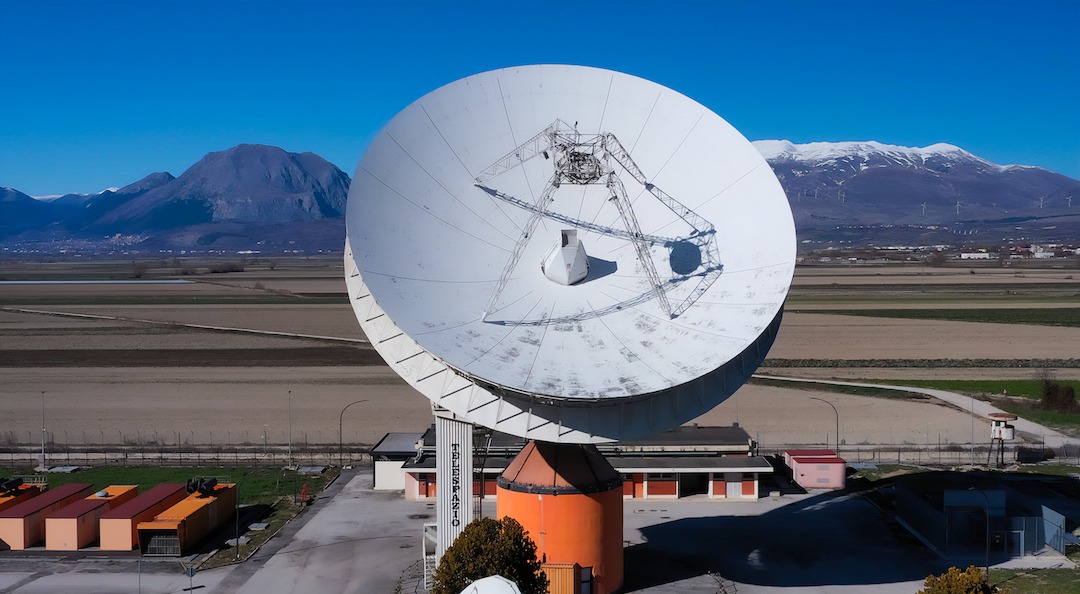
Under the project, known as Response, Telespazio and the Italian Space Agency (ASI) will upgrade the FOC-1A antenna at the Fucino Space Centre in central Italy. The 27-metre-diameter parabolic antenna has been in continuous operation since 1967 and will be adapted to meet modern near-Earth and deep space communication requirements.
The FOC-1A antenna is a landmark in Italy’s space history, having relayed television images of the Moon landing to Italian audiences in 1969. The modernisation aims to extend the facility’s operational life so it can support upcoming lunar missions and long-term deep space exploration.
Once upgraded, the antenna will also contribute to European Space Agency programmes, including ESTRACK, the agency’s global tracking network for satellites and missions. In addition, the system is expected to support communications with the Moon through Italy’s contribution to Artemis program and ESA’s Moonlight initiative, which is focused on establishing lunar communications and navigation services. Telespazio is the prime contractor for the Moonlight programme.
“With Response, Telespazio and ASI are giving new life to an infrastructure that has made the history of Italian and international satellite communications,” said Alessandra Farese, senior vice president for Satellite Systems & Operations at Telespazio. “The FOC-1A antenna, a symbol of the great space achievements of the 1960s and 1970s, is now being projected into the future to support lunar missions and deep space exploration over the coming decades.”
Telespazio said the project reflects a broader effort, alongside its parent group Leonardo, to modernise legacy infrastructure and align it with Europe’s evolving ambitions in space exploration and international cooperation.