The U.S. Space Development Agency has awarded Seattle-based Starfish Space a $52.5 million contract to provide end-of-life disposal services for satellites in the agency’s Proliferated Warfighter Space Architecture, marking what the company described as the first operational contract of its kind for on-orbit satellite disposal.
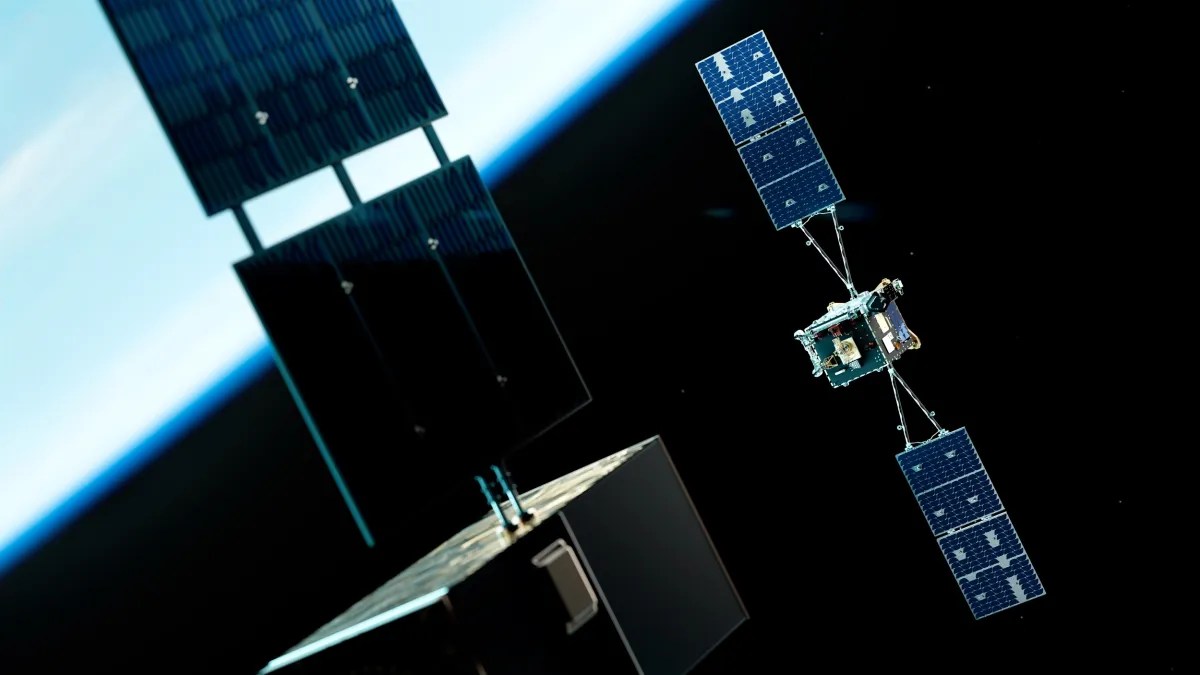
Under the agreement, Starfish Space will use its Otter spacecraft to capture and deorbit SDA satellites once they reach the end of their operational life. The contract includes options to expand the scope of services depending on the vehicle’s performance in orbit, the company said.
“This is a contract to go and provide multiple disposals with an Otter vehicle,” said Trevor Bennett, cofounder of Starfish Space, adding that the award represents a shift from research and development toward sustained operational services. “It’s truly a first of its kind… this is not just an R&D contract; this is a true… operational contract,” he said.
Otter, which has a mass of about 300 kilograms, is designed to dock with and service satellites that were not originally built for capture. According to the company, the vehicle can deorbit spacecraft or extend their operational life by acting as an external propulsion system, allowing it to work across constellations made up of satellites from multiple manufacturers.
Starfish said the Otter mission supporting the SDA contract is planned for launch in 2027, though a launch provider has not yet been selected. The ability to service “unprepared” satellites was a key factor in the award, Bennett said, enabling SDA to manage disposal across its distributed satellite architecture while also ensuring the technology has potential commercial applications.
The new contract builds on a competitive mission study that Starfish carried out for the Space Development Agency during 2024–2025. It also follows a series of earlier demonstration and service agreements aimed at maturing the Otter platform.
In May 2024, Starfish won a $37 million Strategic Funding Increase contract to build and operate an Otter vehicle for a docking mission providing “augmented maneuver” to a national security satellite in geosynchronous orbit. The following month, the company signed a commercial agreement with Intelsat, now part of SES, to move a geosynchronous satellite into a higher graveyard orbit. In September 2024, NASA awarded Starfish a $15 million, three-year contract to inspect a defunct satellite in low Earth orbit.
Bennett said the Otter’s propulsion capability allows it to operate across multiple orbital regimes. “Because of the delta-V it can provide, it is a multi-orbit, multi-domain platform,” he said.