Attitude and orbit control are important components of satellite platforms and play a very important role in the completion of spaceborne payload missions. When other sub-systems of the satellite are working normally, whether the geosynchronous satellite can establish a point, whether the geosynchronous satellite and the sun-synchronous satellite can maintain orbit, whether the returnable satellite can return to the designated location, whether the resource satellite can accurately take pictures, whether the meteorological satellite can provide the correct regional cloud map, whether the relay satellite can communicate with the inter-satellite link, whether the relative position between the constellation satellites can be correctly maintained, etc. These are all tasks of satellite attitude control and orbit control.
Satellite attitude control
Satellite attitude control refers to the technology of applying external torque to the satellite around its center of mass to maintain or change the orientation of one or more axes on the satellite in space as required. Different satellites have different requirements for attitude control. For example, the antenna pattern of a communication and broadcasting satellite must cover a given area on the ground; the orbiting engine of a satellite must be aligned with the required thrust direction when maneuvering a maneuver; the braking and heat-resistant surface of a returnable satellite must be aligned with the direction of the oncoming airflow when returning to the atmosphere from space. Generally speaking, orbit control and attitude control are closely related. In order to achieve orbit control, the satellite attitude must meet the requirements. That is to say, when orbit control of the satellite is required, attitude control is also required.
Satellite attitude control includes attitude stability and attitude maneuvering. The former is the process of maintaining the existing attitude or attitude movement, and the latter is the reorientation process of changing the satellite from one attitude to another.
Satellite attitude stabilization methods can be roughly divided into two categories. One is spin stabilization. The satellite rotates around its axis (spin axis) and relies on the rotational momentum moment to maintain the direction of the spin axis in the inertial space. The dual-spin satellite consists of two parts: a spin body and a racer body. The spin body rotates around the spin axis to obtain the spin axis orientation. On the basis of the spin axis orientation, the racer body equipped with the payload is controlled by the spin motor on the bearing shaft to achieve three-axis stability. The second is the three-axis stabilization method, which relies on active attitude control or the action of space environment torque to maintain the orientation of the satellite’s three orthogonal axes in the inertial space.
The satellite attitude is usually described by pitch angle, yaw angle, and roll angle, which respectively correspond to the rotational motion of the satellite around the three axes of its body coordinate system. In order to determine these three angles, the attitude control system needs to complete two core steps, one is to determine the target attitude, and the other is to determine the current attitude.
Determining the target attitude is also to determine the “ideal” orientation required by the satellite mission. For example, a communication satellite needs to accurately point its antenna to a specific area on the earth, a remote sensing satellite needs to aim its camera lens vertically at the ground target, or a solar sail panel needs to always face the sun to obtain maximum energy. The target attitude is usually calculated by ground command injection or on-board autonomous planning system based on orbital parameters and mission requirements.
How to know the current posture of the satellite requires relying on various sensors, including: infrared earth sensors (which determine the direction of the center of the earth by detecting infrared radiation from the edge of the earth, which is the most commonly used reference for earth orientation for near-Earth satellites), and solar sensors (which determine the sun vector by detecting the direction of sunlight) , almost all satellites are equipped with them because they need to protect the battery panels), star sensors (by photographing the starry sky and comparing star maps, the attitude of the satellite in the universe can be known extremely accurately), and gyroscopes (based on the principle of conservation of angular momentum, by detecting changes in the angular velocity of objects rotating around three axes in real time, and accurately outputting attitude and direction information).
Once the target attitude and current attitude are known, the attitude control system calculates the error between the two (i.e., attitude deviation). Then, the control algorithm (such as PID control, sliding mode control, etc.) will calculate the required control torque based on this error, and drive the actuator to produce corresponding actions to eliminate the attitude error, so that the satellite maneuvers from the “current attitude” to and maintains the “target attitude”. To put it simply, the whole process is a closed-loop feedback control: measure the current attitude → compare with the target attitude → calculate the error → generate control instructions → execute the mechanism action → change the attitude → measure again…
Regarding the actuator, it mainly includes the reaction wheel (this is the most commonly used method at present. The satellite relies on the motor to accelerate the flywheel. The flywheel rotates faster. According to the conservation of angular momentum, the satellite body rotates in the opposite direction. The advantages of this method are high precision, no fuel consumption, and it can move as long as there is electricity. The disadvantage is The torque and angular momentum storage capacity of the flywheel is limited. If you want it to rotate at a large angle quickly, the flywheel will soon reach the highest speed and be saturated. At this time, another mechanism is needed to help), and the control moment gyro (it allows a high-speed rotating gyro frame to precess, generating a large control torque. It allows satellites to turn around quickly, suitable for large space stations or large satellites with rapid maneuvers), magnetic torquers (use energized coils to generate torque in the earth’s magnetic field, the advantage is that it does not consume fuel, the disadvantage is that the torque is very small, and can only be used for very slow maneuvers, or as an auxiliary when unloading the flywheel system Means, low-orbit satellites often use it for initial capture), thrusters (when the flywheel is saturated or rapid maneuvering is required, the thruster jet is used to generate torque. The advantage is that the torque is large, but the disadvantage is that it consumes fuel, and the ejected plume may contaminate sensitive devices. It is usually used for large-angle maneuvers or emergency rescue).
satellite orbit control
Satellite orbit refers to the movement trajectory of the satellite’s center of mass in space. The orbit is determined by six radicals such as semi-major axis, eccentricity, and orbital inclination. Any orbit control essentially changes these factors by applying external force (speed increment) to the satellite.
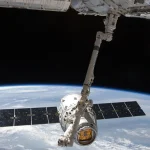
Satellite orbit control tasks can basically be divided into four types: orbit change control, orbit maintenance, return control, and orbit rendezvous. Orbit change control is the control to transfer a satellite from one free flight segment orbit to another free flight segment orbit. For example, during the launch of a geostationary satellite, the orbit change maneuver is performed near the apogee of a large elliptical transfer orbit to enter a quasi-synchronous orbit. Orbit maintenance is the control that enables the spacecraft to overcome the influence of various perturbations in space and keep certain parameters of the satellite orbit unchanged. For example, geostationary satellites perform regular orbit corrections to accurately maintain fixed positions; the control of sun-synchronous orbit and return orbit satellites to maintain their inclination and period; the control of some low-orbit satellites to overcome atmospheric resistance and extend the satellite’s life in orbit, etc. Return control is the control to make the satellite leave its original orbit and enter the atmosphere. Orbital rendezvous is the process by which one satellite and another satellite arrive at the same location in space at the same time and at the same speed.
The process of satellite orbit control mainly includes orbit determination, orbit planning and guidance, control execution, orbit maintenance and revision.
Orbit determination is mainly divided into two categories: non-autonomous determination and autonomous determination.
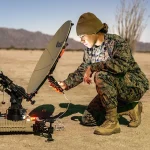
For non-autonomous determination, the satellite is tracked and measured by ground station equipment (such as radar), and the data is processed at the space measurement and control center, and finally the orbit position information is obtained. Since this method of orbit determination relies on ground stations, it has great limitations. If you want to continuously track satellites, you need a lot of ground stations, and these stations must be ideally distributed. This will inevitably require some stations to be located outside the country’s territory or on the high seas. It can be seen that it is uneconomical and unrealistic to continuously track low-orbit satellites by adding ground stations.
For autonomous navigation, the motion parameters (position and speed) of the satellite are determined by on-board orbit measurement instruments, and the work of the instrument does not depend on navigation and communication on the earth or other celestial bodies. Space-borne navigation equipment generally includes altimeters, space sextants, MANS navigation sensors, GPS navigation receivers, etc. In order to complete autonomous navigation tasks, attitude measurement and orbit measurement sometimes share a sensor, such as a gyroscope and a star sensor. Autonomous navigation systems can be divided into four categories according to their working principles: astronomical navigation (measuring angles sensitive to celestial bodies to determine the position of the satellite. In this system, the satellite first measures its local vertical line on the earth’s surface, and then uses this as a benchmark to measure the angles of three independent known stars. Based on these measurement data, the satellite’s position and attitude information is calculated), landmark positioning (uses measurement of ground target benchmarks to determine the position and attitude of the satellite), Inertial navigation (mainly composed of an inertial measurement device, a computer and a stable platform (the strapdown type does not have a stable platform), uses a gyroscope and accelerometer to measure the angular velocity and linear acceleration of the satellite relative to the inertial space, and then uses an onboard computer to obtain the satellite’s position, speed and attitude information), beacon ranging (distance measurement of a known beacon, this type of system determines the distance from the satellite to three or more known points, and then uses trigonometric methods to calculate the satellite’s spatial position).
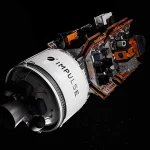
Orbital control is performed by devices that generate thrust, including chemical propulsion (large thrust, fast response, but limited fuel, and satellite life often depends on how much fuel is left) and electric propulsion (using electrical energy to accelerate the ejection of charged ions. The thrust is extremely small, but the specific impulse is extremely high, which is particularly fuel-saving. It is often used for the position maintenance of geostationary orbit satellites and the main propulsion of deep space exploration. Currently, many communication satellites (such as SpaceX’s Starlink) V2, Boeing’s 702SP platform) all-electric propulsion, although slow to change orbit, it can carry more loads or extend its life).
Future development (intelligent and autonomous)
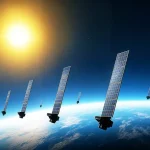
With the continuous launch of low-orbit satellite constellations, the traditional “ground calculation, command upload” model has fatal flaws such as large communication delays, computational overload, and untimely response when faced with such a high-density dynamic environment. Currently, low-orbit satellites (such as Starlink V2 and my country’s satellite internet constellation low-orbit business satellites) are generally equipped with laser inter-satellite links, which eliminates the need for satellites to rely on ground stations for data transfer. Through ISL, satellites can share their own orbital status, perceived space debris information and the positions of neighboring satellites in real time, providing a data basis for collaborative decision-making. Satellites in the future will no longer be terminals for executing dead orders. Algorithms based on distributed model predictive control, multi-agent reinforcement learning or game theory are being implanted into onboard computers. When two satellites predict the risk of collision, they can “talk” directly through the inter-satellite link, instantly calculate the optimal avoidance trajectory based on preset game rules (such as: who has lower orbit change cost, who has higher priority), and automatically executes thruster ignition. This process does not require ground intervention, and the reaction time is extremely compressed. With its huge constellation size, SpaceX has actually been forced to transform towards automation in practice. Its latest satellites have autonomous maneuver capabilities to respond to increasingly frequent collision warnings and reduce reliance on ground operation teams. In practical applications related to geopolitical conflicts in 2026 (such as communication guarantees in the US-Iran situation), the decentralization and self-healing capabilities of low-orbit constellations (automatic network reconstruction if some satellites are damaged or interfered with) are regarded as core advantages. Behind this is the support of multi-agent collaboration technology.