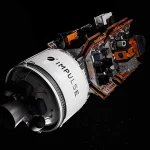
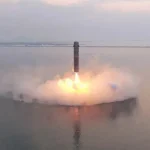
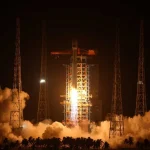
In the past two years, China’s commercial aerospace industry has ushered in a “golden moment.” Rocket launches are becoming more and more intensive, satellite constellation plans are becoming more and more ambitious, and it seems to be prosperous.
But when we go into companies and investment institutions and have in-depth discussions with practitioners in different cities and different tracks, we find a very contradictory reality: commercial aerospace is “hot” and company development is “difficult”. Almost every company is facing similar problems: slow financing, fragile cooperation chains, opaque supply chain prices, difficulty finding talents, poor matching of local policies, and long project cycles…
Why does the industry seem bustling but full of anxiety? This article attempts to explain it from the perspective of “industry ecology”.
01
Industry “hot”
First of all, what we can see is that China’s commercial aerospace is indeed experiencing a stage of rapid growth.
In 2025, it only took 10 months and three days for the number of Chinese rocket launches to exceed last year’s 68, and the number of annual launches is expected to exceed 80. While annual launches are increasing, leading commercial rocket companies have also entered a stage of stable operation. Many private rocket companies such as Galaxy Power, China Science and Technology Aerospace, and Blue Arrow Aerospace have achieved “multiple launches a year.”
At the same time, satellites and applications have also shown significant growth. China Star Network launches more than 100 satellites annually. Multiple production lines, including the Hainan Super Satellite Factory, are expected to be completed and put into production within the year. The demand for commercial aerospace application scenarios such as remote sensing/communications is becoming increasingly clear.
In addition, at the policy and financial level, local governments have included aerospace as a “strategic emerging industry”, special funds for commercial aerospace have been established in various places, and investment institutions have continued to pay attention to aerospace in the past two years; the Science and Technology Innovation Board has restarted the fifth set of listing standards for the commercial aerospace industry… From a macro trend, this is a period of opportunity for China’s commercial aerospace.
But while the industry is booming, we also need to see that in the process of industrial growth, companies are also experiencing the “pains” of development such as rapid changes in industrial structure, uncertain demand, long R&D cycles, high investment costs, and opaque industry information.
02
Enterprises “encounter cold”
After communicating with dozens of aerospace companies and aerospace entrepreneurs in many cities, we found that the “difficulty” of commercial aerospace does not lie in the external world, but in the industry’s ecological structure itself. For most companies, difficulties manifest themselves in the following three phenomena:
1. Information is extremely opaque – there is little effective information, and 99% of the information has no reference value for corporate decision-making.
The common pain point of almost all companies is: “It seems that there is a lot of information, but there is too little really useful information.” For example: the prices of supply chain parts are often completely opaque; companies often have to “ask friends” for the delivery cycle of key components; the true cost of a satellite platform is difficult to obtain from the outside world; investment institutions do not know the company’s true R&D progress; the government also lacks authoritative industry data, making it difficult to evaluate project prospects. At present, most media reports on aerospace remain at the level of “big countries and important weapons”, and consulting services that are willing to dig deep into data and focus on the industry are almost out of stock.
2. Cooperation and mutual trust are fragile – the industry is developing rapidly, but suppliers rely on “divine verification” and “personal connections” for choice
As a large-scale systematic project, aerospace is characterized by high value, high risk, and heavy industrial chain collaboration. A satellite or rocket often integrates multiple systems, dozens of individual machines, and tens of thousands of components. The industrial chain is long and vertical integration is difficult. Therefore, overall enterprises are required to have better control over downstream enterprises.
However, during the development process, the reality encountered by enterprises is that many companies do not know where to find suitable suppliers. R&D cooperation often relies on “personal connections”, and companies do not know each other well enough. The process of bidding and government projects is highly complex, the information is not transparent, and the project risks are high. As a result, the rapid development of the industry requires a lot of fresh blood, but in the selection of suppliers, it is often timid and relies heavily on “God’s verification.”
The result is: everyone needs to cooperate, but the cost of mutual trust is extremely high. This is very dangerous in a rapidly developing industry.
3. Financing anxiety – superficially lively, but actually tightened
Except for the top few companies, almost all commercial aerospace companies are saying the same thing: “Money has become difficult.” On the one hand, aerospace is indeed a popular track in the 20-year cycle; on the other hand, the market has also entered a “rational period”: investment institutions do not understand technology enough; companies cannot explain their business models clearly; local governments depend on output value and fixed investment. In this case, companies are generally in a state of “seeing opportunities but not reaching resources”.
03
What does the contrast between “hot” and “cold” bring?
The most intuitive feeling is: the industry is very hot and there are many start-up companies. However, the release of top-level demand is too slow, and the project verification cycle is too long. Therefore, everyone is repeating the process of “making wheels” to conduct technical verification, make up for shortcomings, and improve production capacity. Every segment is “involved.”
According to statistics from Nihao Space in April 2024, there are about 37 domestic rocket companies, and there are currently more than 40. When the satellite factories planned in various regions reach full capacity, they will be able to produce more than 6,000 satellites per year. In other words, the launch demand of Xingwang and Qianfan has not yet been released, and a “buyer’s market” has formed in China.
According to feedback from supply chain companies in contact with China Star Network, during the technical verification cooperation with Star Network, most supply chain prices were reduced to the cost price after “scale mass production”. That is to say, in the early verification stage, most companies are in the “bring your own dry food” stage, and the internal survival pressure is huge.
External pressure comes from competition among enterprises. In order to “reduce costs” to a greater extent, both single-machine supporting manufacturers and overall satellite companies are trying their best to find “industrial-grade parts” suppliers outside the industry chain to quickly achieve mass production and reduce costs; many companies have to pay low prices or even lose money in order to obtain projects or have a “verification opportunity.”
The industry is facing technology and production capacity saturation, but lacks a transparent information environment and standardized market. To put it bluntly, companies need an “industry infrastructure” that can achieve information transparency and supply and demand docking, so that companies can achieve efficient collaboration; investment institutions can understand projects; and projects can quickly find resources.
Conclusion
At the crossroads of commercial aerospace development, the aerospace industry needs to achieve industrial transparency, eliminate information barriers, and allow risks, resources, and results to be shared.
In the next article, we will systematically analyze the current real status, faults and trends of China’s commercial aerospace industry from the perspective of the industry’s ecological structure, and propose our judgment on the future infrastructure of the industry.