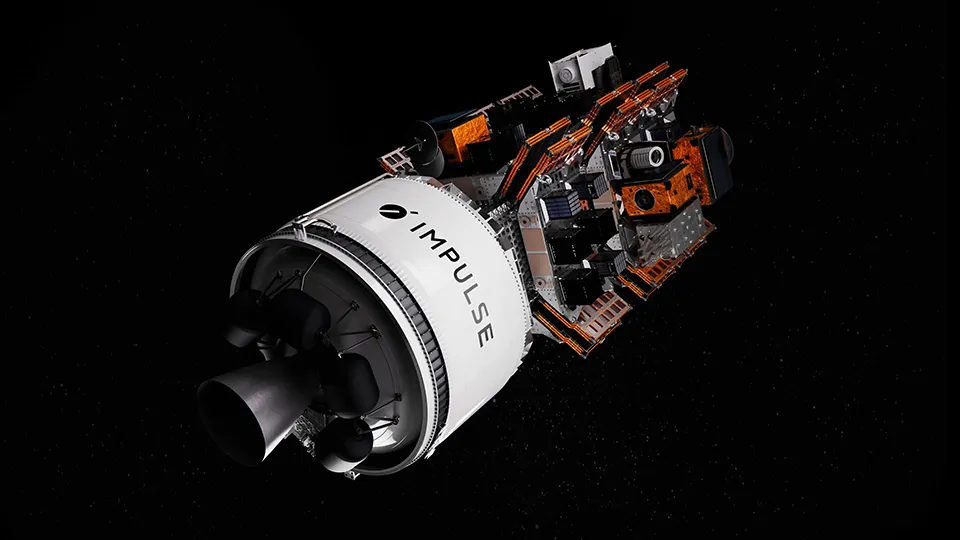
Impulse Space has received a $28 million U.S. Space Force contract to provide a maneuverable Mira spacecraft for a space domain awareness mission scheduled to launch no earlier than 2029. The spacecraft will operate in low Earth orbit while carrying an optical sensor designed to track and characterize objects in geostationary orbit.
A government-provided launch vehicle will place Mira into LEO. The spacecraft will host a government-furnished optical payload developed by the Massachusetts Institute of Technology Lincoln Laboratory to observe objects in the geostationary belt, approximately 35,786 kilometers above the equator.
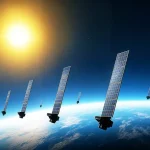
Although the mission’s surveillance target is GEO, the sensing platform itself will remain in LEO. This geometry allows the optical payload to look outward toward the geostationary region from below while Mira adjusts its orbit to support different observation opportunities.
The mission is intended to strengthen the Space Force’s ability to identify, track and characterize spacecraft operating in GEO, an orbital region occupied by strategically important military communications, missile-warning and intelligence satellites as well as commercial communications platforms.
APFIT Funding Supports Mira Procurement
The contract will be funded in part through a $19.75 million fiscal 2026 award from the Defense Department’s Accelerate the Procurement and Fielding of Innovative Technologies program. U.S. Space Command sponsored the APFIT award.
APFIT is intended to move mature technologies into operational procurement more rapidly by financing the transition from development and demonstration to production at military scale. In this case, the funding supports procurement of the Mira spacecraft rather than development of an entirely new satellite platform.
Using an existing commercial spacecraft as the sensor host could shorten the acquisition schedule and avoid some of the costs associated with developing a dedicated surveillance satellite. The approach also allows the government to combine a specialized payload with a commercially developed spacecraft bus that has already operated in orbit.
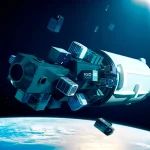
Mira uses chemical propulsion and is designed for high-maneuverability missions, including hosted payload operations, satellite deployment, orbital transfers, and rendezvous and proximity operations. Impulse Space said the vehicle can provide as much as 850 meters per second of delta-v while carrying a 100-kilogram payload.
That maneuvering capacity is central to the Space Force mission. Unlike a sensor placed in a largely fixed orbit, Mira can alter its trajectory and viewing geometry to improve observations of selected objects or respond to changes in the orbital environment. Chemical propulsion also supports relatively rapid maneuvers compared with lower-thrust electric propulsion, although repeated burns consume a finite supply of propellant.
Impulse Space President and Chief Operating Officer Eric Romo said Mira’s previous commercial missions in LEO had demonstrated the spacecraft’s suitability as a hosted-payload platform. The company has also tested both sustained and rapid engine burns, providing experience relevant to taskable surveillance operations.
The new award expands Impulse Space’s U.S. national-security portfolio. The company previously secured a position under the Space Force’s National Security Space Launch Phase 3 Lane 1 program for its Helios high-energy upper stage. It also received an extension to a Small Business Innovation Research Phase III contract supporting the Space Safari office’s VICTUS SALO 2 and VICTUS SALO 3 missions.
Those programs reflect growing military interest in spacecraft that can reposition after launch rather than remain confined to an initially assigned orbit. For space domain awareness, maneuverable platforms could supplement ground-based telescopes, radar systems and satellites operating closer to the geostationary belt, giving military operators additional viewing angles and more flexible observation schedules.
The immediate program milestones will include spacecraft and payload integration, mission planning and launch preparations ahead of the planned flight in 2029 or later.