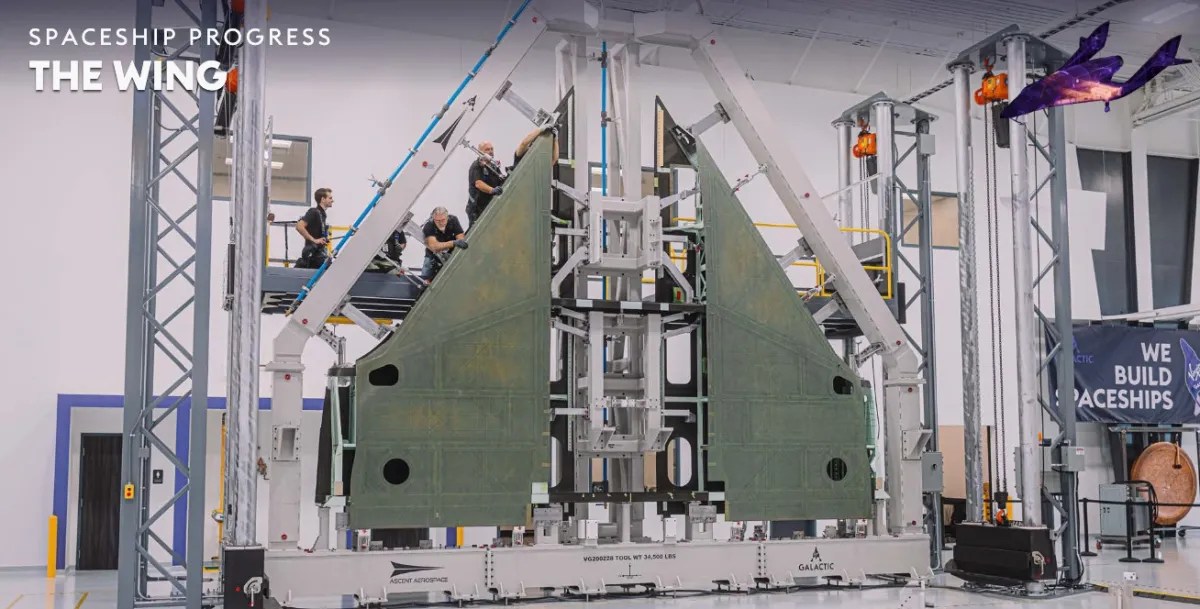
Virgin Galactic Holdings said it remains on track to bring its next-generation SpaceShip program into operation in 2026, with flight tests planned for the third quarter and a first commercial flight expected in the fourth quarter of that year. Chief Executive Michael Colglazier said the schedule is “stable,” noting that supply-chain constraints have been resolved and that assembly of the first fuselage is progressing ahead of plan.
The company aims to operate as many as 125 missions annually once the system enters service. Virgin Galactic has been making upgrades to its Eve carrier aircraft in support of higher flight frequency from its base at Spaceport America in New Mexico. The company, which manufactures air and space vehicles in addition to offering human spaceflight services, is developing a multi-day customer experience that includes several minutes of weightlessness and views of Earth from space.
Virgin Galactic, listed on the New York Stock Exchange, has a market capitalization of about $190.6 million and operates in the U.S. aerospace and defense sector. The stock’s beta of 3.82 indicates substantially higher volatility than the broader market.
Financial outlook remains strained
Recent financial metrics point to persistent challenges. Revenue has grown 2% over the past three years to reach $1.7 million. The company’s operating and net margins remain deeply negative, at -18,967.67% and -17,828.03%, respectively. Its debt-to-equity ratio stands at 1.6, and a current ratio of 3.38 highlights potential liquidity pressure despite available short-term assets.
Virgin Galactic’s Altman Z-Score of -4.47 places it in the distress zone, indicating an elevated risk of financial instability, while a Piotroski F-Score of 2 signals weak operational performance.
Valuation and market sentiment
Valuation metrics remain stretched, with a price-to-sales ratio of 66.17. Analysts’ average target price of $4.14 corresponds with a consensus “hold” recommendation and reflects continued uncertainty surrounding the company’s long-term trajectory. Technical indicators show an RSI-14 of 36.53, approaching oversold conditions. Institutional investors hold about 20.69% of the shares, while insiders account for 6.53%.
High-risk profile
The company continues to face sector-specific risks, including technical hurdles and regulatory oversight inherent to human spaceflight. Stock volatility remains elevated at 69.52, amplified by its high beta. For investors, the outlook suggests considerable near-term risk and a need for substantial operational progress before the company can reach sustained profitability.