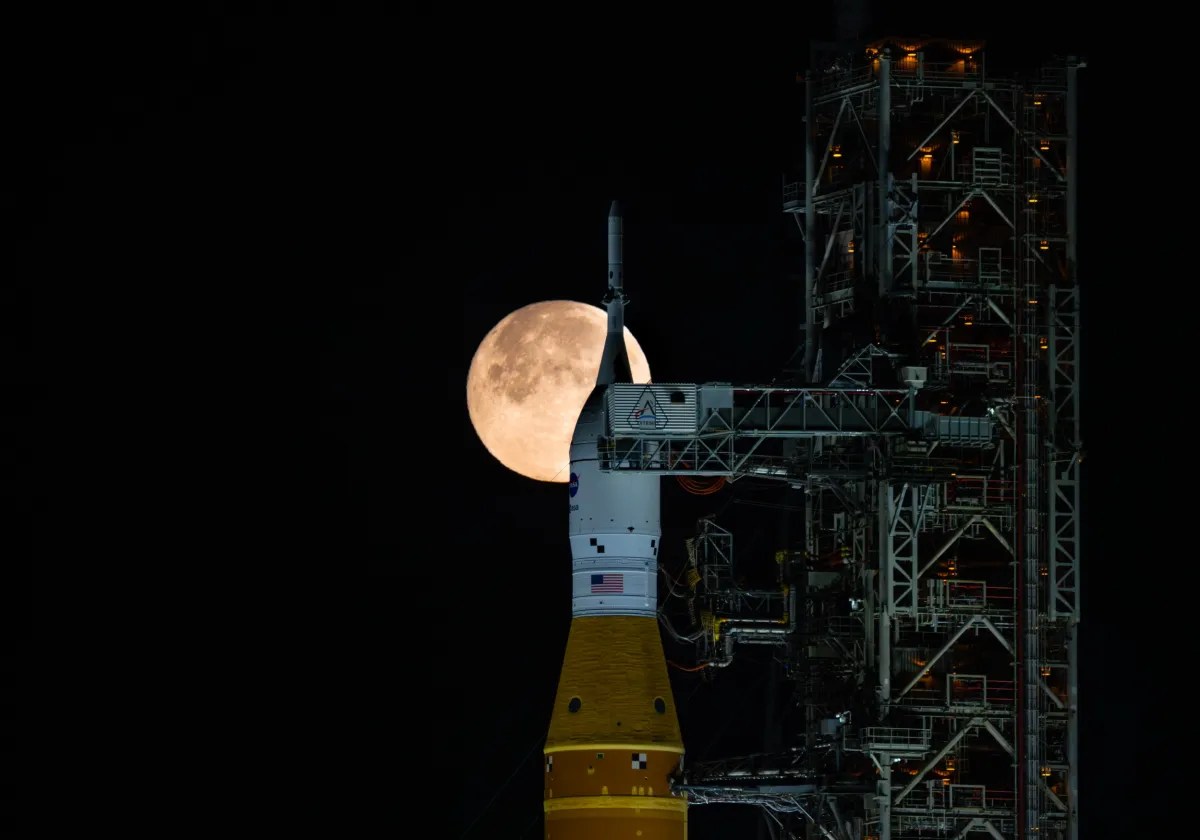
NASA is now targeting March for the earliest possible launch of its Artemis II mission after encountering technical issues during a critical prelaunch test of its Space Launch System rocket, the agency said.
The Artemis II mission is set to carry four astronauts into deep space, marking the first crewed lunar mission since the Apollo program ended more than 50 years ago. The launch had previously been expected as early as Feb. 8 but was delayed following a wet dress rehearsal completed in the early hours of Tuesday.
NASA said cold weather contributed to a late start for the test, during which engineers encountered hydrogen leaks while fueling the Space Launch System with super-chilled propellants. The agency said the delay would allow teams to review data and conduct an additional rehearsal before setting a firm launch date.
“With more than three years between SLS launches, we fully anticipated encountering challenges,” said Jared Isaacman in a social media post. “That is precisely why we conduct a wet dress rehearsal.”
NASA officials said it remains unclear whether the rocket will need to be rolled back to the Vehicle Assembly Building for servicing. A rollback would be required if the mission slips beyond March, as batteries on the upper stage would need replacement.
When cleared to fly, Artemis II will send Reid Wiseman, Victor Glover, and Christina Koch, along with Jeremy Hansen, on a roughly 10-day journey around the far side of the moon. The mission is expected to set a new record for the farthest distance humans have traveled from Earth.
The astronauts were released from quarantine in Houston and will re-enter isolation about two weeks before the next targeted launch date. NASA has previously identified March 6, 7, 8, 9 and 11 as potential launch opportunities from Kennedy Space Center.
During the wet dress rehearsal, launch controllers loaded more than 700,000 gallons of liquid hydrogen and liquid oxygen into the rocket and simulated a countdown to liftoff. NASA said the countdown was halted with about five minutes remaining after a spike in hydrogen leak rates triggered an automatic stop.
“This was the first opportunity for us to get the integrated stack for Artemis II on the launchpad with all the systems working together,” said John Honeycutt.
NASA said a second rehearsal will aim to complete the remaining countdown milestones not achieved during the latest test. The agency added that teams will fully review the data and mitigate issues before confirming an official launch date.