The University of Pittsburgh has launched a $25 million institute focused on translating discoveries from space research into biomedical and commercial applications on Earth, as part of an effort to expand Pittsburgh’s role in life sciences innovation.
The Trivedi Institute for Space and Global Biomedicine is funded primarily by entrepreneur Ashok Trivedi, whose former IT services company iGATE was sold in 2015. The institute will study how extreme space conditions such as microgravity and radiation affect human biology, with the goal of accelerating medical breakthroughs and supporting the creation of new startups.
“The institute will probably play a very big role in seeding new life sciences and space-adjacent startups in Pittsburgh,” Trivedi said, adding that several spinout concepts are already under development.
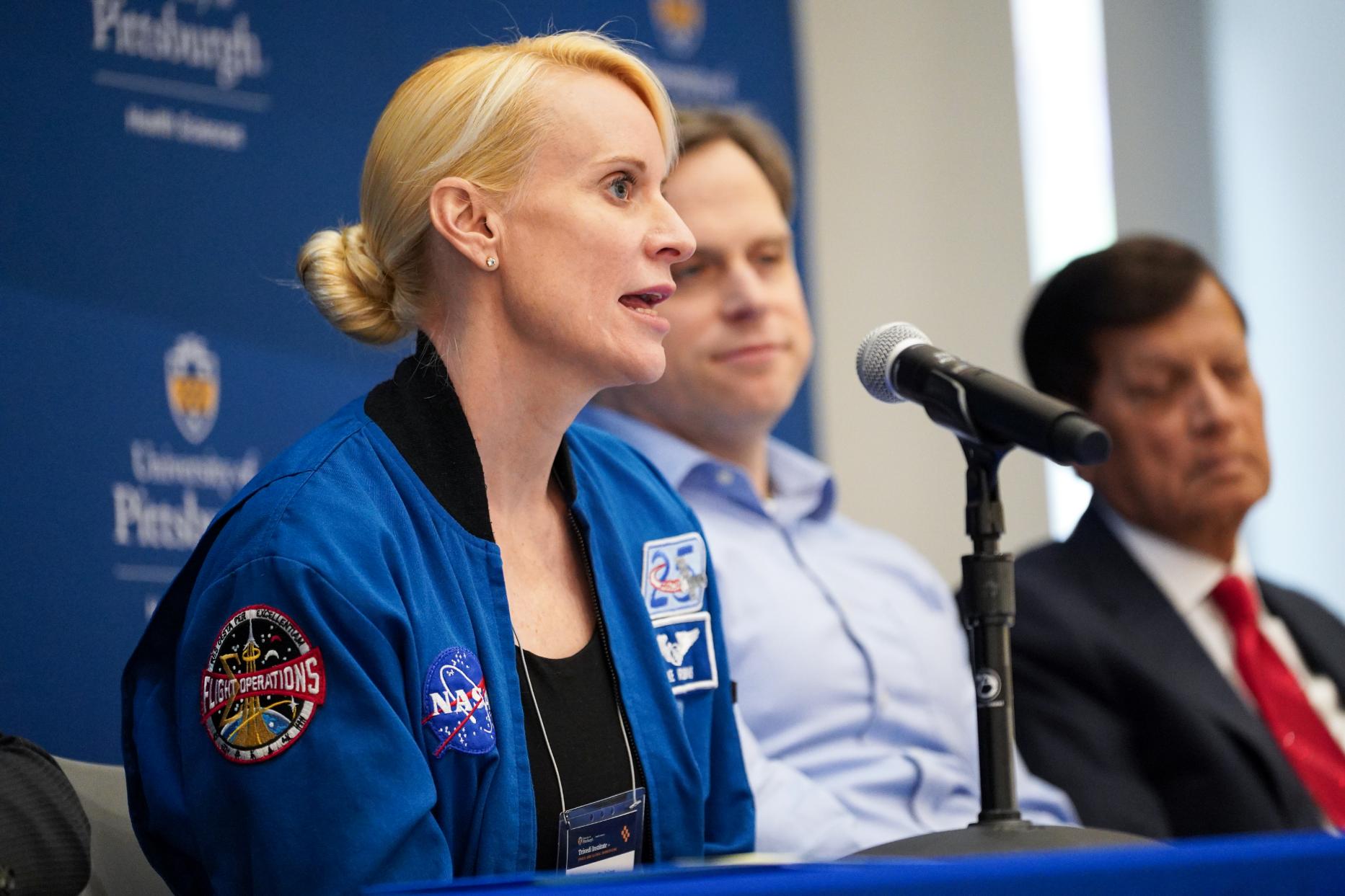
The institute will be led by Kate Rubins, a former NASA astronaut who joined Pitt in October after spending about 900 days in space. Rubins was the first person to sequence DNA aboard the International Space Station and has led multiple studies on genomics and human health under extreme conditions.
“Technologies developed for use in the severely resource-constrained circumstances of space travel can be repurposed for use in patients on Earth,” Rubins said. “These approaches are particularly powerful in settings with limited infrastructure, including disaster response, rural medicine, military operations and humanitarian missions.”
University officials said research conducted in space can speed up scientific discovery because microgravity and radiation can intensify biological processes such as cell growth and disease progression. Senior vice chancellor for the health sciences Anantha Shekhar said the institute builds on Pitt’s longstanding strengths in biomedical research and technology transfer.
The initiative also aims to strengthen Pittsburgh’s startup pipeline by linking space-based research with intellectual property development and entrepreneurial training. According to Pitt, its Office of Innovation and Entrepreneurship recorded a record number of invention disclosures in 2025, resulting in 15 new startup spinouts.
The institute plans to collaborate with regional and national partners, including Carnegie Mellon University, to create a broader research and training ecosystem spanning space science, medicine and advanced technology.
Supporters of the project said the investment could help diversify the geography of space-related biomedical innovation, which has traditionally been concentrated in states such as Florida and Texas, by leveraging Pittsburgh’s established biotech and academic base.