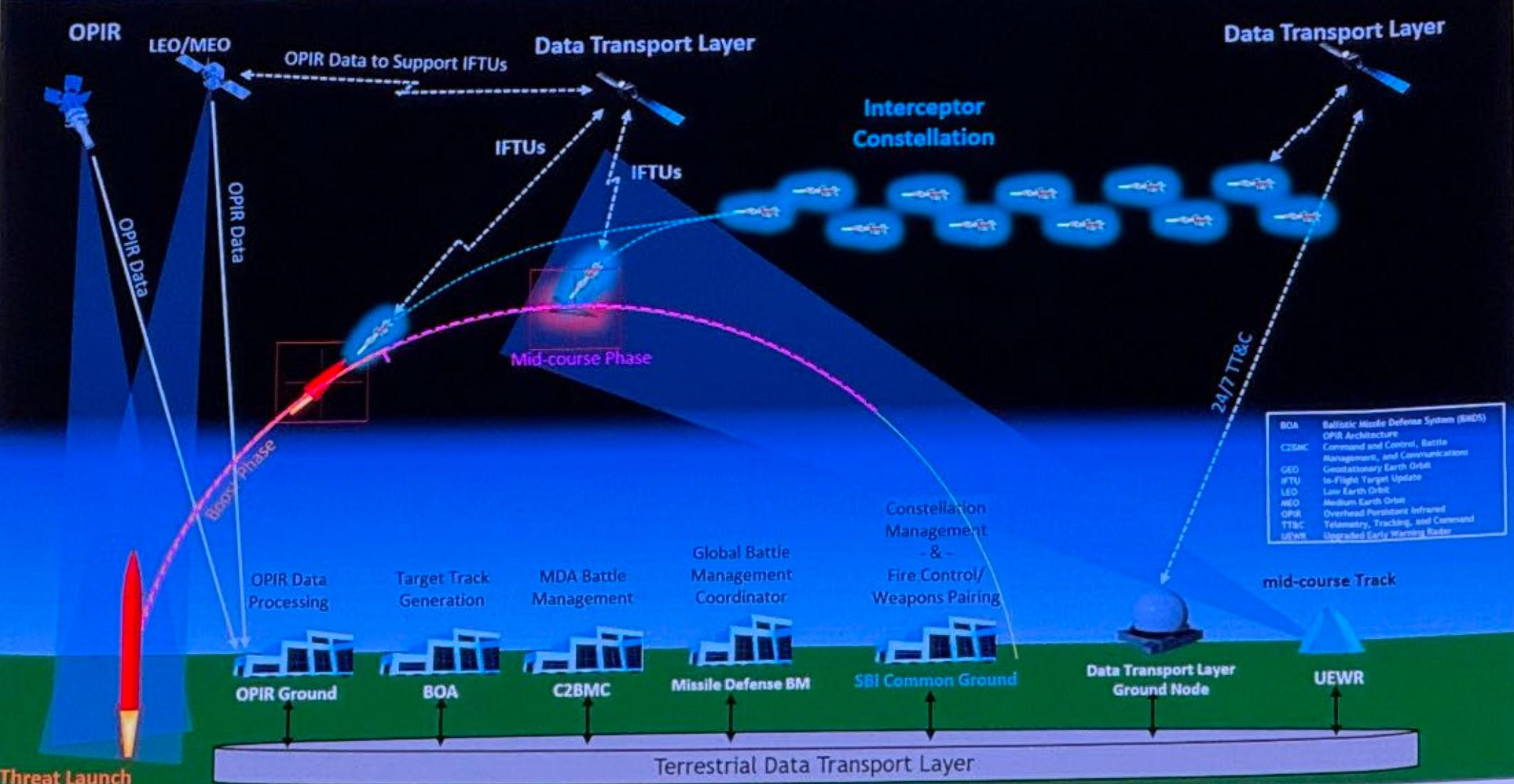
The U.S. Space Force has awarded initial prototype contracts to multiple companies to develop space-based interceptors capable of disabling enemy missiles within minutes of launch, as part of the Pentagon’s Golden Dome missile defense initiative, the service said in a statement.
The contracts were issued under competitive Other Transaction Agreements (OTAs), a mechanism used to speed up development by bypassing some traditional procurement rules. “The U.S. Space Force awarded multiple contracts for Space-Based Interceptor prototype agreements to multiple performers through competitive Other Transaction Agreements,” a Space Force spokesperson said. “The selection process was robust and thorough.” The service declined to identify the companies selected or disclose the value of the awards, citing enhanced security measures and the confidential nature of OTAs.
The interceptor prototypes will focus on boost-phase missile defense, targeting threats shortly after launch. The Space Force said it also plans to open a separate prototype competition in early December for kinetic midcourse interceptors designed to destroy missiles during flight, with contract awards targeted for February. The service is using both OTAs and prize challenges to accelerate development under Golden Dome, which aims to create a layered homeland missile defense shield within three years.
Golden Dome is a high-priority Pentagon program backed by President Donald Trump, who announced the initiative in an executive order during the first week of his second term. During a May Oval Office presentation, Trump said the project would cost $175 billion and reach initial operational capability within three years, estimates that have been questioned by defense analysts. The Pentagon has not publicly outlined Golden Dome’s full architecture but is preparing an implementation plan. The Space Force did not specify which funds were used for the initial awards, though Congress earlier directed $5.6 billion of a $25 billion Golden Dome budget toward space-based interceptor capabilities.
Several defense contractors and startups have already signaled involvement in related work, including Northrop Grumman, Lockheed Martin and Apex Space. Apex has said it plans to launch its “Project Shadow” interceptors next summer, while Lockheed targets demonstrations in 2028. Northrop has begun ground testing and is providing operational analysis to the Defense Department.